
Field guide · common
Brown Hare
Long-eared speedster of open fields — boxing matches in British spring.
Least Concern
Lepus europaeus
Overview
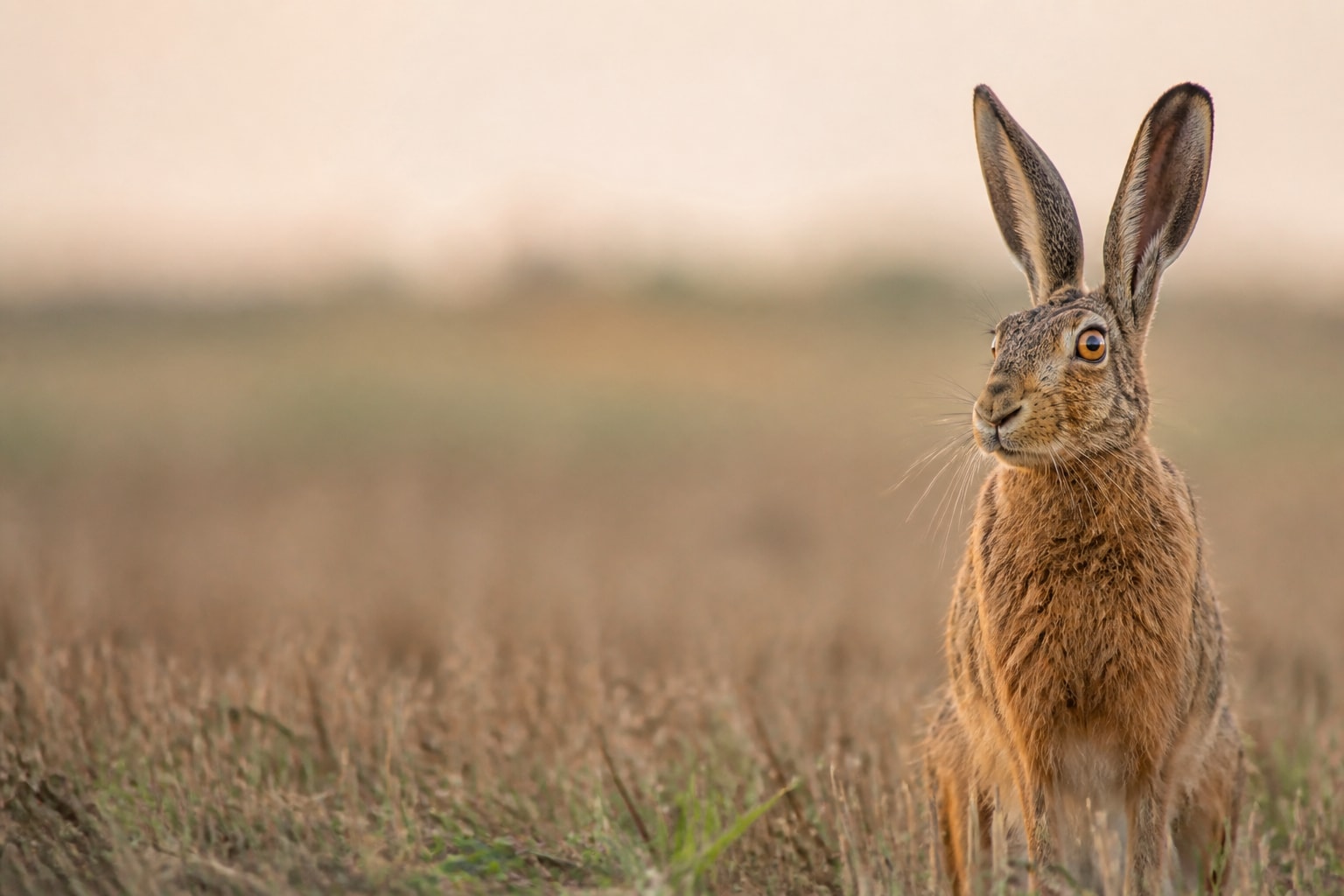
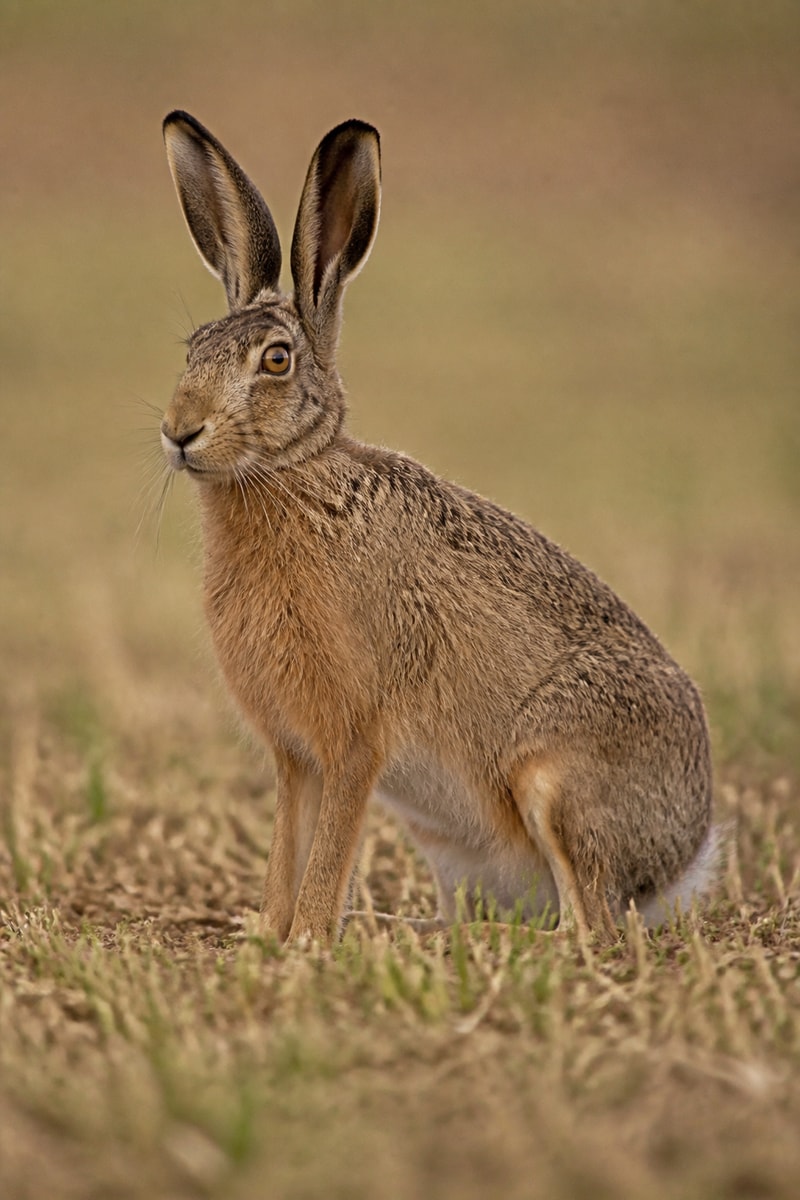
Brown hares are large, long-legged lagomorphs of open British farmland, with black-tipped ears and amber eyes set high on the head. They rest in shallow forms by day and explode into sprinting zigzags when flushed, famous for spring ‘boxing’ between females and suitors.
For UK collectors, the brown hare is a farmland classic — dawn field runner, boxing spring spectacle, and a common open-country mammal distinct from the rabbit.
- Scientific nameLepus europaeus
- Length50–70 cm
- Weight3–5 kg
- LifespanAround 3–5 years in the wild
- DietGrasses
- ConservationLeast Concern
- RegionBritish Farmland Fields
Where to see them
Habitat
- Arable field
- Open grassland
- Field margin
- Mixed farmland
Open farmland, grassland, and wide field margins across lowland Britain, needing cover for forms and open ground for spotting predators.
Field notes
Field scale for the Brown Hare: length around 50-70 cm; weight 3-5 kg. Typical lifespan: Around 3-5 years in the wild.
When you are scanning habitat, prioritise arable field, open grassland, field margin, and mixed farmland. Those settings are where a clean look and a usable photo are most likely.
Quick ID anchor: Long black-tipped ears, amber eye, and longer legs than a rabbit. Confirm with behaviour and habitat before you log the discovery.
Diet
Grasses, herbs, cereal shoots, and other green plants.
Browse bark and woody shoots when winter forage is scarce.
Behaviour
Solitary or loosely spaced; freeze in forms then bolt in zigzags.
Nocturnal and crepuscular; spring chasing and boxing on open fields.
How to identify
Long black-tipped ears, amber eye, and longer legs than a rabbit.
Tawny-brown coat; white underside of the tail shows when fleeing.
Interesting facts
- 01
Larger and longer-legged than rabbits, with black-tipped ears.
- 02
Do not dig burrows — rest in shallow ground forms.
- 03
Spring ‘boxing’ is often a female fending off a male.
- 04
Leverets are born fully furred with open eyes.
- 05
Can sprint at speeds over 70 km/h in short bursts.
- 06
Most active at dusk and dawn across open fields.
Conservation status
Brown hares are Least Concern globally but have declined in parts of the UK with intensive farming. Field margins, crop diversity, and reduced persecution help local populations.
Sources: IUCN Red List
Keep exploring
Free on iOS
Catch the Brown Hare
Spot one in the wild, then scan it in Catch'Um to log your common discovery.