
Field guide · common
Blackbird
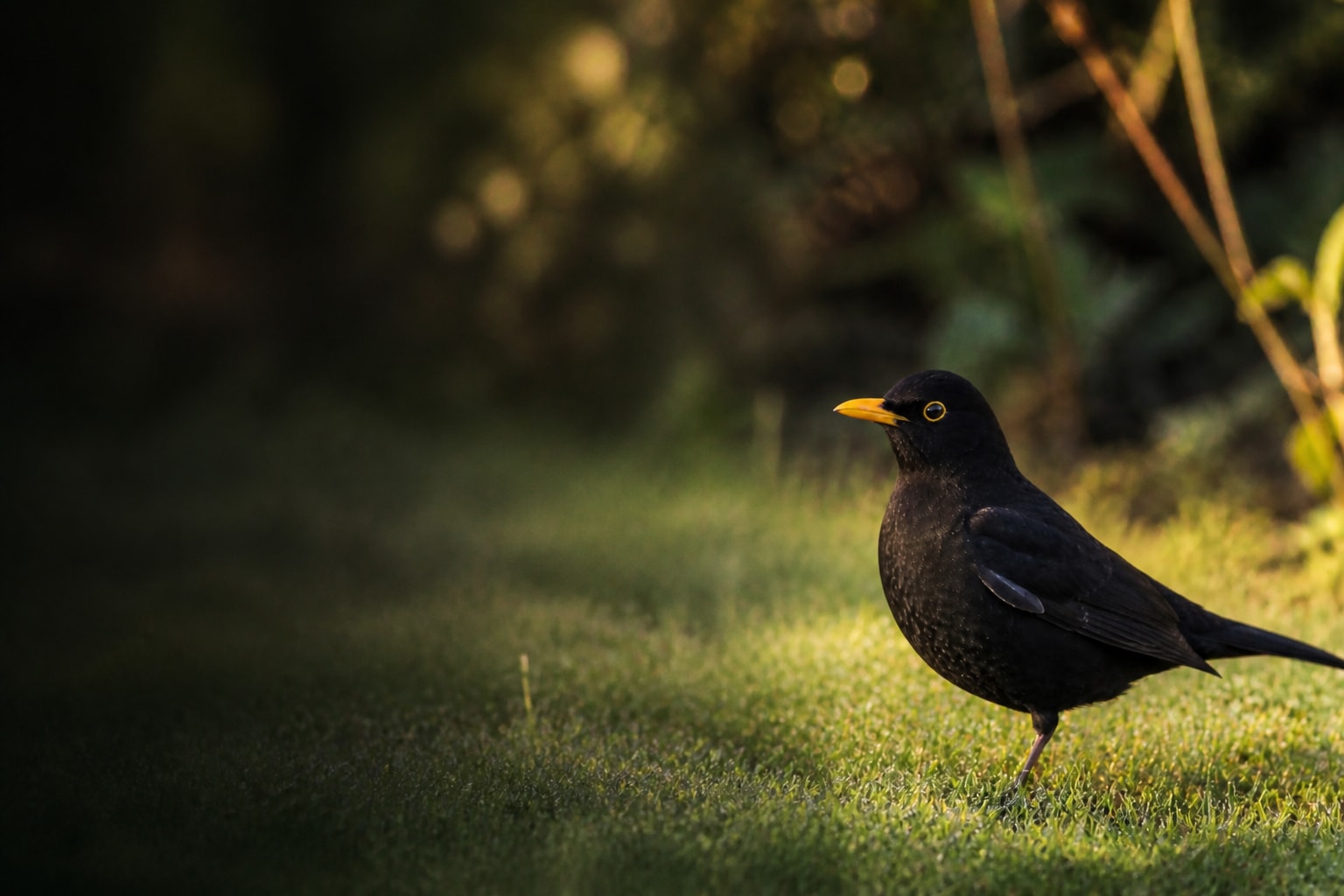
The dawn chorus lead, a glossy black male whose flute-like song marks the start of spring.
Least Concern
Turdus merula
Overview
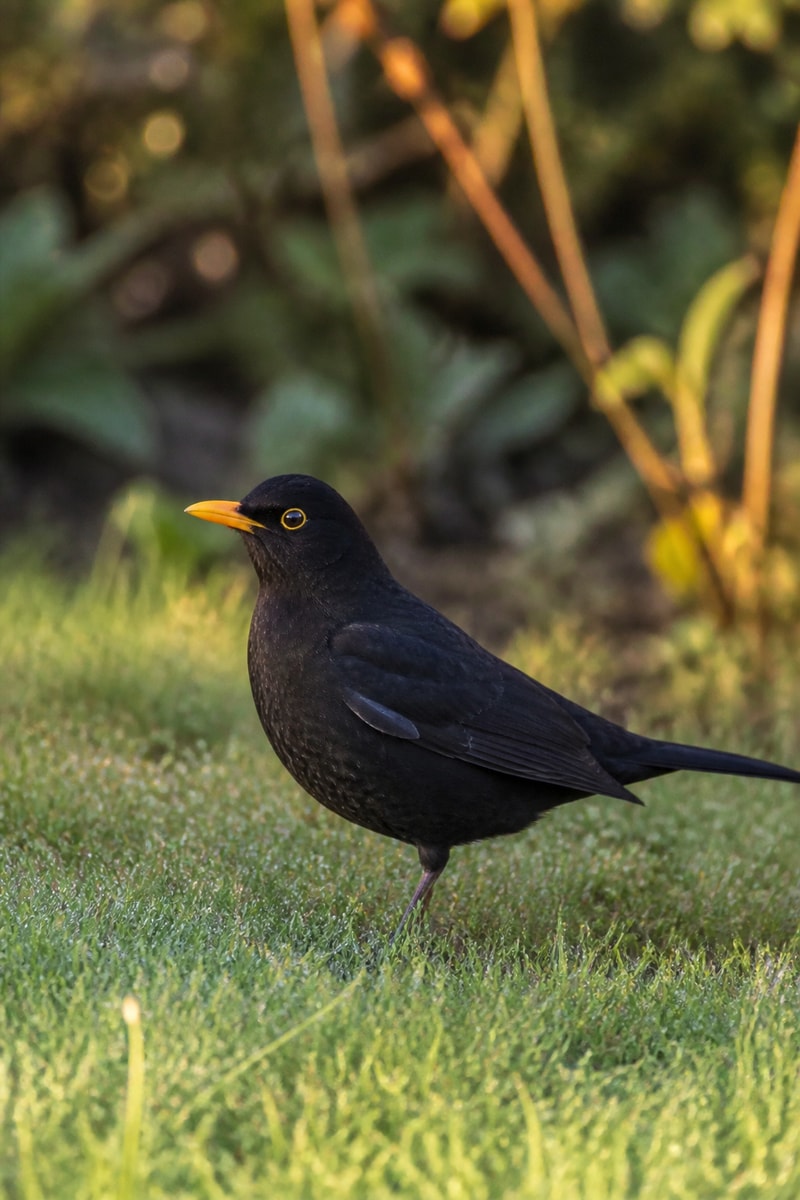
The blackbird is the soundtrack to a British morning. Males are jet black with a bright yellow eye-ring and bill; females are dark brown with streaked throats. Both hop across lawns pulling worms from damp soil at first light.
From a high perch at daybreak, the male pours out a slow, rich, flute-like song that carries through streets and woodlands alike. Common as they are, blackbirds reward early risers with one of the best free concerts in nature, and a photograph in golden hour light.
- Scientific nameTurdus merula
- Length23.5–29 cm
- Weight80–125 g
- Lifespan2–5 years in the wild typical; some reach 10+ years
- DietEarthworms
- ConservationLeast Concern
- RegionGardens & Parks
Habitat
- Gardens
- Woodland
- Parks
- Hedgerows
Blackbirds are found throughout the United Kingdom in gardens, parks, woodland, hedgerows, and farmland. They feed on lawns and leaf litter for worms and insects, and nest in shrubs, climbers, and hedges, often within a few metres of human homes.
Countries found
Field notes
Field scale for the Blackbird: length around 23.5-29 cm; weight 80-125 g. Typical lifespan: 2-5 years in the wild typical; some reach 10+ years.
When you are scanning habitat, prioritise gardens, woodland, parks, and hedgerows. Those settings are where a clean look and a usable photo are most likely.
Quick ID anchor: Adult males are glossy black with a bright yellow-orange bill and eye-ring; females are dark brown with a mottled throat and duller bill. Longish tail and upright stance on lawns. Confirm with behaviour and habitat before you log the discovery.
Where to see one
United Kingdom
In United Kingdom, start at The New Forest (Hampshire). Open heath and oak woodland where foxes, deer, ponies, and woodland birds share a landscape that feels surprisingly wild for southern England.
More context on this destination lives on the United Kingdom expedition page.
Diet
Earthworms, beetles, and other invertebrates taken from lawns and leaf litter. Berries and fruit become important in autumn and winter.
Behaviour
Males sing rich, fluty phrases from rooftops and trees at dawn and dusk. Often seen hopping then pausing to listen for worms; nests are cup-shaped in hedges and shrubs.
How to identify
Adult males are glossy black with a bright yellow-orange bill and eye-ring; females are dark brown with a mottled throat and duller bill. Longish tail and upright stance on lawns.
Interesting facts
- 01
Male blackbirds sing from high perches at dawn. Their melody marks the start of spring.
- 02
Females are brown, not black. A common source of confusion for new birdwatchers.
- 03
They run and hop rather than walk, stopping abruptly to cock their head and listen for worms.
- 04
Blackbirds can raise three broods in a good summer, from March through July.
- 05
Their alarm call is a loud, repeated clack, often the first sign a cat is nearby.
- 06
They belong to the thrush family, alongside song thrushes and fieldfares.
Conservation status
The common blackbird is Least Concern and widespread across Europe. UK garden populations are stable, though cold snaps and dry summers can reduce worm availability and nesting success in bad years.
Sources: IUCN Red List

Keep exploring
Free on iOS
Catch the Blackbird
Spot one in the wild, then scan it in Catch'Um to log your common discovery.