
Field guide · common
Barn Swallow
Forked tail, mud nest under the eaves — summer’s classic aerial insect hunter.
Least Concern
Hirundo rustica
Overview
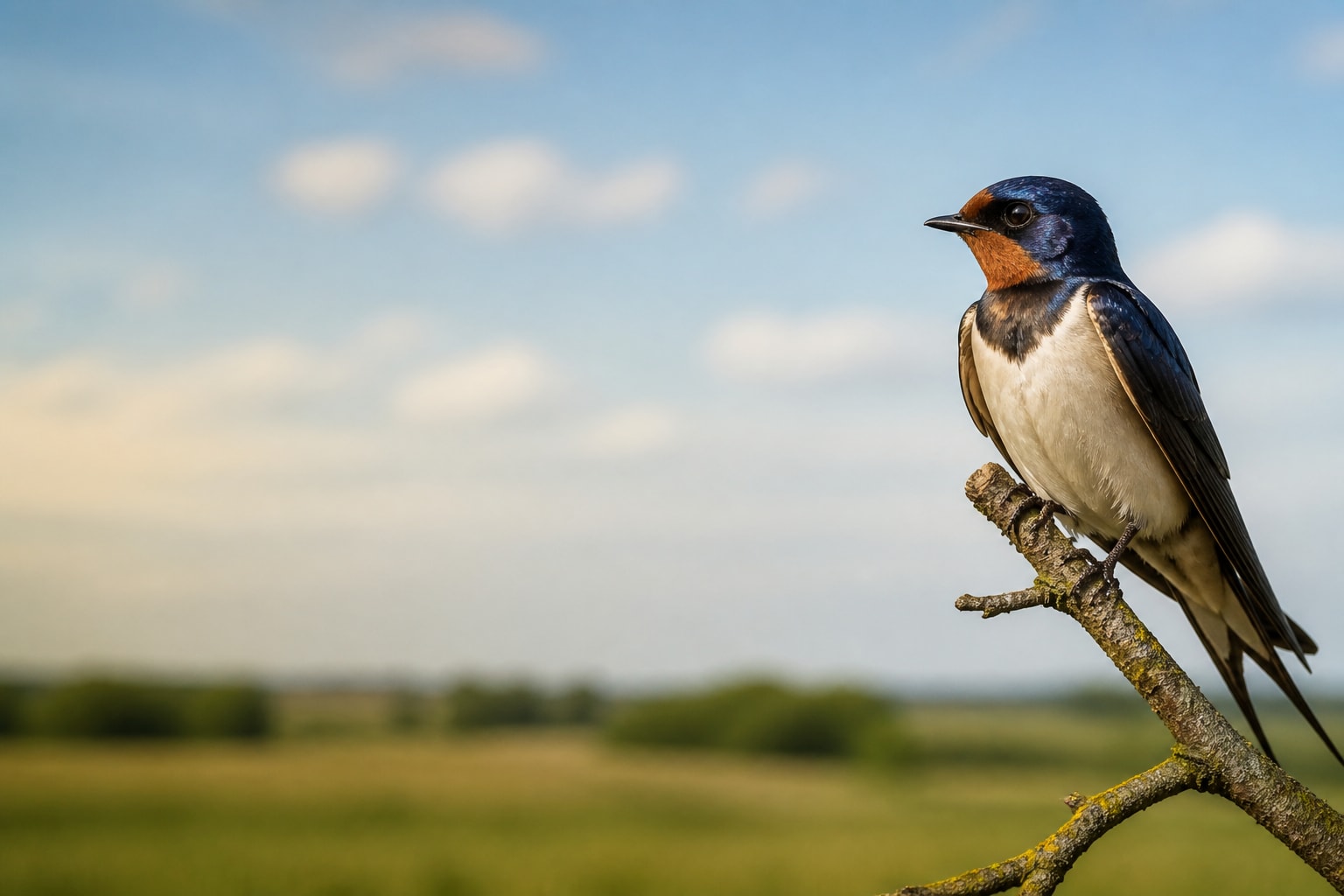
Barn swallows are sleek migratory songbirds that skim fields and water for flying insects. Long forked tails, steel-blue backs, and chestnut throats mark Britain’s classic summer swallows nesting on beams and ledges.
For UK collectors, the barn swallow is a common seasonal prize — mud cups in barns, twittering flight, and a herald of British summer.
- Scientific nameHirundo rustica
- Length17–19 cm
- Weight16–22 g
- LifespanAround 2–4 years average; up to 8+ recorded
- DietFlying insects
- ConservationLeast Concern
- RegionBritish Summer Skies
Where to see them
Habitat
- Farmland airspace
- Village eaves
- Wetland edge
- Open meadow
Open farmland, meadows, and villages across the UK in summer, nesting on buildings and foraging over fields, rivers, and wetlands.
Field notes
Field scale for the Barn Swallow: length around 17-19 cm; weight 16-22 g. Typical lifespan: Around 2-4 years average; up to 8+ recorded.
When you are scanning habitat, prioritise farmland airspace, village eaves, wetland edge, and open meadow. Those settings are where a clean look and a usable photo are most likely.
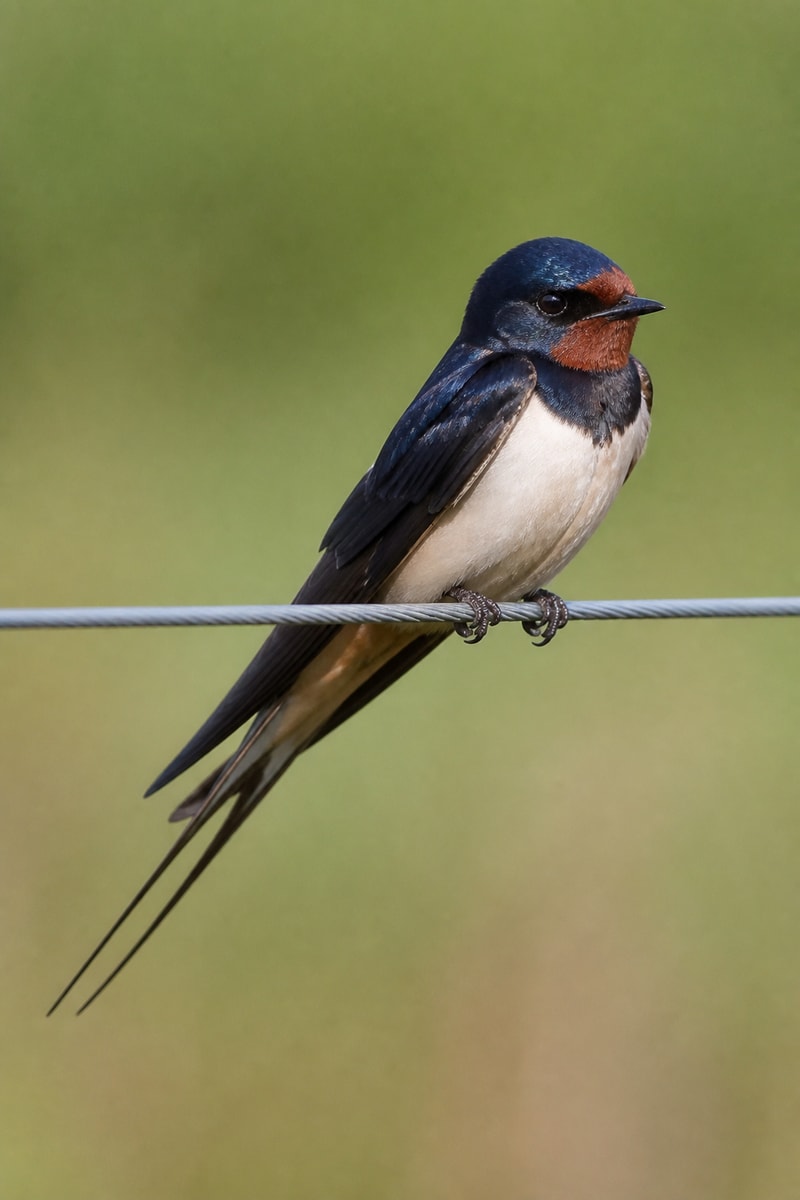
Quick ID anchor: Glossy blue-black upperparts, pale underside, and chestnut face and throat. Confirm with behaviour and habitat before you log the discovery.
Diet
Flying insects — flies, aphids, beetles, and other aerial prey.
Hunt on the wing over grassland, water, and livestock.
Behaviour
Social breeders; often nest in loose colonies in barns.
Gather on wires before autumn migration to Africa.
How to identify
Glossy blue-black upperparts, pale underside, and chestnut face and throat.
Long forked tail with white spots; pointed wings for fast flight.
Interesting facts
- 01
Deeply forked tail streamers are longest on adult males.
- 02
Build open mud-cup nests on beams, eaves, and bridges.
- 03
Long-distance migrants wintering mainly in Africa.
- 04
Catch flying insects in agile low-level flight.
- 05
Chestnut throat and forehead contrast with blue upperparts.
- 06
Arrive in Britain from March–April and depart by autumn.
Conservation status
Barn swallows are Least Concern globally but remain sensitive to insect declines and loss of nest sites on modern farms. UK breeding numbers fluctuate with weather and food.
Sources: IUCN Red List

Keep exploring
Free on iOS
Catch the Barn Swallow
Spot one in the wild, then scan it in Catch'Um to log your common discovery.