
Field guide · common
African Buffalo
Bosses and bulk — Africa's formidable herd bovine, never to be confused with the American bison.
Near Threatened
Syncerus caffer
Overview
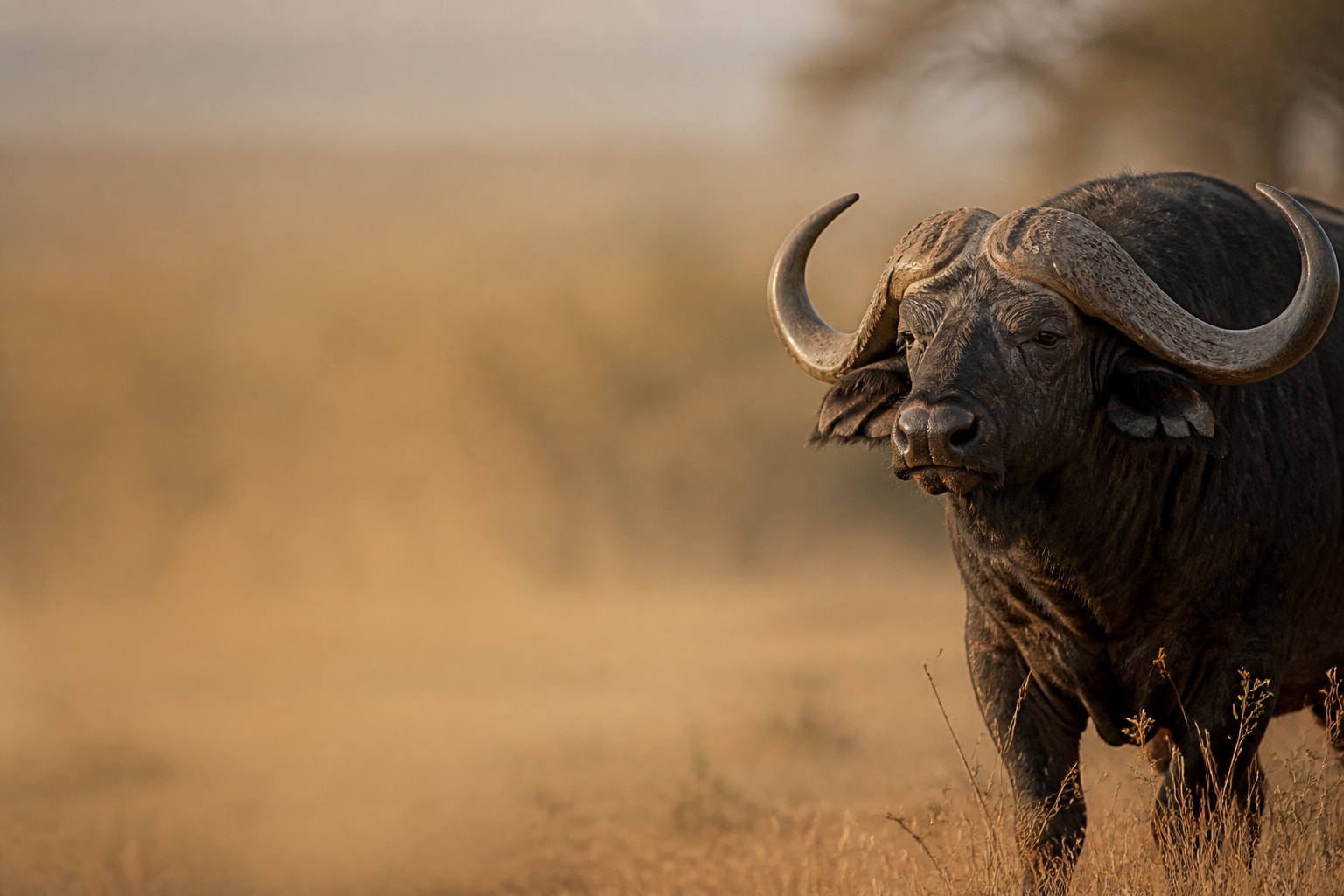
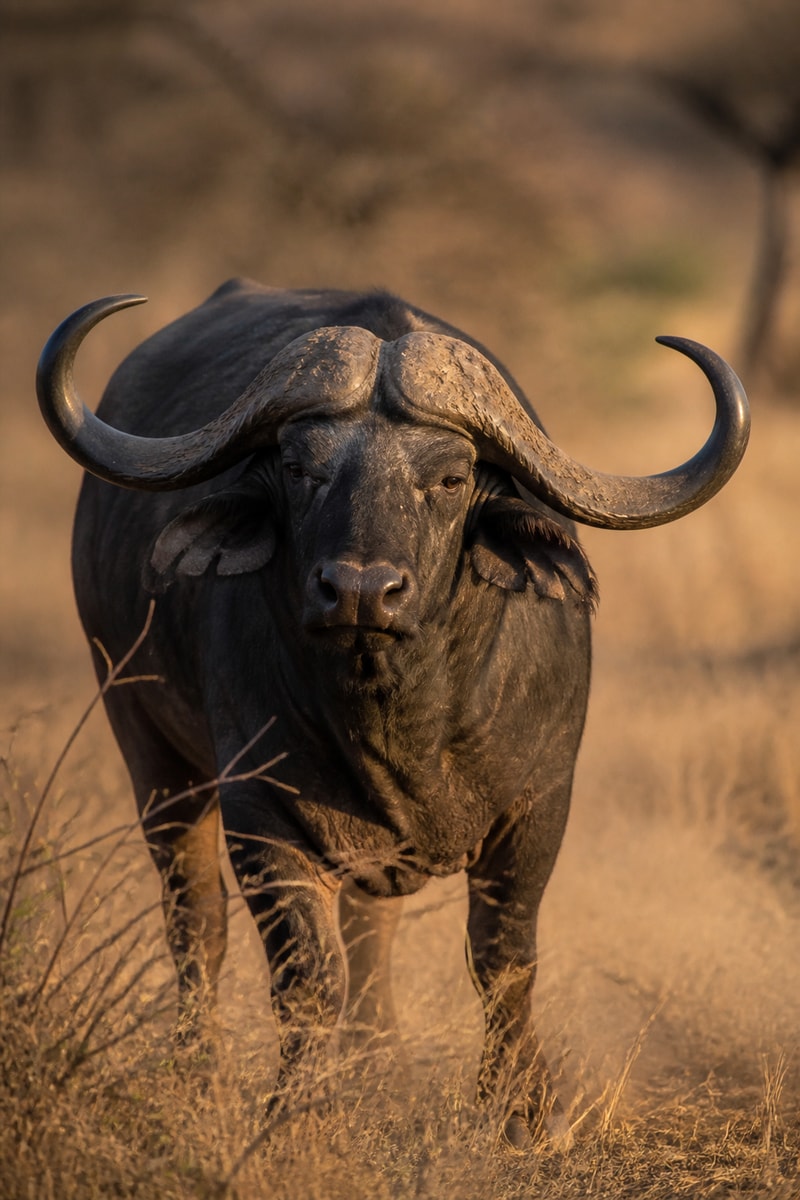
African buffalo are powerful, herd-living bovines of savanna and woodland, famous for fused horn bases ('bosses') in adult males and a reputation for unpredictable courage. They are a classic Big Five safari animal and a cornerstone of Kenyan and Botswanan game drives.
Adding buffalo completes a major Africa gap beside lion, elephant, rhino, and leopard — without overlapping North America's bison.
- Scientific nameSyncerus caffer
- Length1.7–3.4 m
- Height1–1.7 m at the shoulder
- Weight500–900 kg
- LifespanAround 15–25 years in the wild
- DietGrazers of tall and…
- ConservationNear Threatened
- RegionSavanna
Where to see them
Habitat
- Savanna
- Floodplain
- Open woodland
African buffalo use savanna, floodplain, and open woodland near permanent water across sub-Saharan Africa. Large herds graze in places like the Masai Mara, Okavango, and other protected grasslands.
Field notes
Field scale for the African Buffalo: length around 1.7-3.4 m; height 1-1.7 m at the shoulder; weight 500-900 kg. Typical lifespan: Around 15-25 years in the wild.
When you are scanning habitat, prioritise savanna, floodplain, and open woodland. Those settings are where a clean look and a usable photo are most likely.
Quick ID anchor: Dark, heavily built bovine with large curved horns and a stocky neck. Confirm with behaviour and habitat before you log the discovery.
Where to see one
Kenya
In Kenya, start at Masai Mara National Reserve (Southwest Kenya). Open savanna where lion prides patrol the grassland and the Great Migration crosses the Mara River from July to October.
More context on this destination lives on the Kenya expedition page.
Botswana
In Botswana, start at Okavango Delta (Northern Botswana). A river that never reaches the sea. Mokoro trips through papyrus channels with elephants, hippos, and painted dogs.
More context on this destination lives on the Botswana expedition page.
Diet
Grazers of tall and short grasses; browse occasionally when grass is poor.
Need regular access to water and mineral licks.
Behaviour
Live in herds with complex social structure; older bulls may form bachelor groups.
Defend calves fiercely against lions; wallow in mud for cooling and parasite control.
How to identify
Dark, heavily built bovine with large curved horns and a stocky neck.
Males show a thick boss where horns meet; cattle-like but wilder and more muscular.
Interesting facts
- 01
African buffalo are one of the traditional Big Five safari animals.
- 02
Adult males develop a fused horn base called a boss.
- 03
They are unpredictable and highly protective of the herd.
- 04
Oxpeckers often ride on their backs, picking parasites.
- 05
Herds may number hundreds on productive grasslands.
- 06
They need to drink daily and stay close to water.
Conservation status
African buffalo are Near Threatened. Disease, habitat loss, and hunting have reduced many populations. Large, well-managed parks in East and southern Africa still support impressive herds.
Sources: IUCN Red List

Keep exploring
Where it lives
Free on iOS
Catch the African Buffalo
Spot one in the wild, then scan it in Catch'Um to log your common discovery.