
Field guide · rare
Adder
Britain's only widespread venomous snake — a zigzag back and a preference for quiet sunny banks.
Least Concern
Vipera berus
Overview
Adders are the UK's native vipers: relatively small, often with a dark zigzag down the back, basking on heaths and woodland edges in spring. They are shy, medically significant if they bite, and a genuine wild highlight for patient British collectors.
A key UK reptile card that fills a taxonomic gap beyond frogs and garden birds.
- Scientific nameVipera berus
- Length50–70 cm typical; rarely over 80 cm
- Weight50–100 g typical
- LifespanAround 10–15 years in the wild
- DietSmall mammals
- ConservationLeast Concern
- RegionHeath & Woodland
Where to see them
Habitat
- Heathland
- Moorland
- Woodland edge
- Rough grassland
Heathland, moorland, woodland edge, and rough grassland across Britain, especially with sunny banks for basking and cover for hunting.
Field notes
Field scale for the Adder: length around 50-70 cm typical; rarely over 80 cm; weight 50-100 g typical. Typical lifespan: Around 10-15 years in the wild.
When you are scanning habitat, prioritise heathland, moorland, woodland edge, and rough grassland. Those settings are where a clean look and a usable photo are most likely.
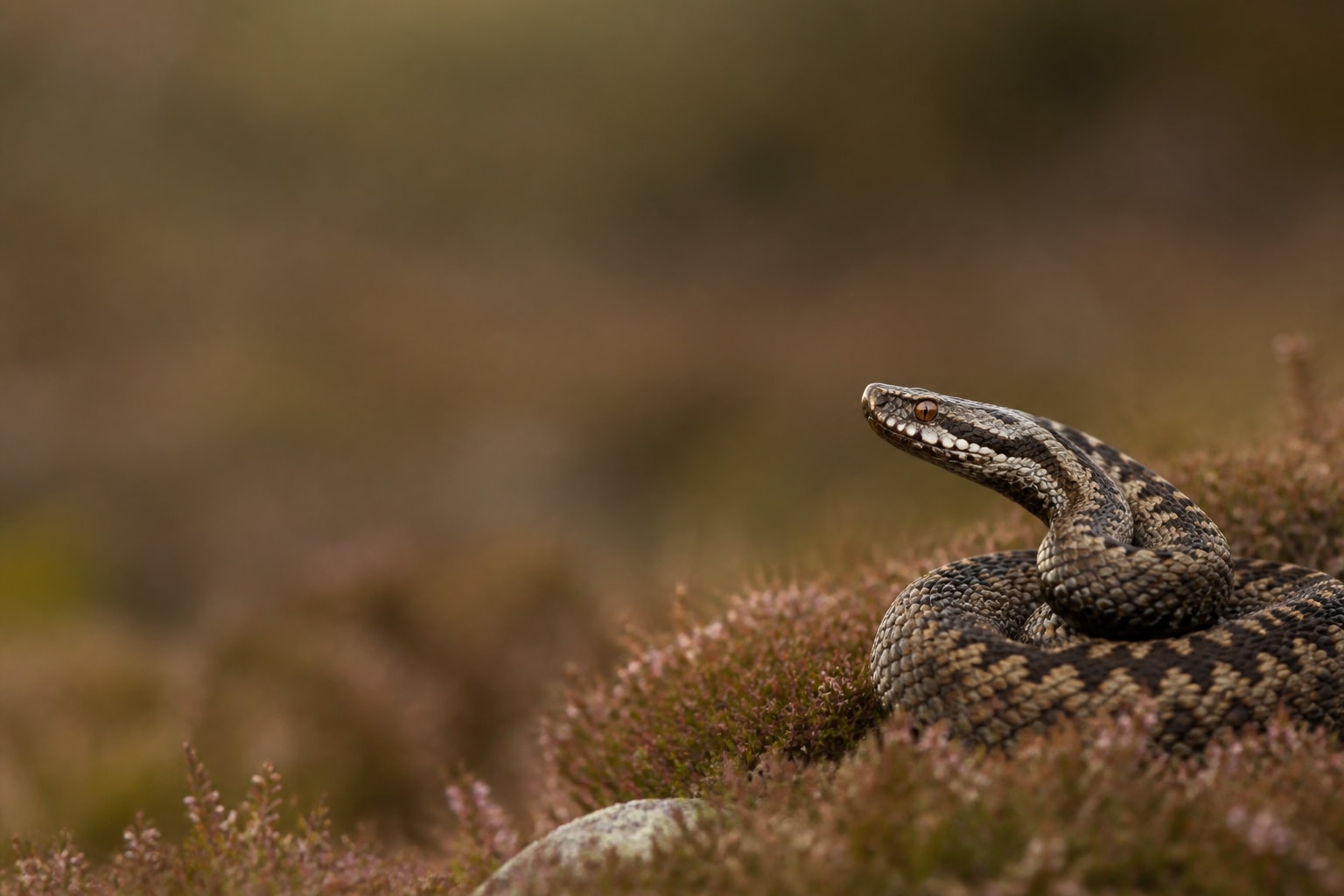
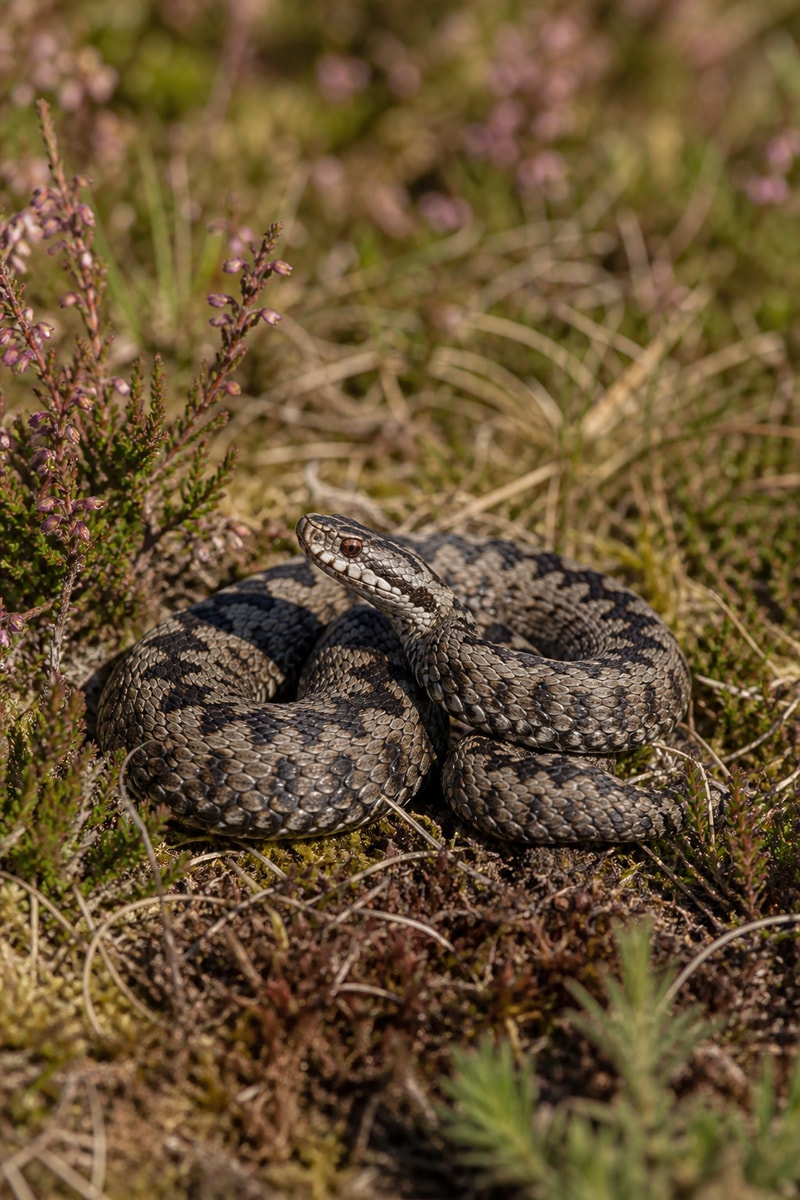
Quick ID anchor: Stocky viper with a dark zigzag dorsal stripe and vertical pupils. Confirm with behaviour and habitat before you log the discovery.
Diet
Small mammals, lizards, amphibians, and nestling birds.
Ambush from cover; venom subdues prey.
Behaviour
Bask to thermoregulate; most active in spring and late summer.
Hibernate in communal or solitary sites over winter.
How to identify
Stocky viper with a dark zigzag dorsal stripe and vertical pupils.
Males often silver-grey; females brown; some individuals very dark.
Interesting facts
- 01
The UK's only widespread venomous snake.
- 02
Dark zigzag stripe along the back is the classic ID mark.
- 03
Males are often greyer; females browner — both variable.
- 04
Give birth to live young rather than laying eggs.
- 05
Bask in spring after emerging from hibernation.
- 06
Prefer to flee; bites usually occur when stepped on or handled.
Conservation status
Adders are Least Concern globally but declining in parts of Britain from habitat loss and fragmentation. Protecting heathland and sunny corridors helps local populations.
Sources: IUCN Red List
Keep exploring
Free on iOS
Catch the Adder
Spot one in the wild, then scan it in Catch'Um to log your rare discovery.