
Field guide · rare
Aardvark
Night digger of the African plains — tubular snout, donkey ears, and a tongue built for termites.
Least Concern
Orycteropus afer
Overview
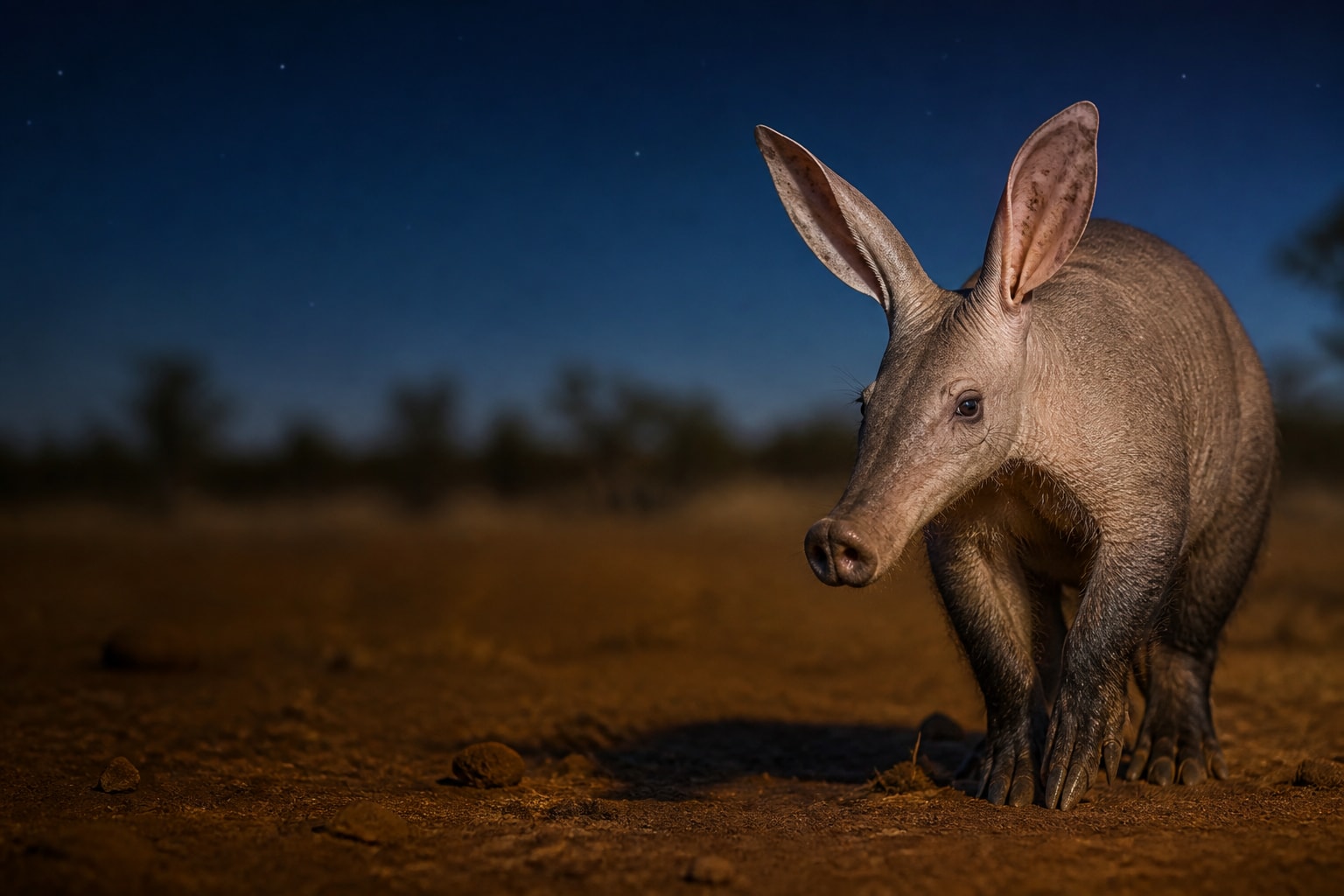
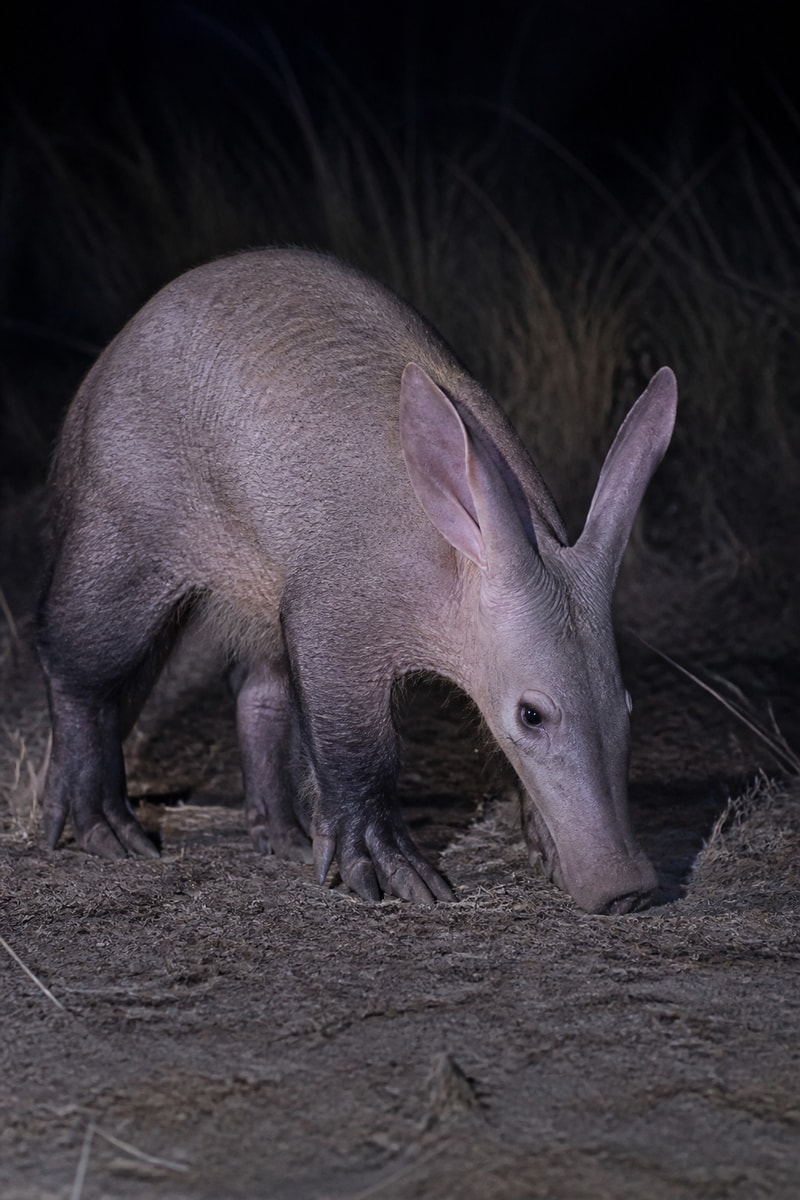
Aardvarks look assembled from spare parts: rabbit-like ears, a piggish body, and an elongated snout for vacuuming ants and termites after dark. Solitary and shy, they dig burrows that later house warthogs, wild dogs, and countless other species.
A uniquely African Catch'Um card — odd, memorable, and ecologically important.
- Scientific nameOrycteropus afer
- Length1–1.3 m body; tail 50–70 cm
- Weight40–65 kg
- LifespanAround 10–23 years in the wild
- DietAnts and termites…
- ConservationLeast Concern
- RegionSavanna
Where to see them
Habitat
- Savanna
- Grassland
- Open woodland
Savanna, grassland, and open woodland across sub-Saharan Africa with termite mounds and soil soft enough for burrowing.
Field notes
Field scale for the Aardvark: length around 1-1.3 m body; tail 50-70 cm; weight 40-65 kg. Typical lifespan: Around 10-23 years in the wild.
When you are scanning habitat, prioritise savanna, grassland, and open woodland. Those settings are where a clean look and a usable photo are most likely.
Quick ID anchor: Arched back, sparse hair, long tubular snout, and long donkey-like ears. Confirm with behaviour and habitat before you log the discovery.
Where to see one
Kenya
In Kenya, start at Masai Mara National Reserve (Southwest Kenya). Open savanna where lion prides patrol the grassland and the Great Migration crosses the Mara River from July to October.
More context on this destination lives on the Kenya expedition page.
Diet
Ants and termites extracted with a long sticky tongue after powerful digging.
May eat other insects opportunistically.
Behaviour
Nocturnal solitary foragers; sleep by day in burrows.
Cover large nightly distances between mounds.
How to identify
Arched back, sparse hair, long tubular snout, and long donkey-like ears.
Powerful digging claws on the front feet; thick tapering tail.
Interesting facts
- 01
The name means 'earth pig' in Afrikaans.
- 02
Tongue can extend deep into termite tunnels.
- 03
Nocturnal and usually solitary.
- 04
Burrows are later reused by many other animals.
- 05
Not related to anteaters despite similar diet — a unique African order.
- 06
Thick skin helps resist insect bites.
Conservation status
Aardvarks are Least Concern but hard to census. Habitat change and hunting affect some regions; intact savanna with termite prey supports healthy numbers.
Sources: IUCN Red List
Common questions
- What is an aardvark?
- An aardvark is a nocturnal African mammal that digs for ants and termites with powerful claws and a long sticky tongue. Its name means “earth pig” in Afrikaans.
- Where do aardvarks live?
- Aardvarks occur widely across sub-Saharan Africa in savanna, woodland, and grassland wherever ants and termites are abundant.
- Are aardvarks related to anteaters?
- No. Similar diets evolved separately. Aardvarks belong to their own order (Tubulidentata) and are not closely related to South American anteaters.

Keep exploring
Where it lives
Free on iOS
Catch the Aardvark
Spot one in the wild, then scan it in Catch'Um to log your rare discovery.