
Field guide · common
Octopus
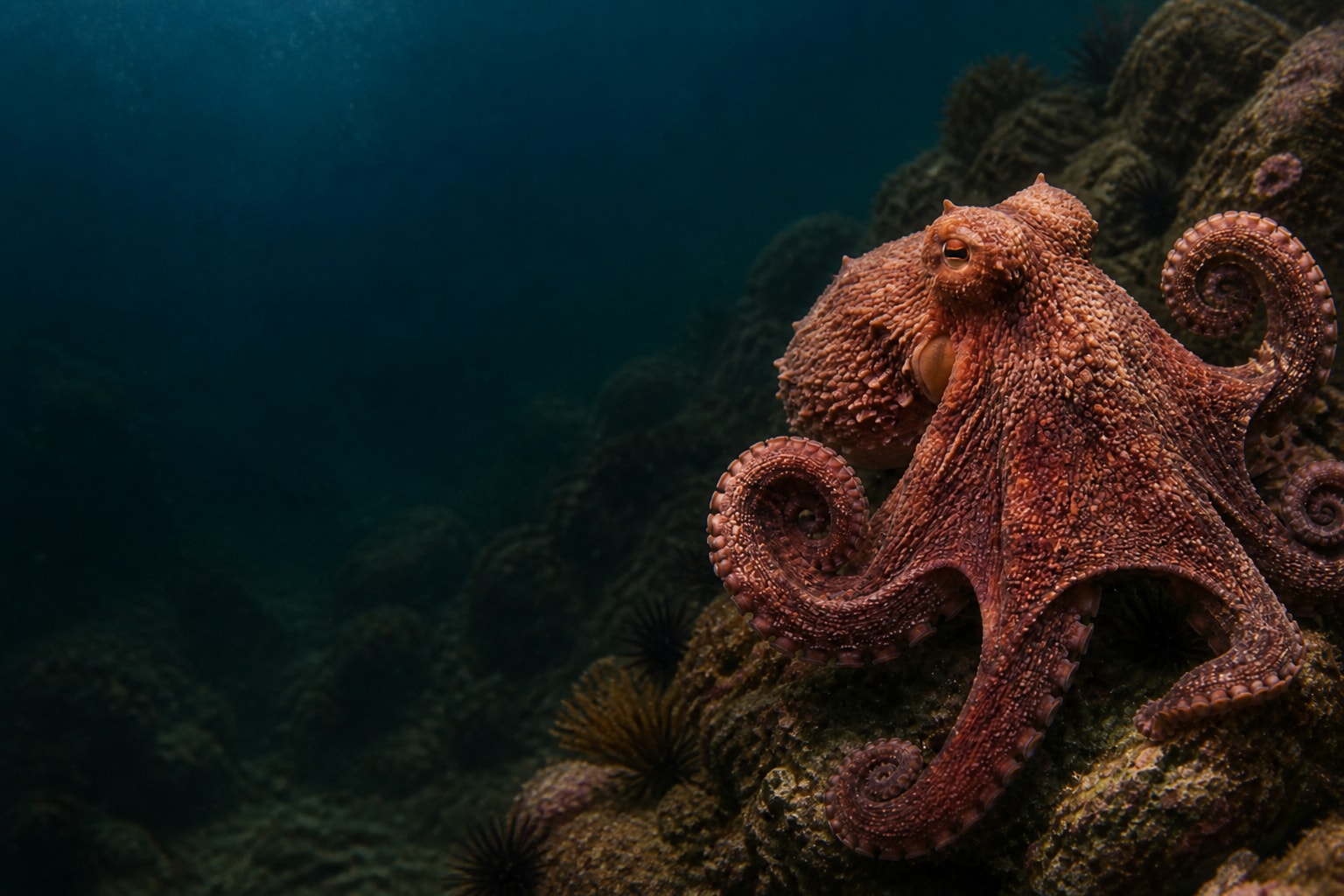
Eight arms, three hearts, one brilliant mind, the most intelligent invertebrate in the sea.
Least Concern
Octopus vulgaris
Overview
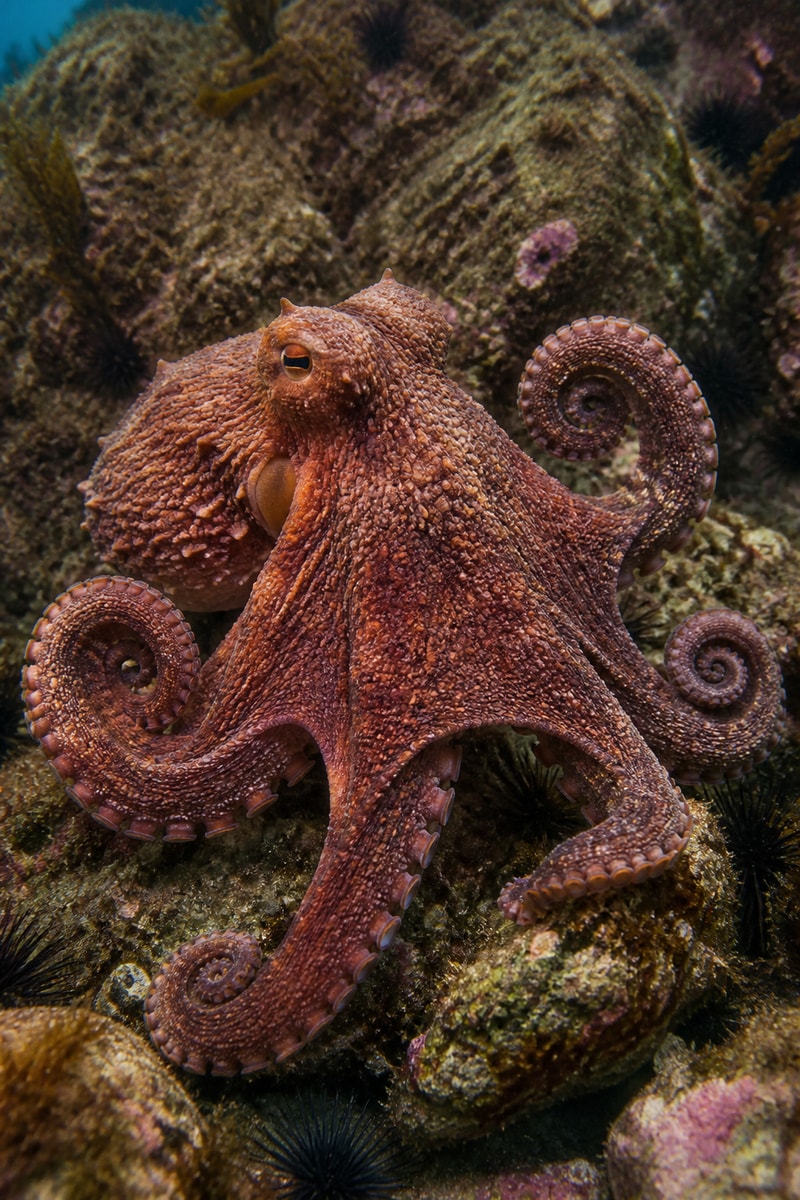
The common octopus is a master of disguise and problem-solving: it can change colour and texture in milliseconds, squeeze through gaps the size of its eye, and open jars to reach food in laboratory tests. Blue copper-based blood pumps through three hearts as it prowls rocky reefs and tide pools.
Octopuses are solitary and short-lived, most species live only one to two years, dying after breeding. They are also delicious to predators and people alike, making every day a chess match of camouflage, jet propulsion, and ink clouds.
- Scientific nameOctopus vulgaris
- LengthMantle 15–30 cm; arm span often ~1 m
- Weight3–10 kg typical
- LifespanAround 1–2 years
- DietCommon octopuses hunt crabs
- ConservationLeast Concern
- RegionRock Pools & Reef
Habitat
- Rocky reef
- Tide pool
- Coastal seabed
Rocky coastlines, reefs, and tide pools in temperate and tropical seas worldwide hold common octopuses. They den in crevices by day and hunt crabs, molluscs, and fish by night across the Mediterranean, Atlantic, and Indo-Pacific.
Field notes
Field scale for the Octopus: length around Mantle 15-30 cm; arm span often ~1 m; weight 3-10 kg typical. Typical lifespan: Around 1-2 years.
When you are scanning habitat, prioritise rocky reef, tide pool, and coastal seabed. Those settings are where a clean look and a usable photo are most likely.
Quick ID anchor: Soft-bodied cephalopod with eight suckered arms, no internal shell, and a sack-like mantle. Can rapidly change colour and skin texture; siphon used for jet propulsion. Confirm with behaviour and habitat before you log the discovery.
Where to see one
Indonesia
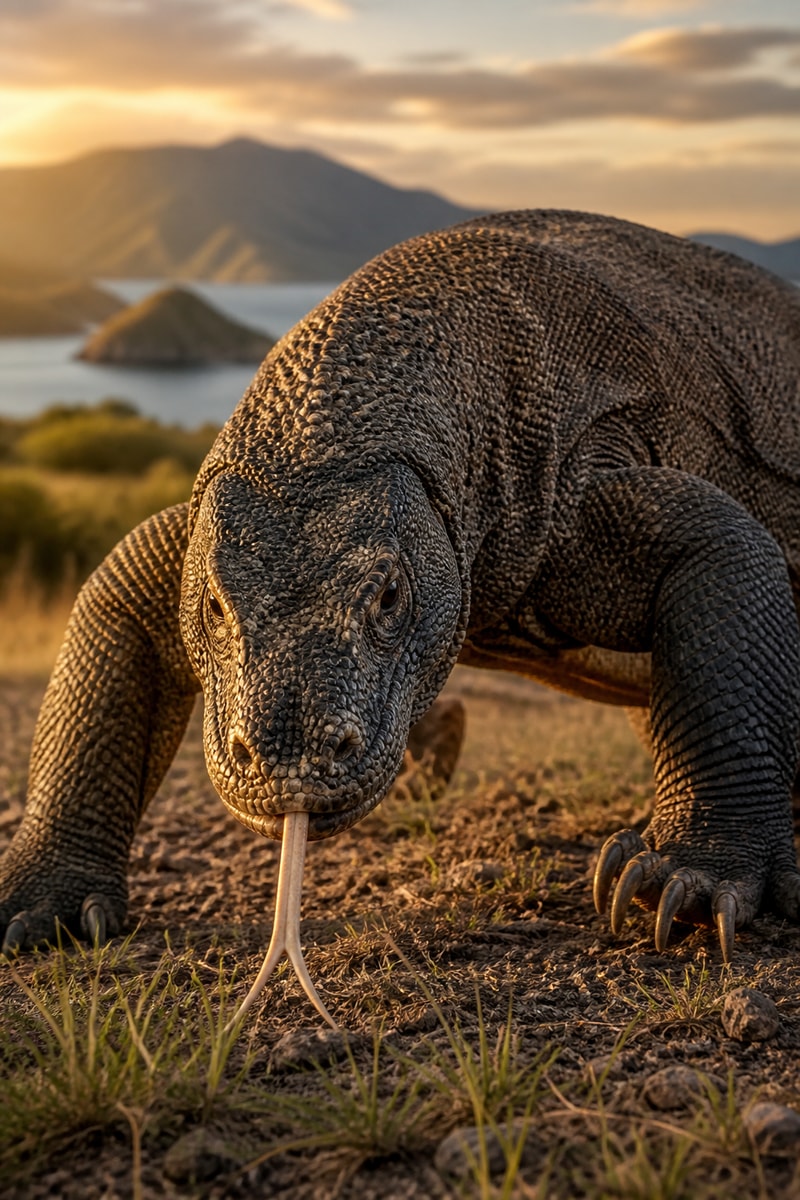
In Indonesia, start at Komodo National Park (East Nusa Tenggara). The only place on Earth to see wild Komodo dragons, patrolling savanna hillsides between pink-sand beaches and manta-filled reefs.
More context on this destination lives on the Indonesia expedition page.
Diet
Common octopuses hunt crabs, molluscs, and fish, often at night. Soft body allows them to pry prey from crevices; leftover shells may pile outside the den.
Behaviour
Solitary and highly intelligent, denning in rock holes by day. Masters of camouflage and ink escape; short-lived, typically dying after a single breeding event.
How to identify
Soft-bodied cephalopod with eight suckered arms, no internal shell, and a sack-like mantle. Can rapidly change colour and skin texture; siphon used for jet propulsion.
Interesting facts
- 01
Octopuses have three hearts and blue blood.
- 02
They can change colour and texture to match their surroundings in seconds.
- 03
Two-thirds of an octopus's neurons are in its arms. They can taste by touch.
Conservation status
Common octopuses are Least Concern but heavily fished in the Mediterranean and Atlantic. They remain abundant in many coastal areas and are popular in rock-pool exploration.
Sources: IUCN Red List



Keep exploring
Where it lives
Related discoveries
Free on iOS
Catch the Octopus
Spot one in the wild, then scan it in Catch'Um to log your common discovery.