
Field guide · common
Frilled Lizard
Australia's drama king — a lizard that unfurls a huge neck frill and sprints on two legs.
Least Concern
Chlamydosaurus kingii
Overview
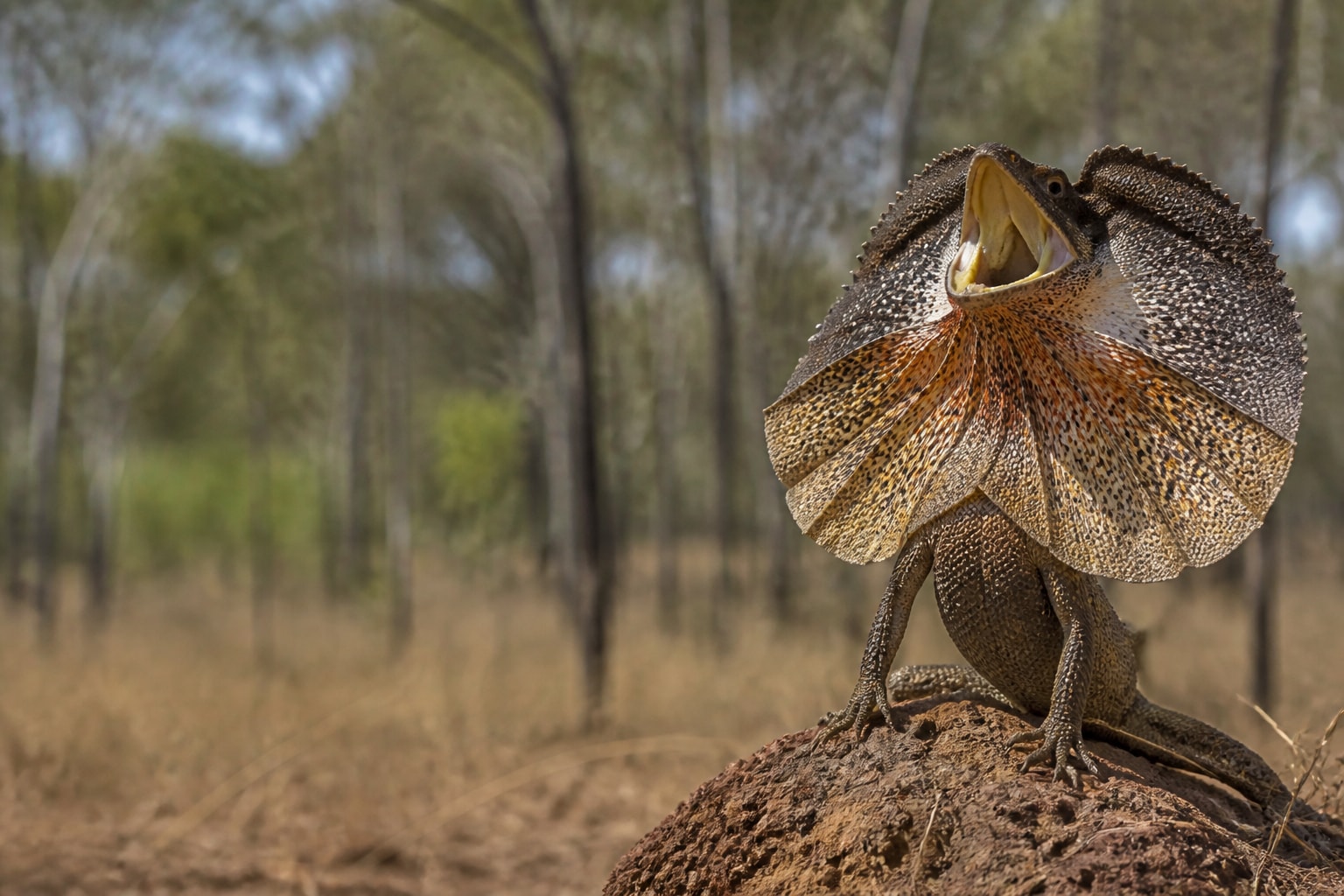
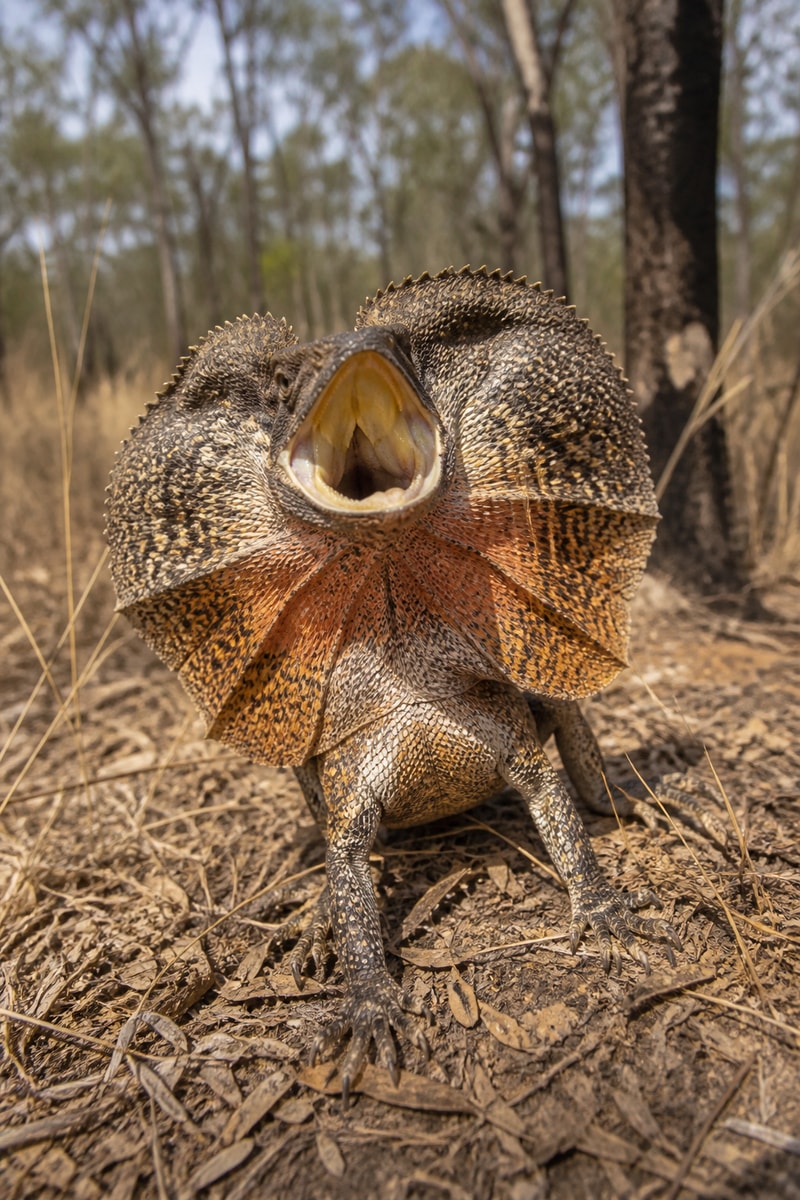
The frilled lizard is an Australian icon: usually camouflaged against tree bark, then suddenly exploding into a gaping mouth and a circular neck frill that can be nearly as wide as the lizard is long. When fleeing, it often runs bipedally like a tiny dinosaur.
Few reptiles make a better collection card — instant recognition, huge visual payoff, and strong search interest.
- Scientific nameChlamydosaurus kingii
- Length60–90 cm including tail
- Weight500 g typical
- LifespanAround 10–20 years in the wild
- DietInsects such as cicadas
- ConservationLeast Concern
- RegionTropical Woodland
Where to see them
Habitat
- Tropical woodland
- Savanna
- Dry forest
Frilled lizards live in tropical savanna woodland and dry forest of northern Australia and southern New Guinea, spending much of their time on tree trunks and descending to the ground to hunt or move between trees.
Field notes
Field scale for the Frilled Lizard: length around 60-90 cm including tail; weight 500 g typical. Typical lifespan: Around 10-20 years in the wild.
When you are scanning habitat, prioritise tropical woodland, savanna, and dry forest. Those settings are where a clean look and a usable photo are most likely.
Quick ID anchor: Camouflaged grey-brown lizard with a large expandable frill of skin around the neck. Confirm with behaviour and habitat before you log the discovery.
Diet
Insects such as cicadas, ants, and termites, plus spiders and occasional small lizards.
Sit-and-wait hunters that drop from trees or dash across the ground.
Behaviour
Arboreal much of the day; open the frill, hiss, and lash the tail when threatened.
May sprint bipedally to the next tree when escape is needed.
How to identify
Camouflaged grey-brown lizard with a large expandable frill of skin around the neck.
Long tail and strong hind limbs for bipedal bursts.
Interesting facts
- 01
The frill is usually folded flat and opened only for display or defence.
- 02
They often run on hind legs when fleeing at speed.
- 03
The frill can measure around 25–30 cm across in adults.
- 04
They eat insects and small vertebrates in woodland and savanna.
- 05
Colouration blends with bark until the frill opens.
- 06
Also called the frill-necked lizard.
Conservation status
Frilled lizards are Least Concern across much of northern Australia, though local habitat clearing and fire regimes can reduce suitable woodland. Intact tropical savanna supports healthy populations.
Sources: IUCN Red List
Keep exploring
Related discoveries
- Great White Sharklegendary • Coastal Ocean
- Saltwater Crocodilelegendary • Estuaries & Coast
- Orcalegendary • Coastal Ocean
- Southern Cassowarylegendary • Rainforest
- Leafy Sea Dragonlegendary • Kelp & Seagrass
- Wandering Albatrosslegendary • Southern Ocean Skies
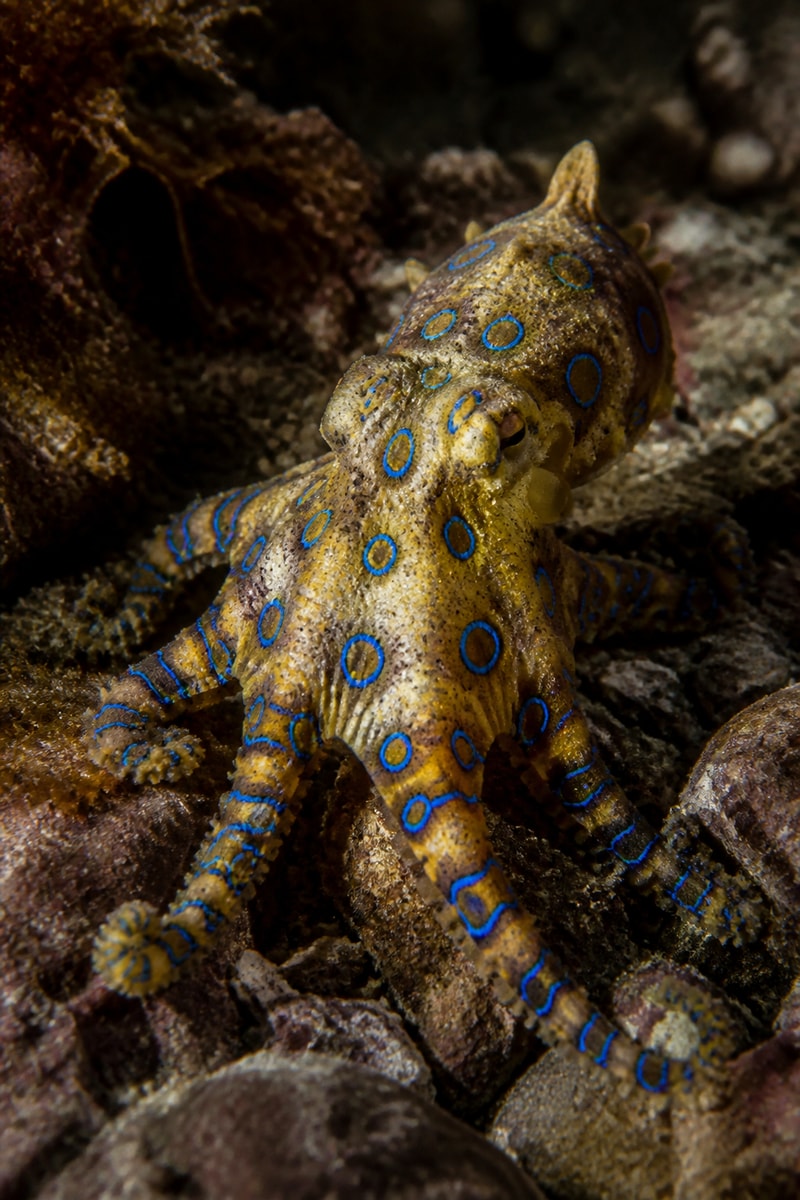
- Southern Blue-ringed Octopuslegendary • Southern Australian Reefs
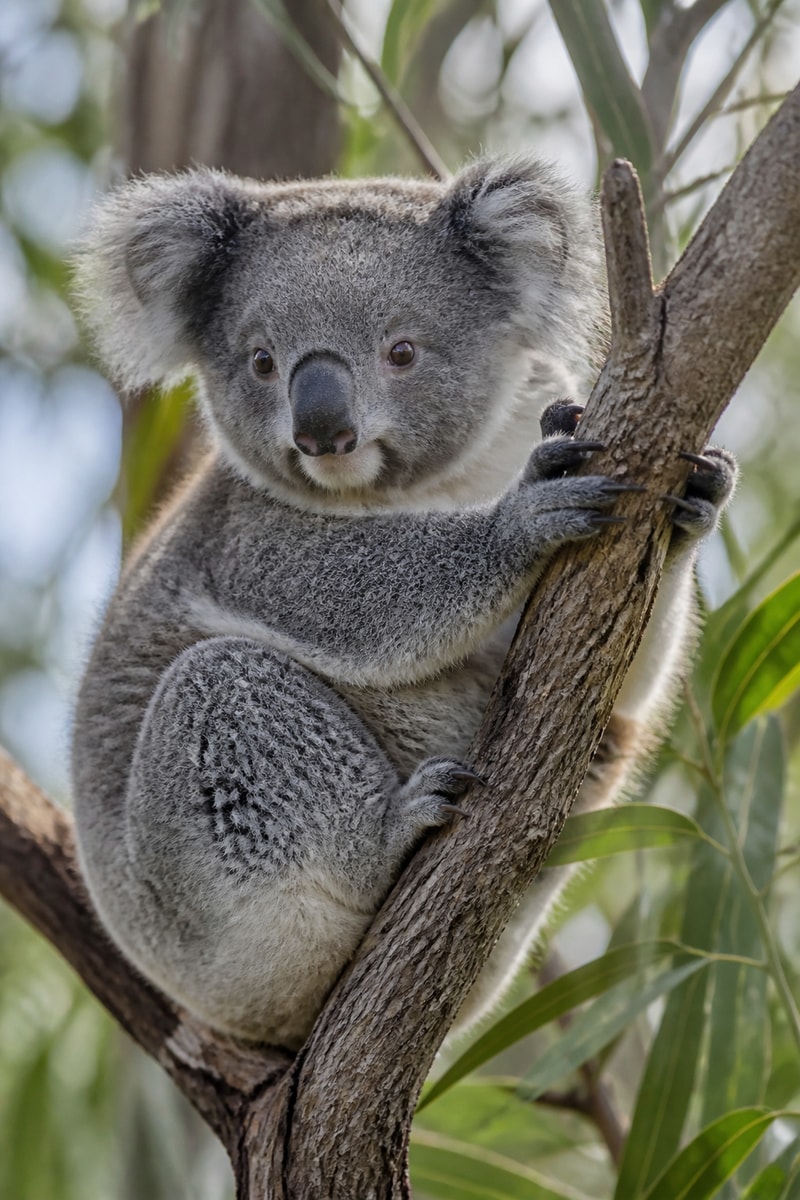
- Koalarare • Eucalyptus Forest
Free on iOS
Catch the Frilled Lizard
Spot one in the wild, then scan it in Catch'Um to log your common discovery.