
Field guide · common
Common Brushtail Possum
Silver-grey night climber with a bushy tail — Australia’s classic rooftop marsupial.
Least Concern
Trichosurus vulpecula
Overview
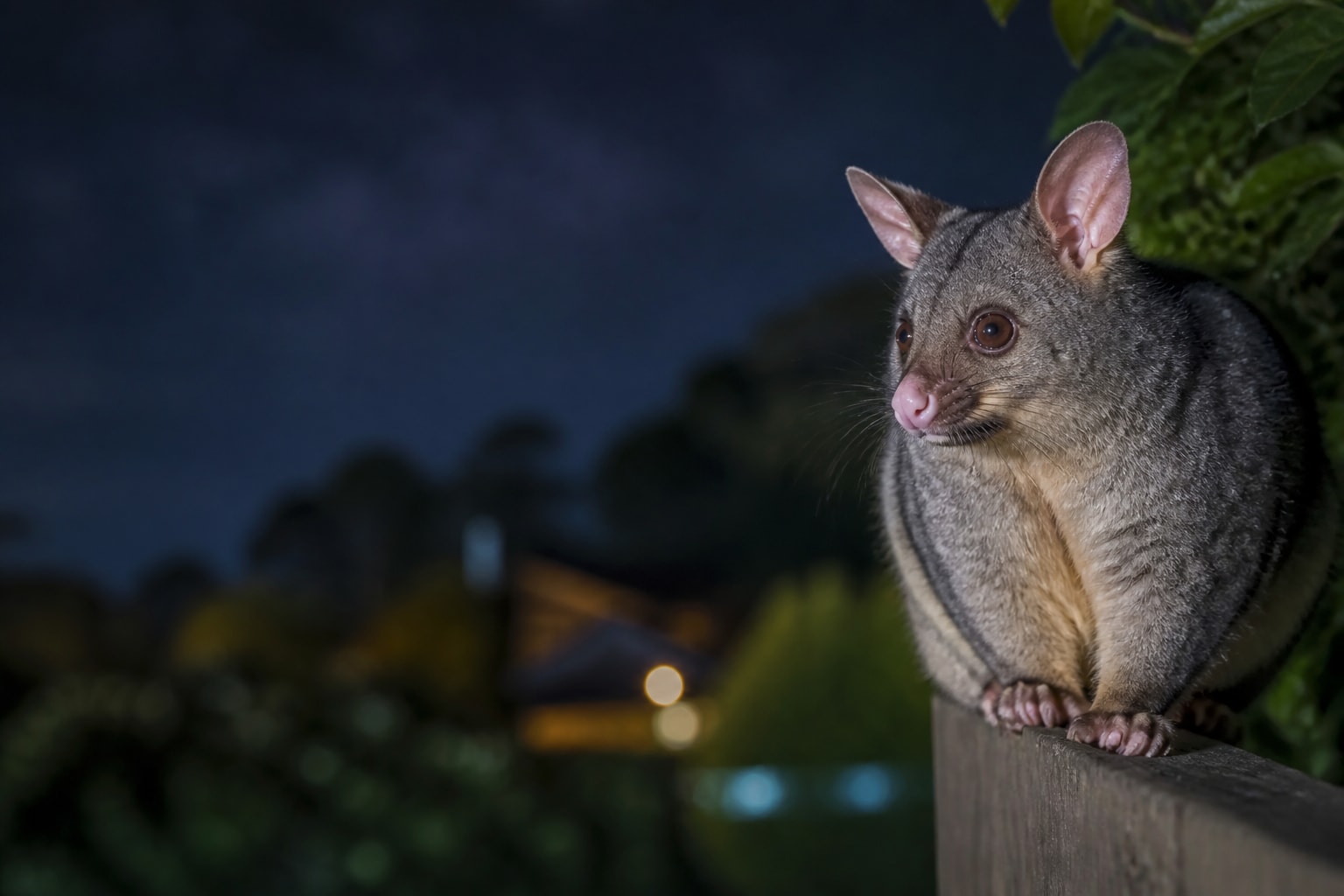
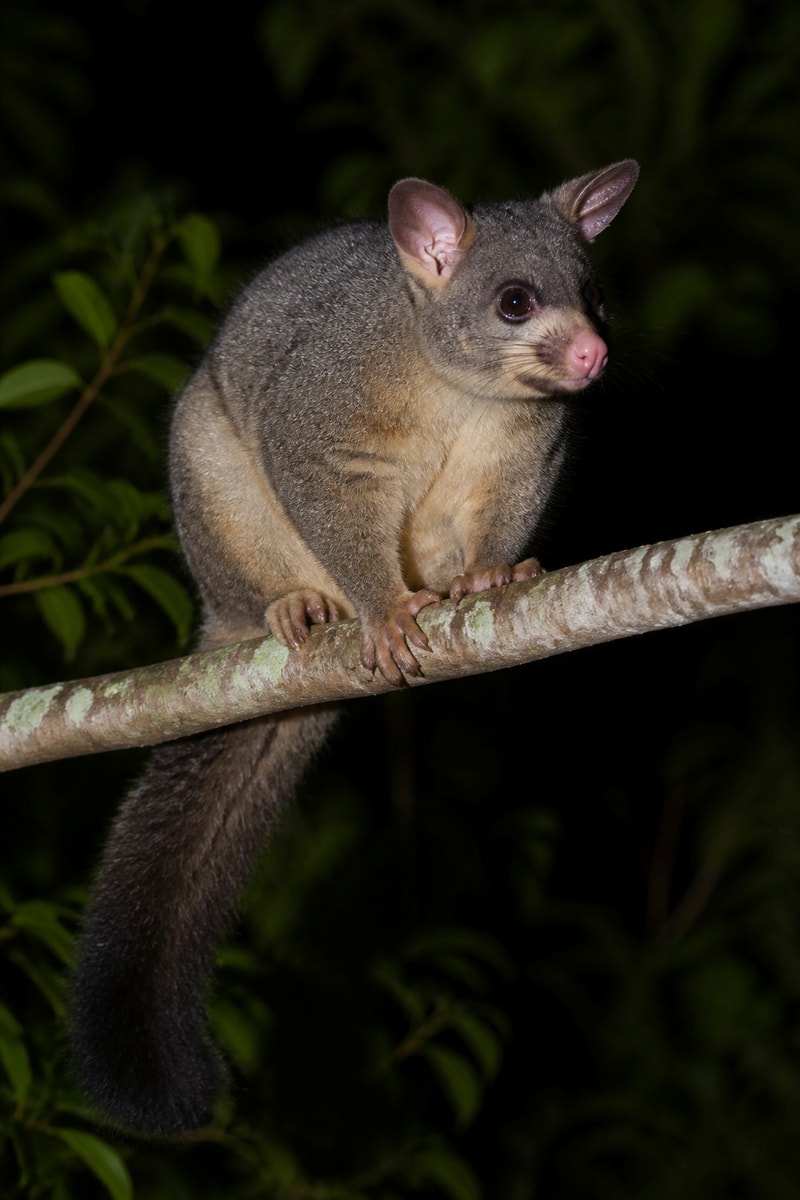
Common brushtail possums are nocturnal marsupials that scramble through trees, roofs, and powerlines after dark. A thick bushy tip to the prehensile tail and pointed face mark them apart from ringtails, and their throaty coughs and hisses echo through suburban nights.
For Australia collectors, the brushtail is a common night prize — backyard-accessible, unmistakable silhouette, and a staple of urban wildlife watching.
- Scientific nameTrichosurus vulpecula
- Length35–55 cm body; tail 25–40 cm
- Weight1.2–4.5 kg
- LifespanAround 6–13 years in the wild
- DietBrowse eucalypt and…
- ConservationLeast Concern
- RegionAustralian Night Gardens
Where to see them
Habitat
- Eucalypt woodland
- Suburban garden
- Urban roof dens
- Forest edge
Eucalypt forest, woodland, and suburban gardens across much of Australia, nesting in tree hollows, dens, or roof cavities by day.
Field notes
Field scale for the Common Brushtail Possum: length around 35-55 cm body; tail 25-40 cm; weight 1.2-4.5 kg. Typical lifespan: Around 6-13 years in the wild.
When you are scanning habitat, prioritise eucalypt woodland, suburban garden, urban roof dens, and forest edge. Those settings are where a clean look and a usable photo are most likely.
Quick ID anchor: Cat-sized grey to brown marsupial with large ears, pink nose, and a bushy black-tipped tail. Confirm with behaviour and habitat before you log the discovery.
Where to see one
Australia
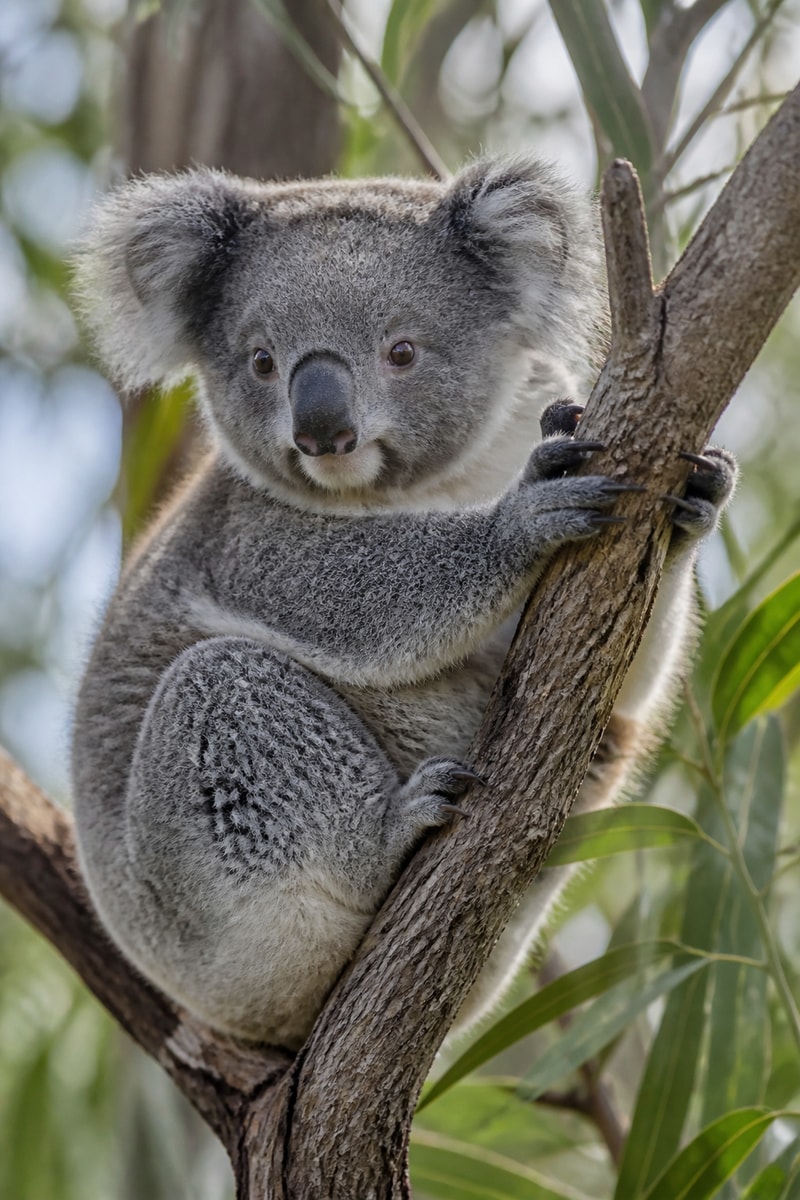
In Australia, strong options include Great Ocean Road and Kangaroo Island. Coastal eucalyptus forest and Kennett River's wild koalas, one of the most reliable places to spot them in the wild.
Open the Australia spotting guide for every park note tied to the common brushtail possum.
Diet
Browse eucalypt and other leaves, plus flowers, fruit, buds, and opportunistic invertebrates.
Often raid garden fruit trees and bird feeders in towns.
Behaviour
Solitary or loosely overlapping home ranges; active after dusk.
Communicate with coughs, hisses, and scent marks; den in hollows or roofs.
How to identify
Cat-sized grey to brown marsupial with large ears, pink nose, and a bushy black-tipped tail.
Pointed face and longer snout than the common ringtail possum.
Interesting facts
- 01
Australia’s most widespread arboreal marsupial in many towns.
- 02
Prehensile, bushy-tipped tail helps grip branches while climbing.
- 03
Nocturnal; sleeps in hollows or roof spaces by day.
- 04
Diet includes leaves, flowers, fruit, and occasional insects.
- 05
Females carry a single joey in the pouch after birth.
- 06
Introduced and invasive in New Zealand native forests.
Conservation status
Common brushtail possums are Least Concern in Australia and remain widespread. In New Zealand they are a major invasive pest impacting native forests and birds.
Sources: IUCN Red List

Keep exploring
Related discoveries
- Great White Sharklegendary • Coastal Ocean
- Saltwater Crocodilelegendary • Estuaries & Coast
- Orcalegendary • Coastal Ocean
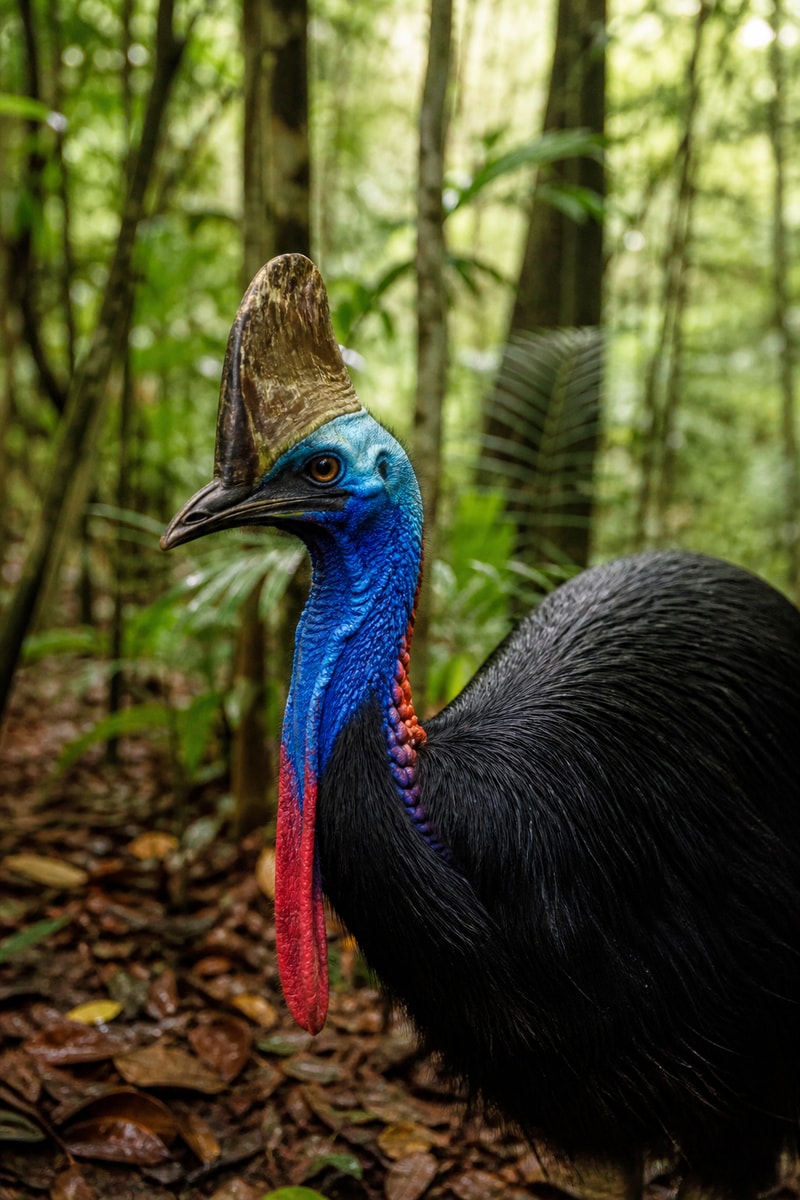
- Southern Cassowarylegendary • Rainforest
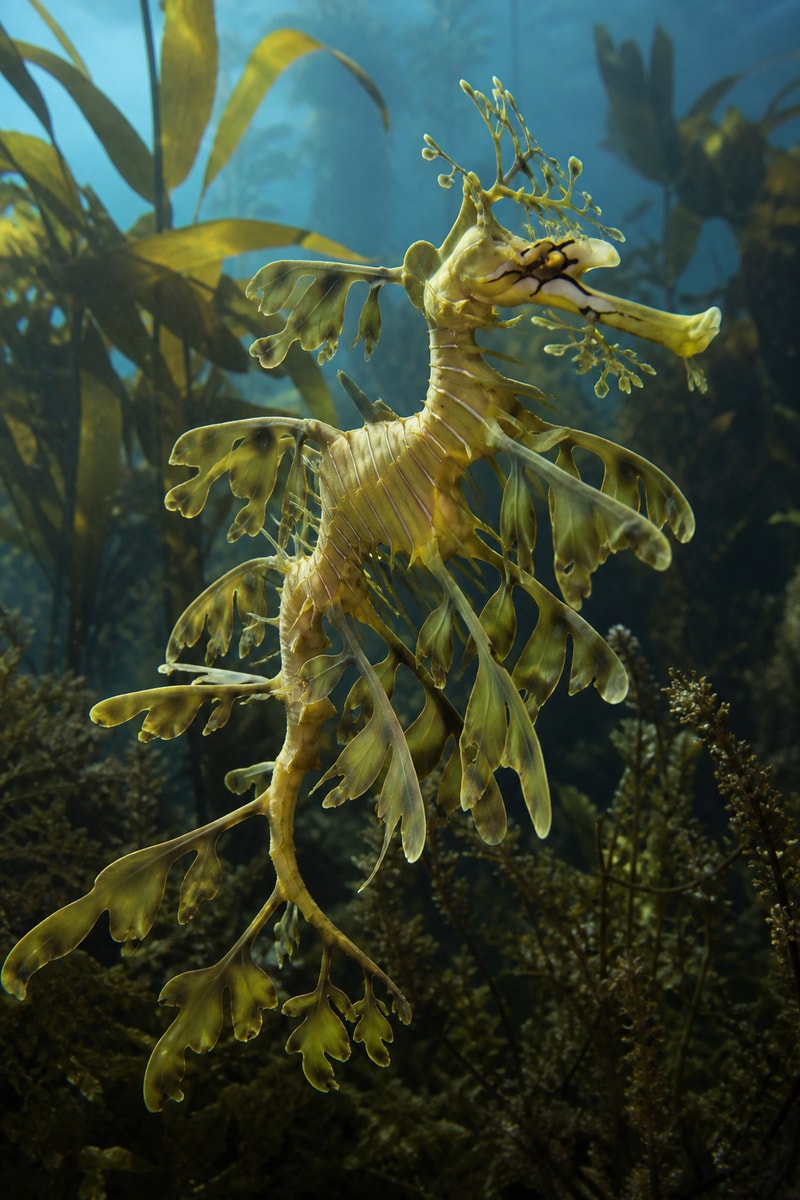
- Leafy Sea Dragonlegendary • Kelp & Seagrass
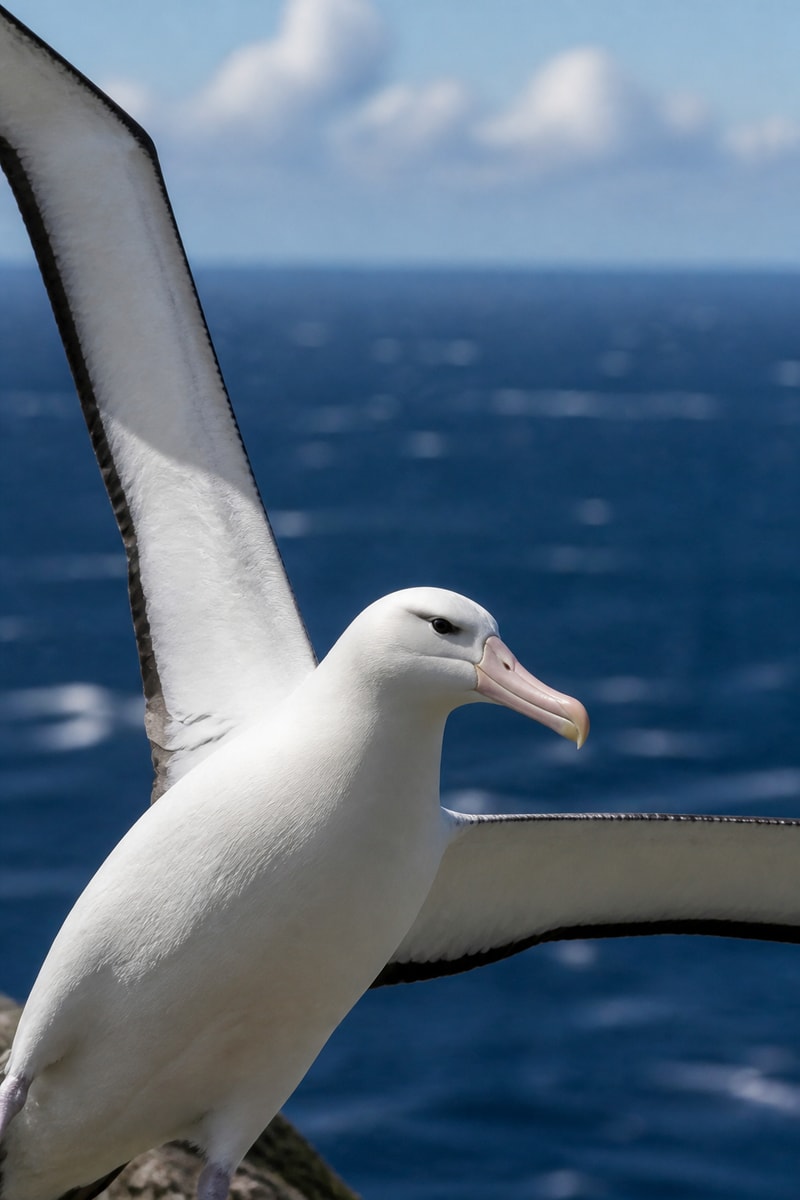
- Wandering Albatrosslegendary • Southern Ocean Skies
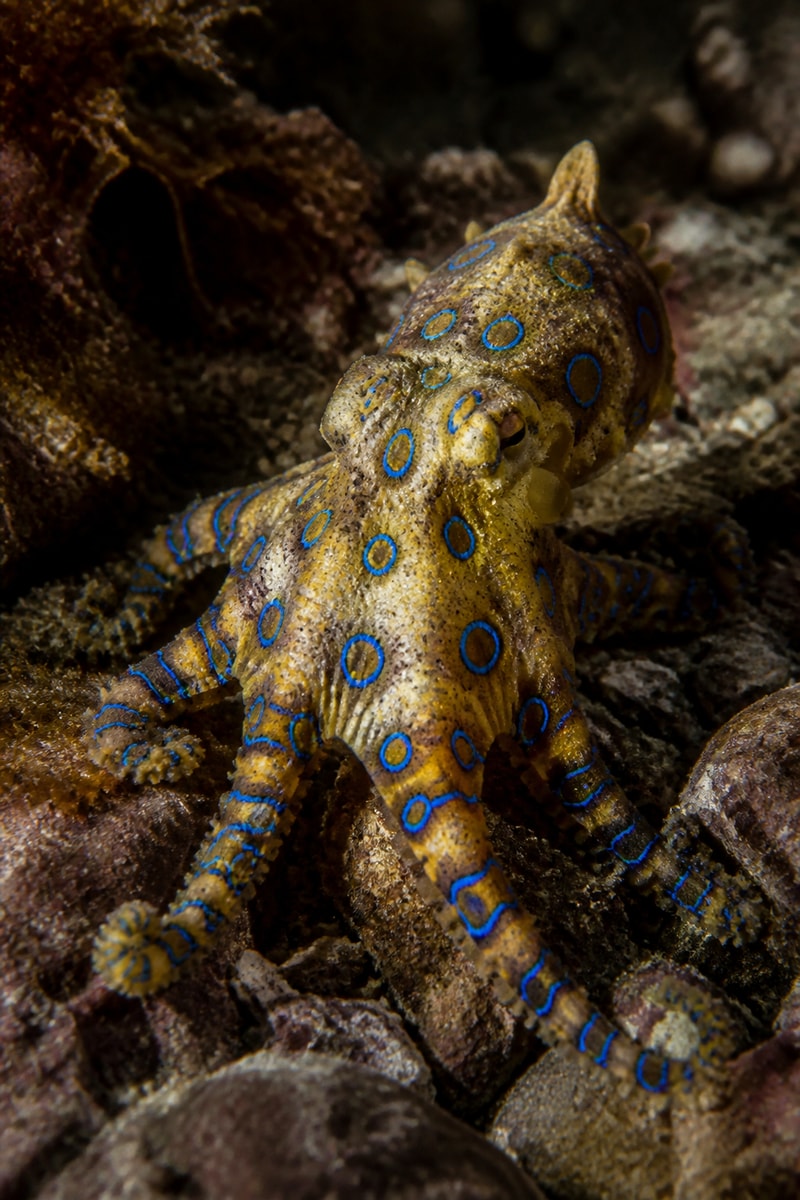
- Southern Blue-ringed Octopuslegendary • Southern Australian Reefs
- Koalarare • Eucalyptus Forest
Free on iOS
Catch the Common Brushtail Possum
Spot one in the wild, then scan it in Catch'Um to log your common discovery.