
Field guide · rare
Panther Chameleon
Madagascar's colour-shifting showpiece — turrets for eyes, a projectile tongue, and male colours that look painted.
Least Concern
Furcifer pardalis
Overview
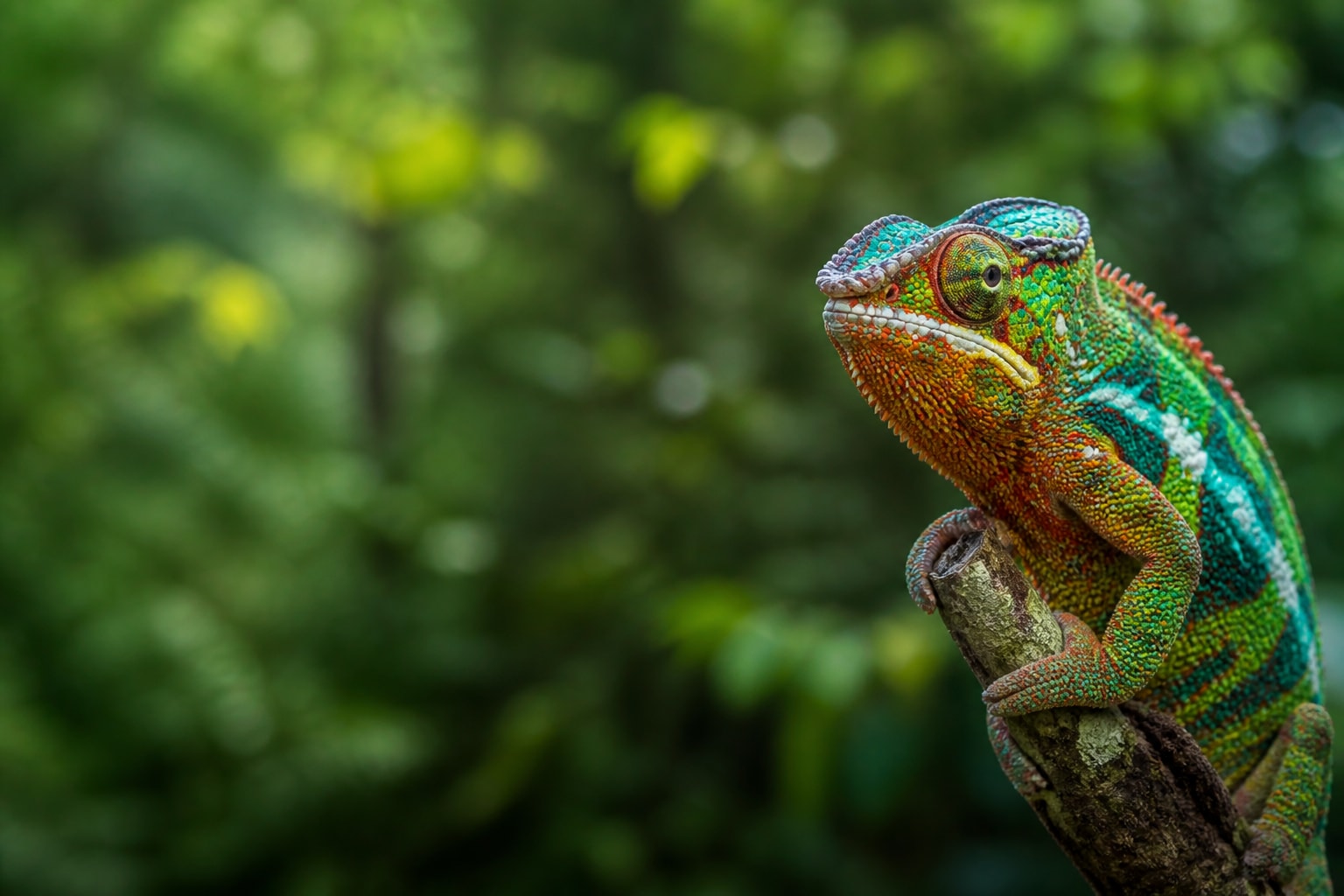
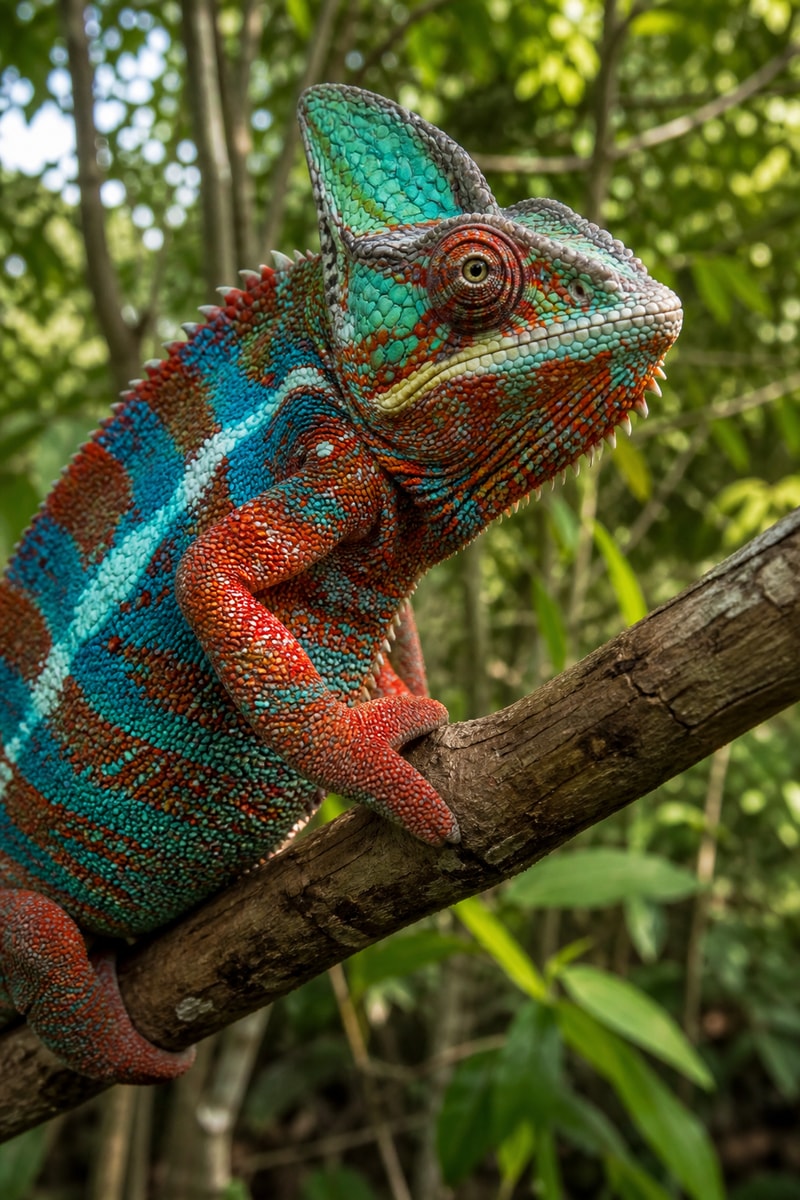
Panther chameleons are Madagascar's most famous colourists. Males can blaze turquoise, red, and green depending on locality and mood, while independently swivelling eyes track insects before a tongue strike faster than a blink.
A perfect endemic reptile card beside indri, fossa, and aye-aye for Madagascar collectors.
- Scientific nameFurcifer pardalis
- Length30–50 cm including tail
- Weight140–180 g typical males
- LifespanAround 3–6 years in the wild
- DietInsects and other small…
- ConservationLeast Concern
- RegionMadagascar Forest
Where to see them
Habitat
- Coastal forest
- Secondary scrub
- Plantations
Coastal and lowland forests, plantations, and scrub of northern and eastern Madagascar with shrubs and trees for climbing.
Field notes
Field scale for the Panther Chameleon: length around 30-50 cm including tail; weight 140-180 g typical males. Typical lifespan: Around 3-6 years in the wild.
When you are scanning habitat, prioritise coastal forest, secondary scrub, and plantations. Those settings are where a clean look and a usable photo are most likely.
Quick ID anchor: Laterally compressed chameleon with a casque head and prehensile tail. Confirm with behaviour and habitat before you log the discovery.
Where to see one
Madagascar
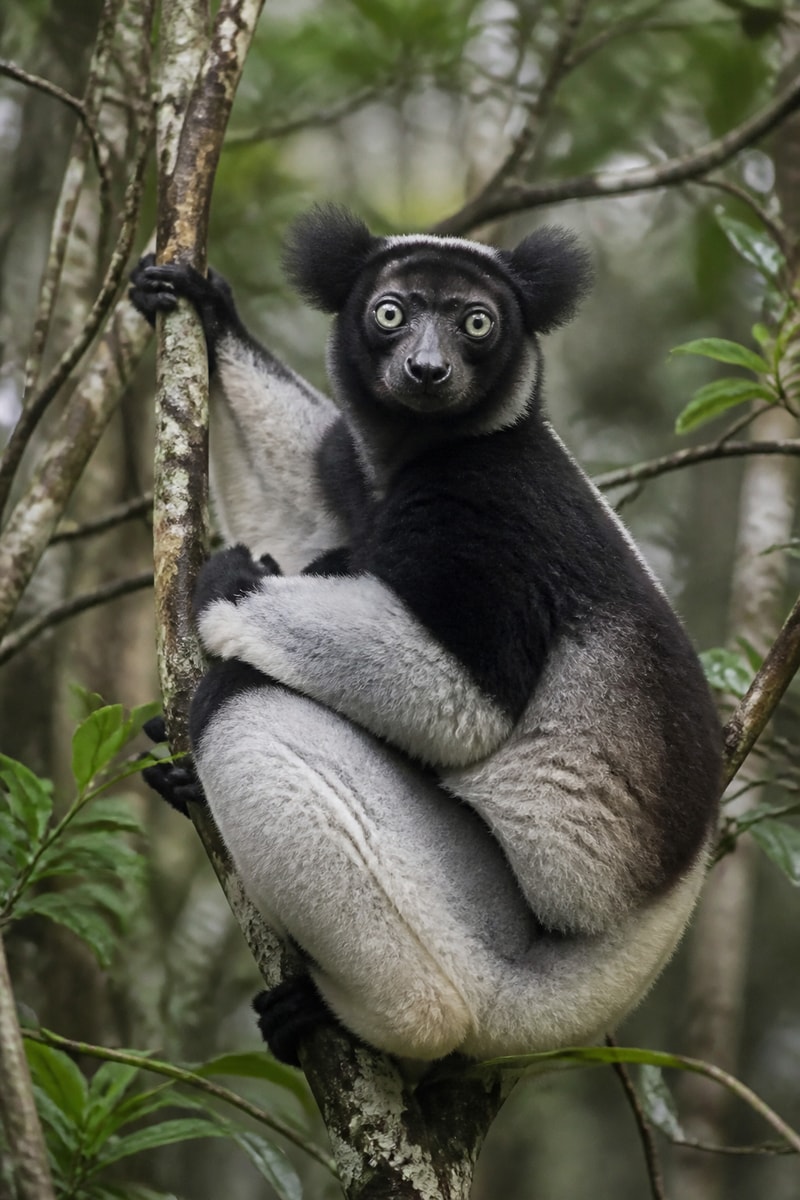
In Madagascar, start at Andasibe-Mantadia National Park (Eastern Madagascar). Rainforest reserve where indri lemurs' haunting calls carry for kilometres, and night walks may reveal aye-ayes tapping for grubs.
More context on this destination lives on the Madagascar expedition page.
Diet
Insects and other small arthropods caught with a ballistic tongue.
Sit-and-wait hunters on branches and shrubs.
Behaviour
Solitary and territorial; males display vivid colours when rival or courting.
Slow rocking walk and independently moving eyes.
How to identify
Laterally compressed chameleon with a casque head and prehensile tail.
Males larger and far more colourful than females; colour varies by region.
Interesting facts
- 01
Males show locality-specific colour morphs across Madagascar.
- 02
Eyes can move independently to scan for prey and threats.
- 03
Tongues can extend longer than the body to catch insects.
- 04
Colour change signals mood and social status as well as camouflage.
- 05
Feet are zygodactyl — arranged for gripping branches.
- 06
They are arboreal and usually solitary.
Conservation status
Panther chameleons are Least Concern but face habitat loss and collection pressure in some areas. Intact northern Madagascar forests support the brightest wild morphs.
Sources: IUCN Red List
Keep exploring
Related discoveries
- Aye-ayelegendary • Madagascar Rainforest
- Fossalegendary • Madagascar Forest
- Indrilegendary • Madagascar Rainforest
- Radiated Tortoiselegendary • Madagascar Spiny Forest
- Ring-tailed Lemurrare • Dry Forest
- Verreaux's Sifakarare • Madagascar Dry Forest
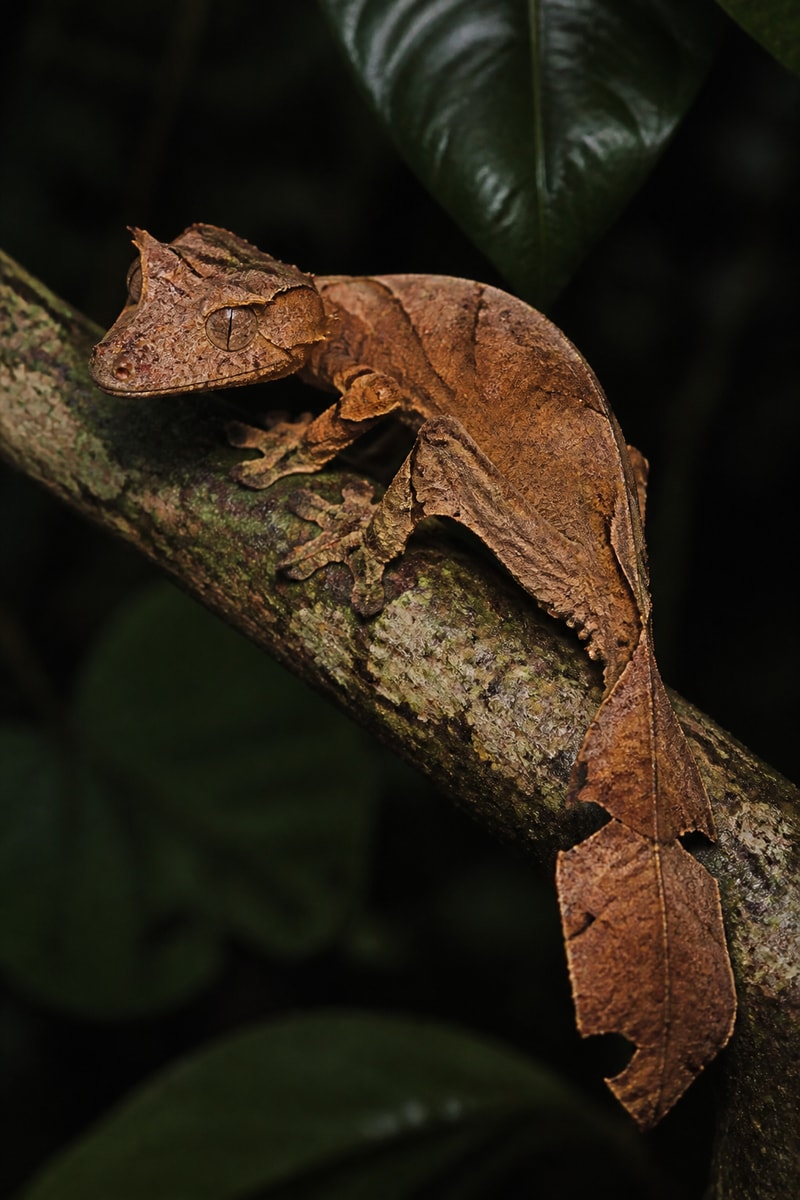
- Satanic Leaf-tailed Geckorare • Madagascar Rainforest
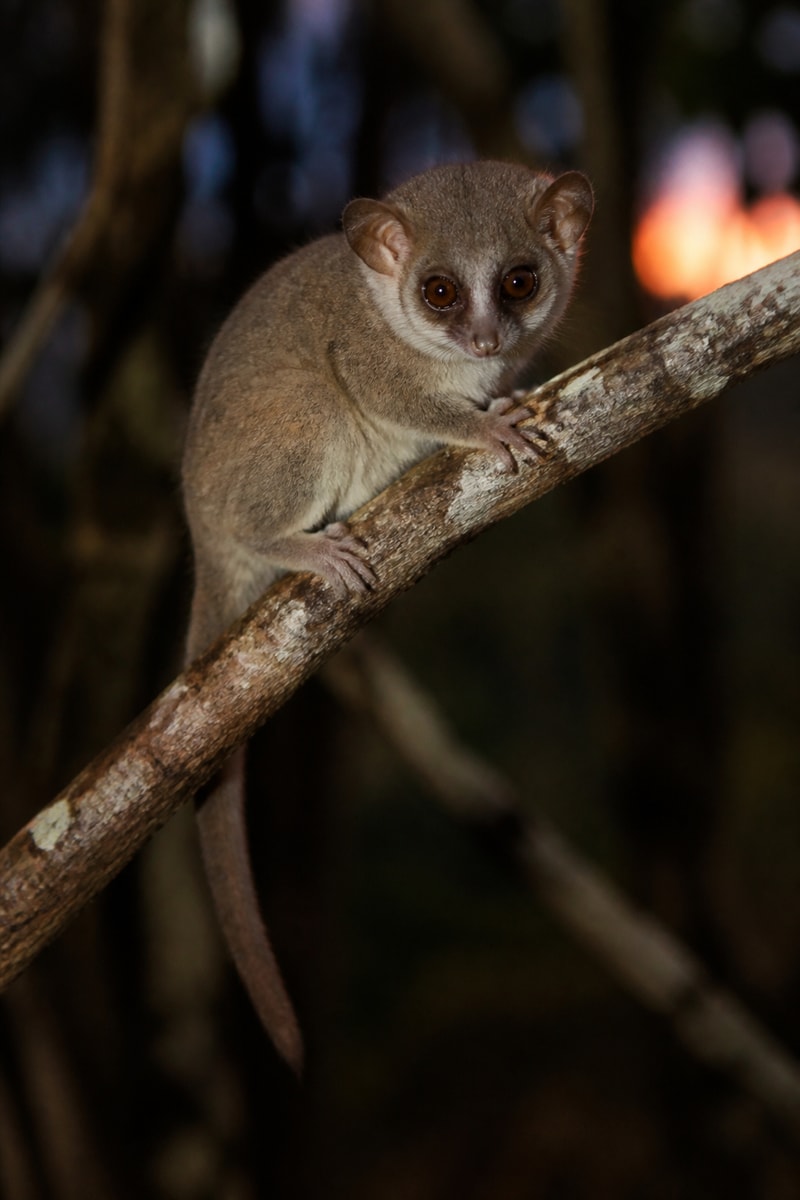
- Grey Mouse Lemurcommon • Madagascar Dry Forest
Free on iOS
Catch the Panther Chameleon
Spot one in the wild, then scan it in Catch'Um to log your rare discovery.