
Field guide · legendary
Fossa
Madagascar's top predator — a sleek, cat-like carnivore that hunts lemurs through the canopy.
Vulnerable
Cryptoprocta ferox
Overview
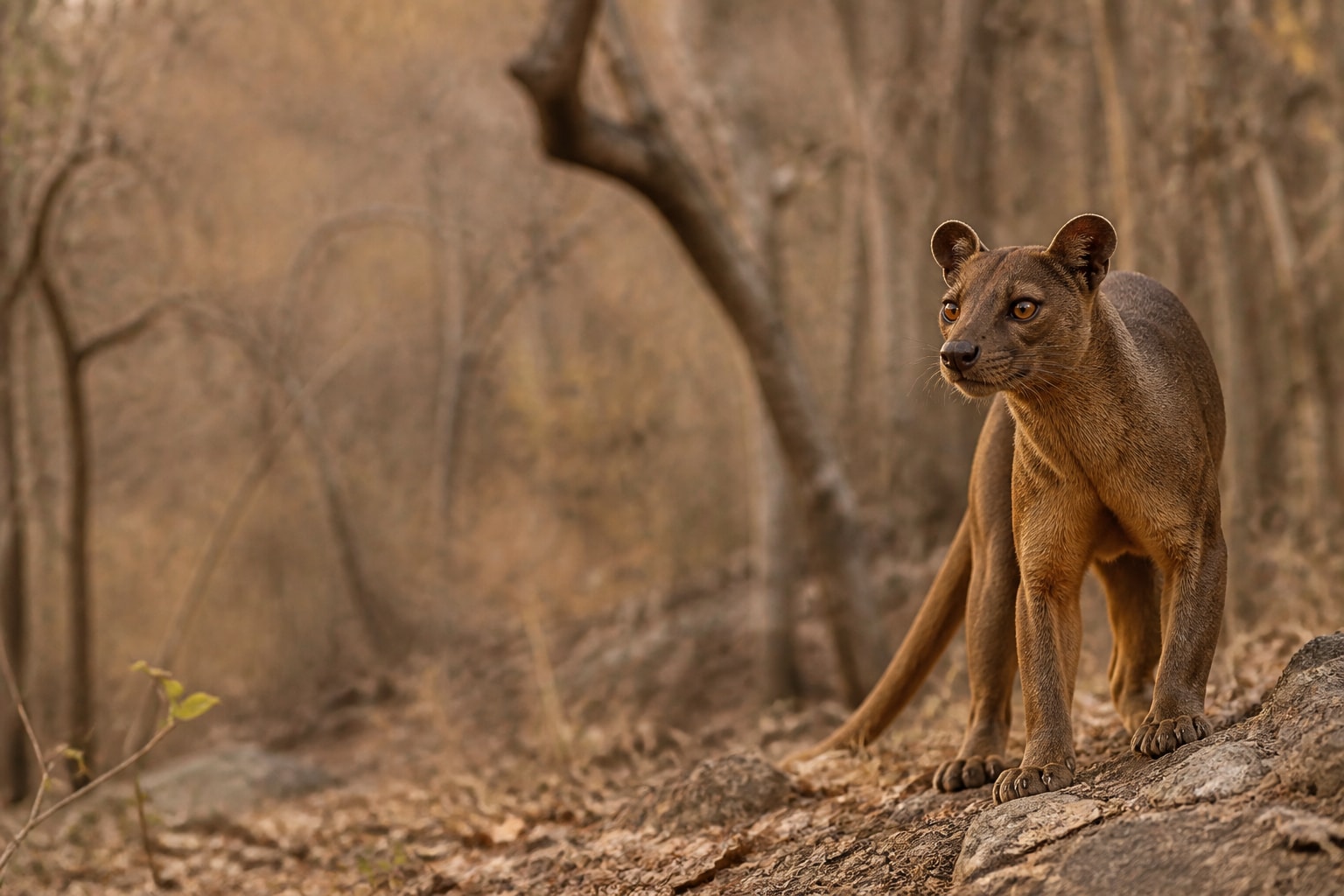
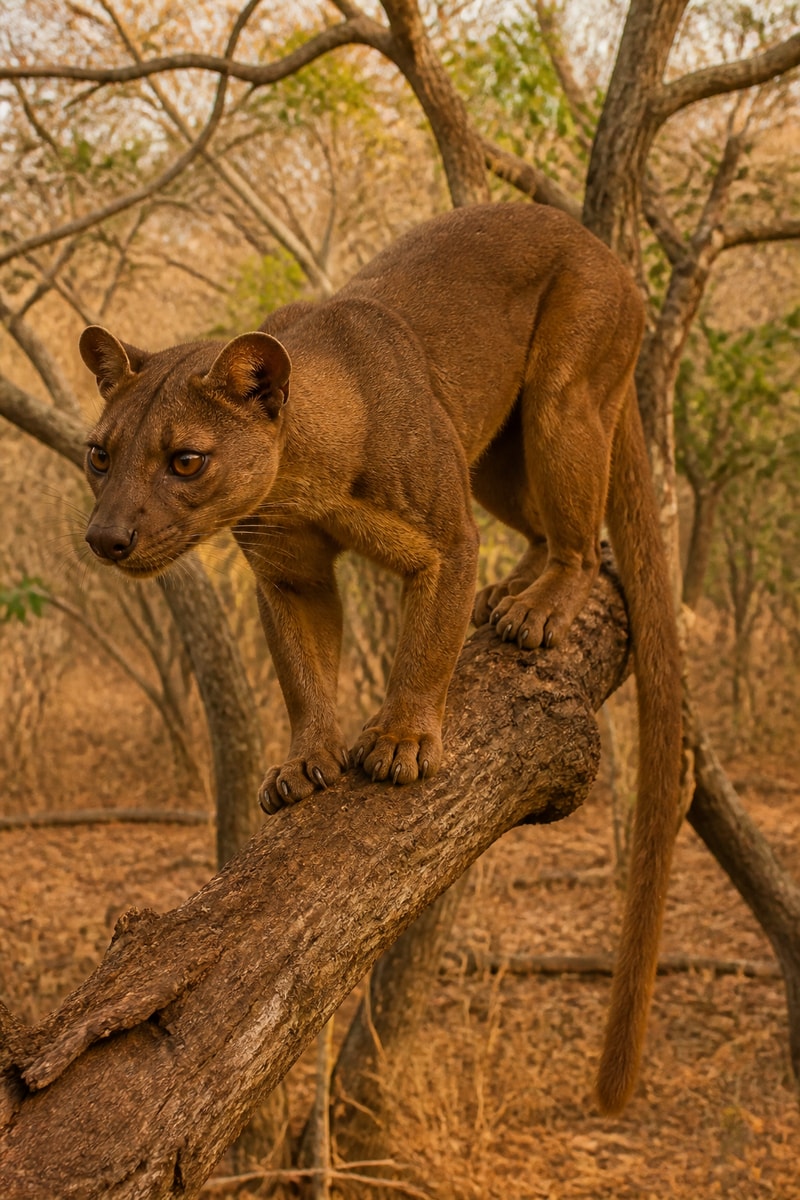
The fossa is Madagascar's largest native carnivore: long, low, and muscular, with a face that suggests both cat and mongoose. It is an agile climber that pursues lemurs through the trees as skilfully as it stalks on the ground.
Paired with ring-tailed lemurs and aye-ayes, the fossa completes Madagascar's Catch'Um story — the island's own apex hunter, rarely seen and genuinely legendary.
- Scientific nameCryptoprocta ferox
- Length70–80 cm body; tail 65–70 cm
- Weight5–10 kg
- LifespanAround 15–20 years in the wild
- DietCarnivore
- ConservationVulnerable
- RegionMadagascar Forest
Where to see them
Habitat
- Dry forest
- Rainforest
- Spiny forest edge
Fossas inhabit Madagascar's forests from dry deciduous woodland in the west to eastern rainforest. They need contiguous forest with healthy lemur prey and den sites in rock crevices, hollow trees, or termite mounds.
Field notes
Field scale for the Fossa: length around 70-80 cm body; tail 65-70 cm; weight 5-10 kg. Typical lifespan: Around 15-20 years in the wild.
When you are scanning habitat, prioritise dry forest, rainforest, and spiny forest edge. Those settings are where a clean look and a usable photo are most likely.
Quick ID anchor: Sleek reddish-brown coat, short muzzle, rounded ears, and a very long tail. Confirm with behaviour and habitat before you log the discovery.
Where to see one
Madagascar
In Madagascar, start at Andasibe-Mantadia National Park (Eastern Madagascar). Rainforest reserve where indri lemurs' haunting calls carry for kilometres, and night walks may reveal aye-ayes tapping for grubs.
More context on this destination lives on the Madagascar expedition page.
Diet
Carnivore specialising on lemurs, plus tenrecs, rodents, birds, and reptiles.
Hunts both on the ground and high in the canopy.
Behaviour
Mostly solitary and often crepuscular or nocturnal.
Excellent climber; uses a long tail for balance when pursuing prey through trees.
How to identify
Sleek reddish-brown coat, short muzzle, rounded ears, and a very long tail.
Cat-like build but with a longer body and more mongoose-like face up close.
Interesting facts
- 01
The fossa is Madagascar's largest carnivore and top native predator.
- 02
Despite a cat-like look, it belongs to a family unique to Madagascar (Eupleridae).
- 03
It can hunt lemurs by chasing them through the canopy.
- 04
A fossa's tail is nearly as long as its body and aids arboreal balance.
- 05
Females may share a mating tree where several males compete.
- 06
They scent-mark territories with glands under the tail.
Conservation status
Fossas are Vulnerable. Deforestation and declining lemur prey shrink their range. Intact forest blocks and protected parks across Madagascar are essential for this endemic predator.
Sources: IUCN Red List

Keep exploring
Where it lives
Related discoveries
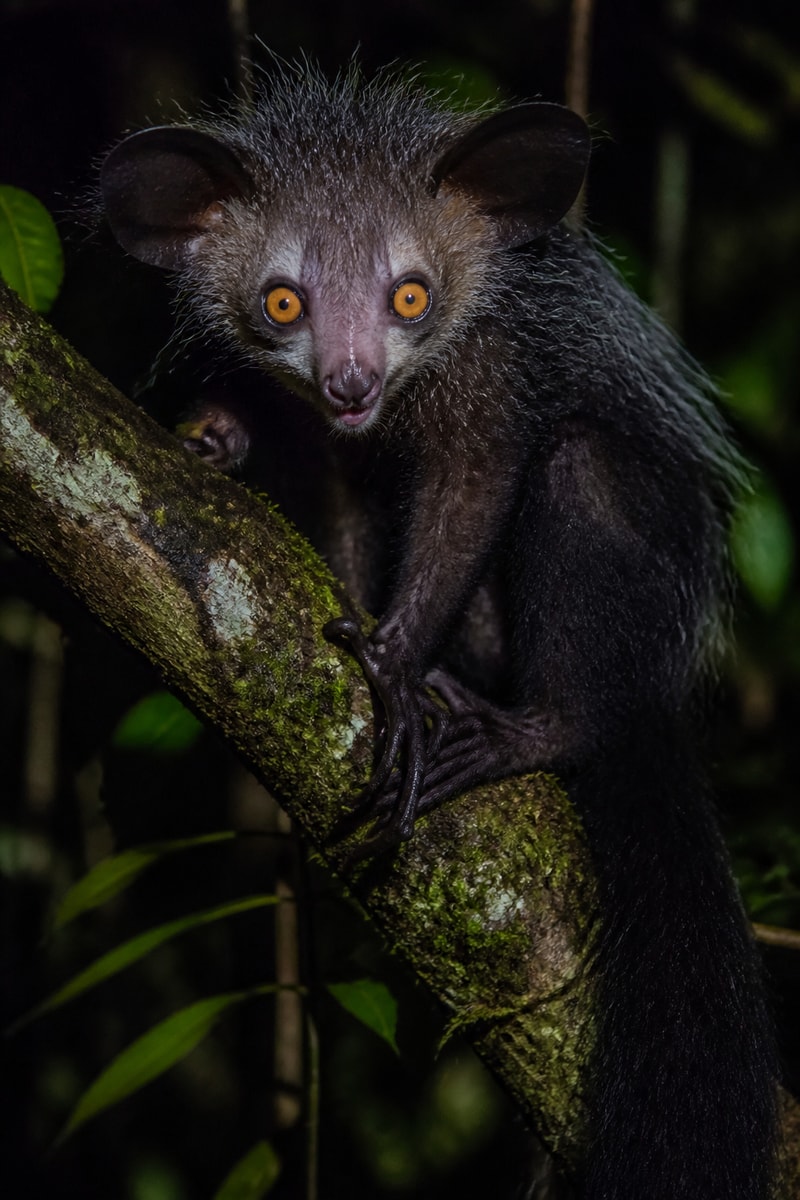
- Aye-ayelegendary • Madagascar Rainforest
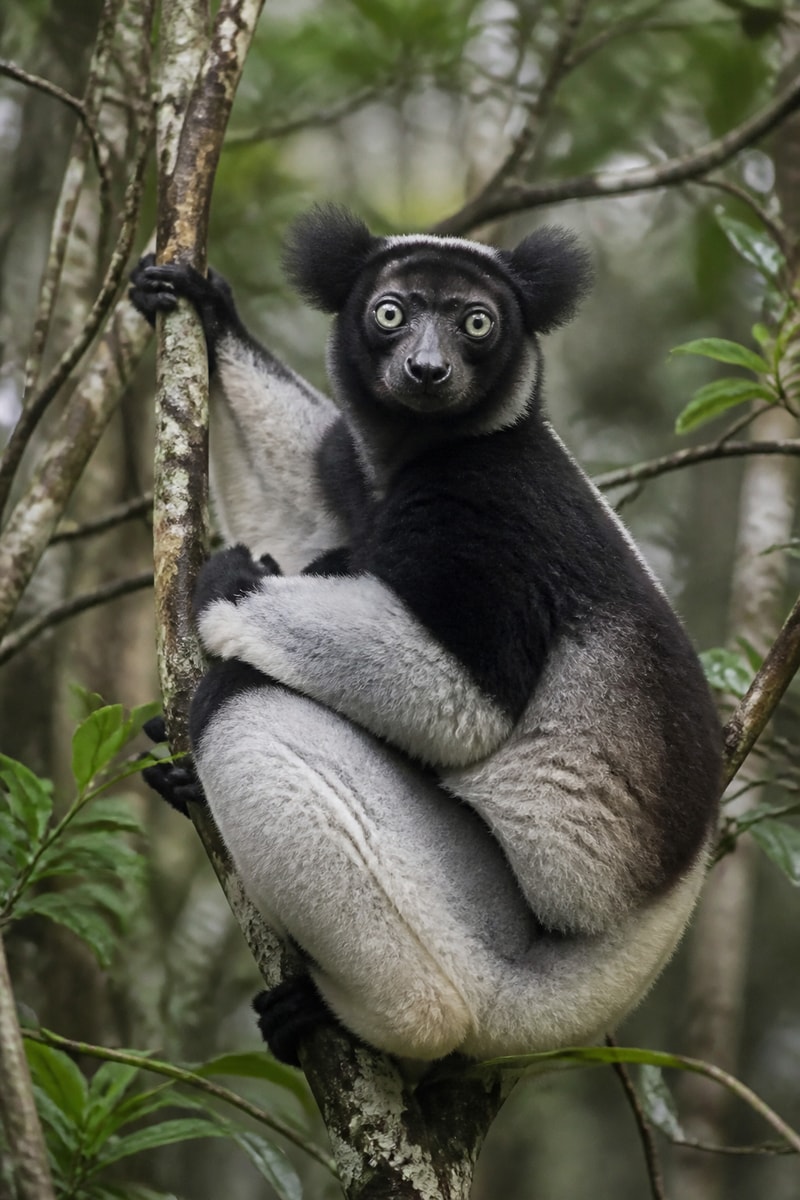
- Indrilegendary • Madagascar Rainforest
- Radiated Tortoiselegendary • Madagascar Spiny Forest
- Ring-tailed Lemurrare • Dry Forest
- Panther Chameleonrare • Madagascar Forest
- Verreaux's Sifakarare • Madagascar Dry Forest
- Satanic Leaf-tailed Geckorare • Madagascar Rainforest
- Grey Mouse Lemurcommon • Madagascar Dry Forest
Free on iOS
Catch the Fossa
Spot one in the wild, then scan it in Catch'Um to log your legendary discovery.