
Field guide · rare
Sunda Slow Loris
Huge eyes, deliberate moves, and a venomous bite — Southeast Asia's nocturnal slow-motion primate.
Endangered
Nycticebus coucang
Overview
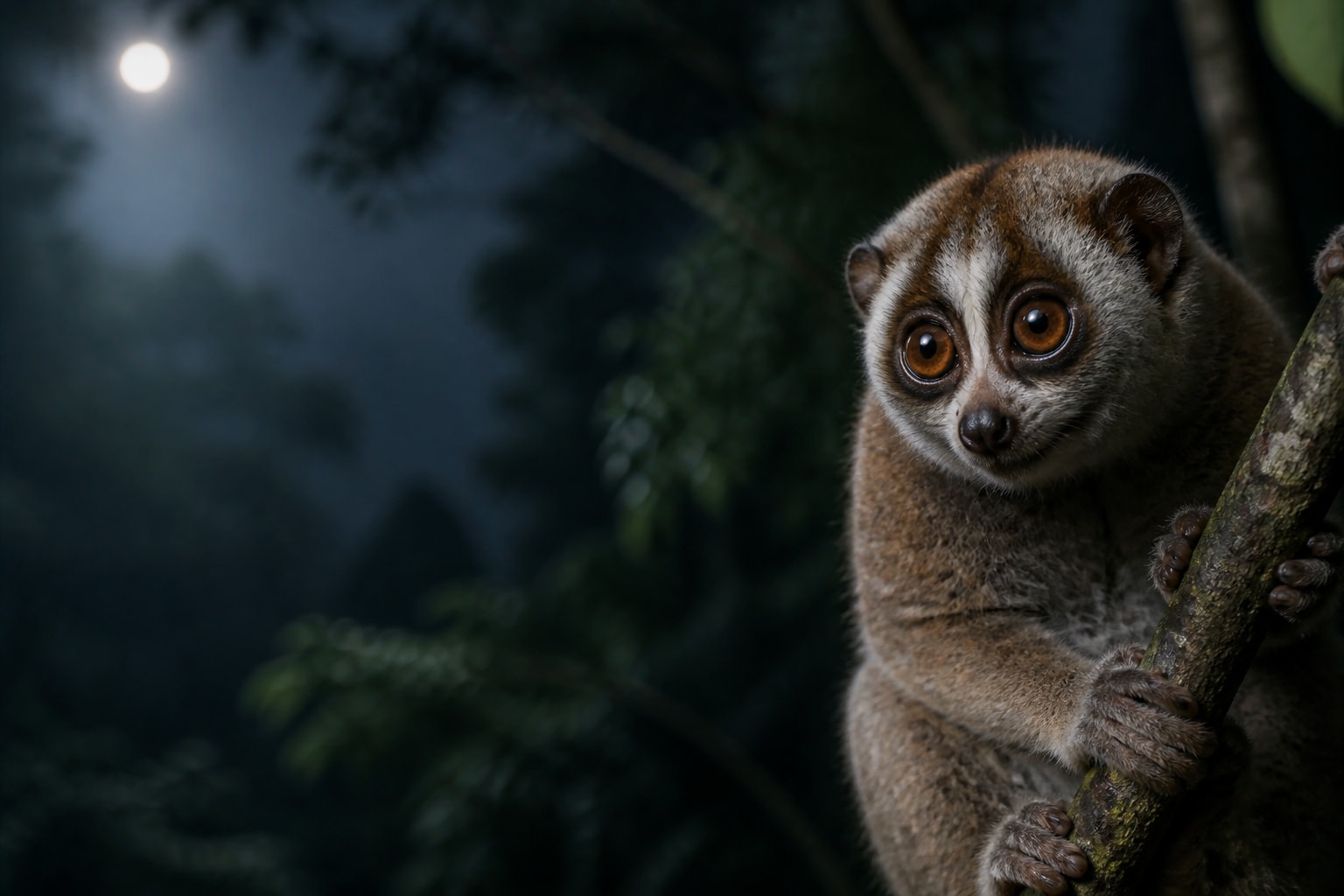
The Sunda slow loris is a small nocturnal primate of Southeast Asian forests, famous for enormous forward-facing eyes and unhurried, deliberate climbing. Unusually among primates, slow lorises can deliver a venomous bite by mixing arm-gland secretions with saliva.
Illegal pet trade has made them tragically familiar online; seeing one wild and free in Indonesian forest is a rare, meaningful Catch'Um discovery.
- Scientific nameNycticebus coucang
- Length27–38 cm
- Weight600–700 g typical
- LifespanAround 15–20 years in the wild
- DietTree gums and saps
- ConservationEndangered
- RegionRainforest Canopy
Where to see them
Habitat
- Tropical rainforest
- Secondary forest
- Connected canopy
Sunda slow lorises inhabit tropical rainforest, secondary forest, and plantations with connected canopy in Indonesia and neighbouring parts of Southeast Asia. They need continuous branches for slow climbing and daytime sleep sites in dense cover.
Field notes
Field scale for the Sunda Slow Loris: length around 27-38 cm; weight 600-700 g typical. Typical lifespan: Around 15-20 years in the wild.
When you are scanning habitat, prioritise tropical rainforest, secondary forest, and connected canopy. Those settings are where a clean look and a usable photo are most likely.
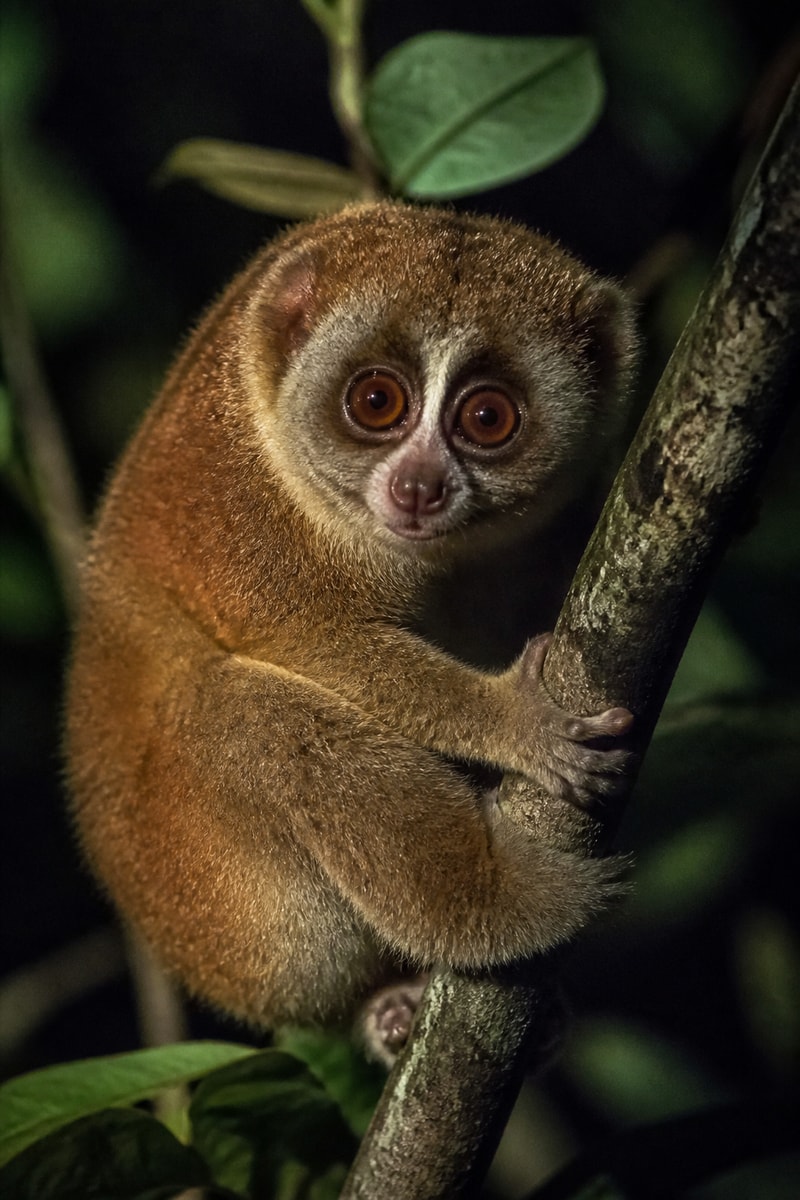
Quick ID anchor: Round head, huge orange-brown eyes, short ears almost hidden in fur, and a short stubby tail. Confirm with behaviour and habitat before you log the discovery.
Diet
Tree gums and saps, nectar, fruit, insects, and small vertebrates.
Specialised toothcomb and strong grip support gum-feeding in the canopy.
Behaviour
Nocturnal and usually solitary while foraging; sleep by day rolled in dense foliage.
Move slowly and carefully; raise arms when threatened before a defensive bite.
How to identify
Round head, huge orange-brown eyes, short ears almost hidden in fur, and a short stubby tail.
Brown or greyish coat with a dark dorsal stripe in many individuals.
Interesting facts
- 01
Slow lorises are among the few venomous mammals.
- 02
Huge eyes help them see in near-total darkness.
- 03
They move with deliberate grips — rarely leaping like other primates.
- 04
The illegal pet trade is a major threat; wild lorises belong in trees.
- 05
They eat tree gum, insects, and fruit in the canopy at night.
- 06
A unique toothcomb helps scrape gum from bark.
Conservation status
Sunda slow lorises are Endangered. Habitat loss and intensive trapping for the pet trade have devastated wild populations. Enforcement against trafficking and protection of connected forest canopy are essential.
Sources: IUCN Red List

Keep exploring
Related discoveries
Free on iOS
Catch the Sunda Slow Loris
Spot one in the wild, then scan it in Catch'Um to log your rare discovery.