
Field guide · rare
Proboscis Monkey
Borneo's big-nosed river primate — pot-bellied, superbly adapted to swimming, and impossible to confuse with anything else.
Endangered
Nasalis larvatus
Overview
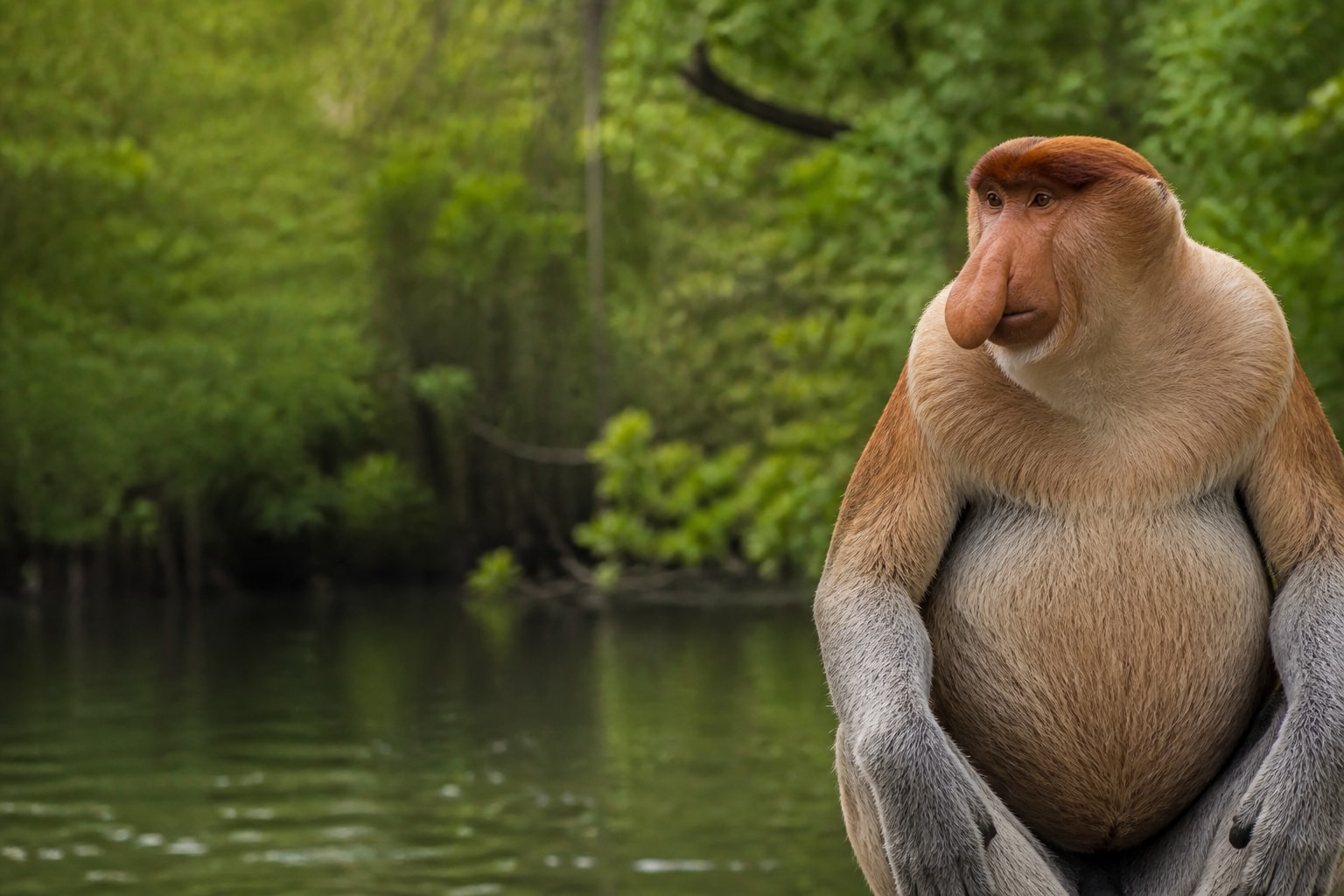
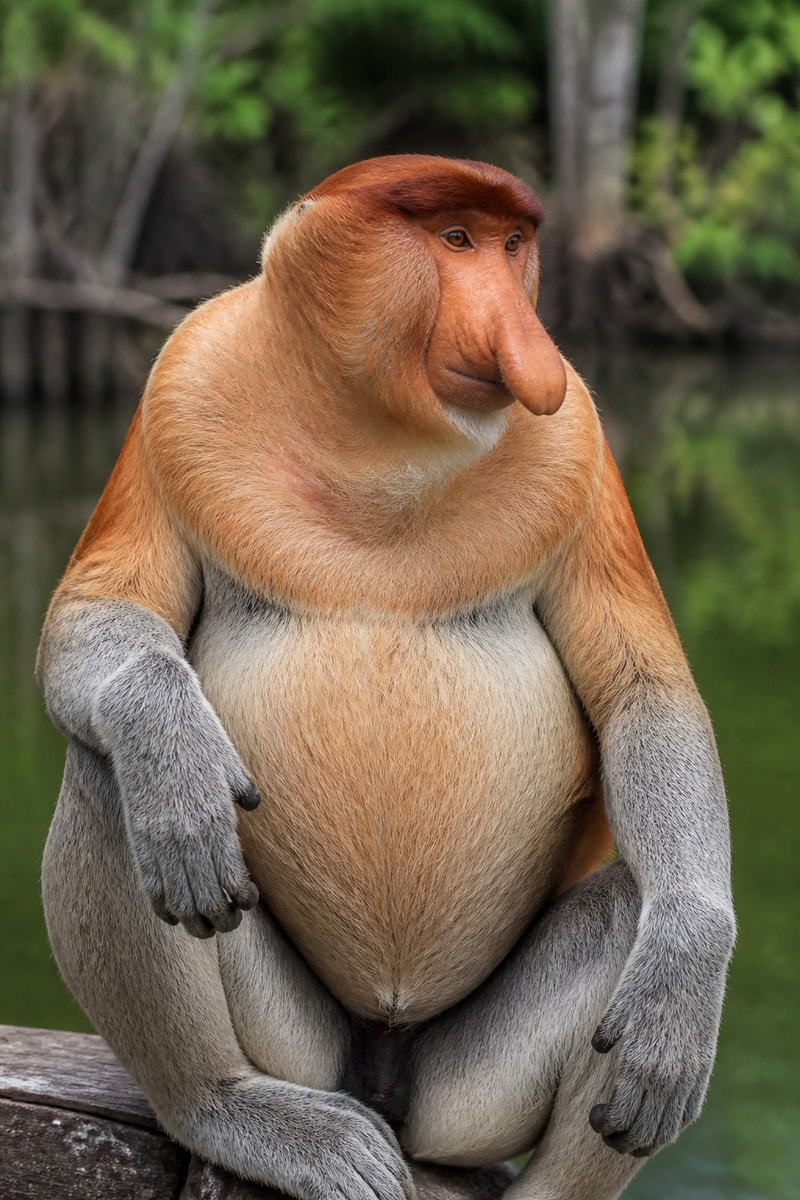
The proboscis monkey is endemic to Borneo and instantly recognisable: adult males sport a pendulous nose that can hang past the mouth, a swollen belly, and a long tail used for balance in riverside trees.
They live in mangrove and riverine forest, diving into water to escape danger or cross channels. For Indonesia collectors, a troop of pot-bellied silhouettes against a mangrove dawn is a uniquely Bornean Catch'Um card.
- Scientific nameNasalis larvatus
- Length66–76 cm body; tail similar length
- WeightFemales ~7–12 kg; males 16–22 kg
- LifespanAround 15–20 years in the wild
- DietPrimarily young leaves
- ConservationEndangered
- RegionMangrove & River Forest
Where to see them
Habitat
- Mangrove
- Peat-swamp forest
- Riverine forest
Proboscis monkeys are confined to coastal mangrove, peat swamp, and riverine forest of Borneo (Indonesia and Malaysia). They rarely stray far from water and favour forests with a continuous canopy along tidal rivers.
Field notes
Field scale for the Proboscis Monkey: length around 66-76 cm body; tail similar length; weight Females ~7-12 kg; males 16-22 kg. Typical lifespan: Around 15-20 years in the wild.
When you are scanning habitat, prioritise mangrove, peat-swamp forest, and riverine forest. Those settings are where a clean look and a usable photo are most likely.
Quick ID anchor: Reddish-brown coat, grey limbs, huge male nose, and a conspicuously pot-bellied silhouette. Confirm with behaviour and habitat before you log the discovery.
Diet
Primarily young leaves, seeds, and unripe fruit from riverside and mangrove trees.
Specialised stomach microbes help break down fibrous foliage.
Behaviour
Live in harem groups with one adult male and several females, or in all-male bachelor bands.
Often rest in riverside trees at midday and swim or wade between forest patches.
How to identify
Reddish-brown coat, grey limbs, huge male nose, and a conspicuously pot-bellied silhouette.
Long tail; infants have a startling blue face.
Interesting facts
- 01
Only found on the island of Borneo.
- 02
Adult males develop a large drooping nose that may amplify calls.
- 03
They are excellent swimmers and can dive underwater to escape predators.
- 04
The pot belly houses a specialised gut for digesting leaves.
- 05
Groups often sleep in riverside trees, leaping into water if threatened.
- 06
Infants are born with a bright blue face that fades with age.
Conservation status
Proboscis monkeys are Endangered. Mangrove clearance, aquaculture, and hunting have fragmented riverside habitat. Protected river corridors in Kalimantan and Sabah are vital to their survival.
Sources: IUCN Red List
Keep exploring
Related discoveries
Free on iOS
Catch the Proboscis Monkey
Spot one in the wild, then scan it in Catch'Um to log your rare discovery.