
Field guide · rare
Orchid Mantis
A living blossom with a strike — petal-leg camouflage from Indonesia's rainforests.
Least Concern
Hymenopus coronatus
Overview
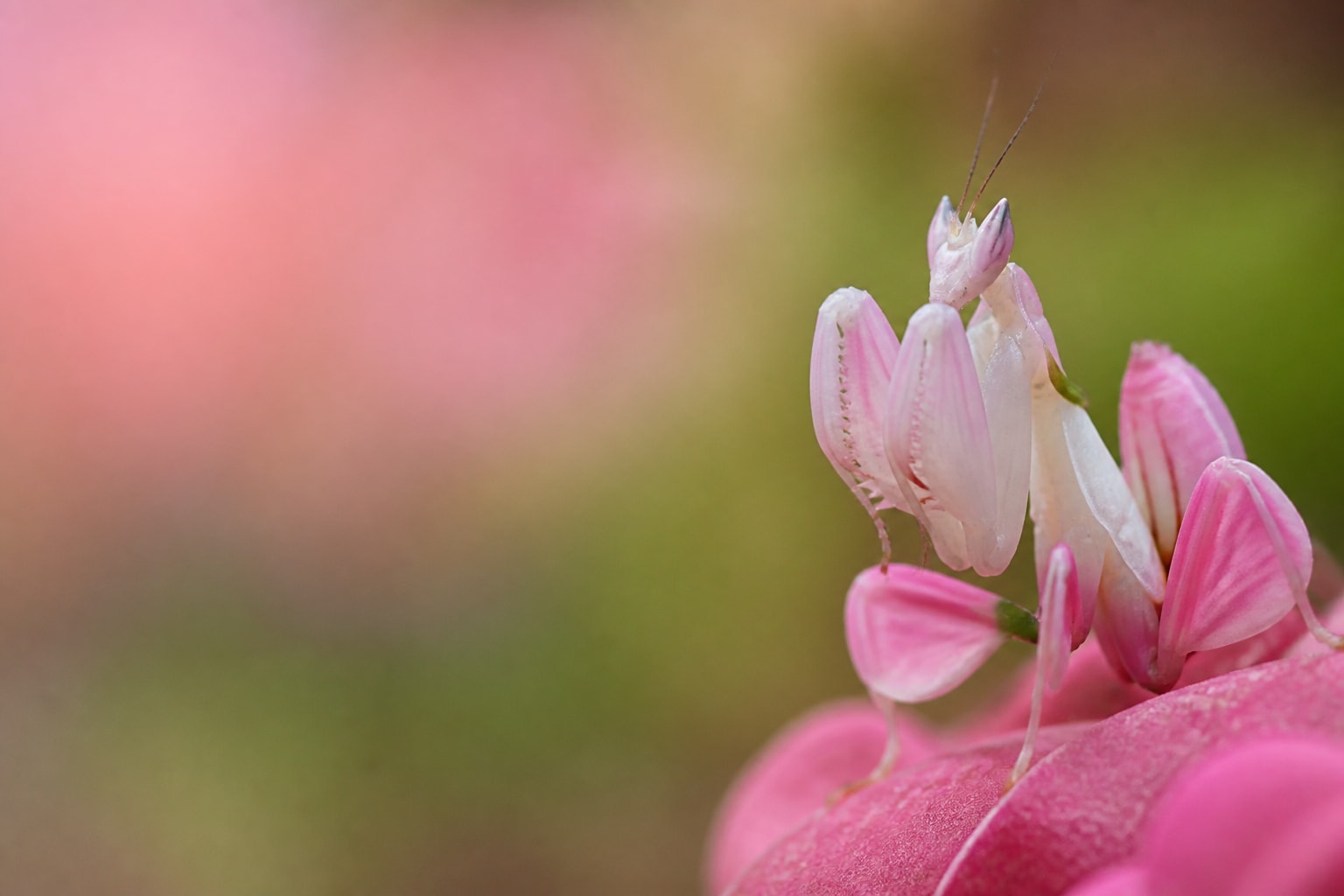
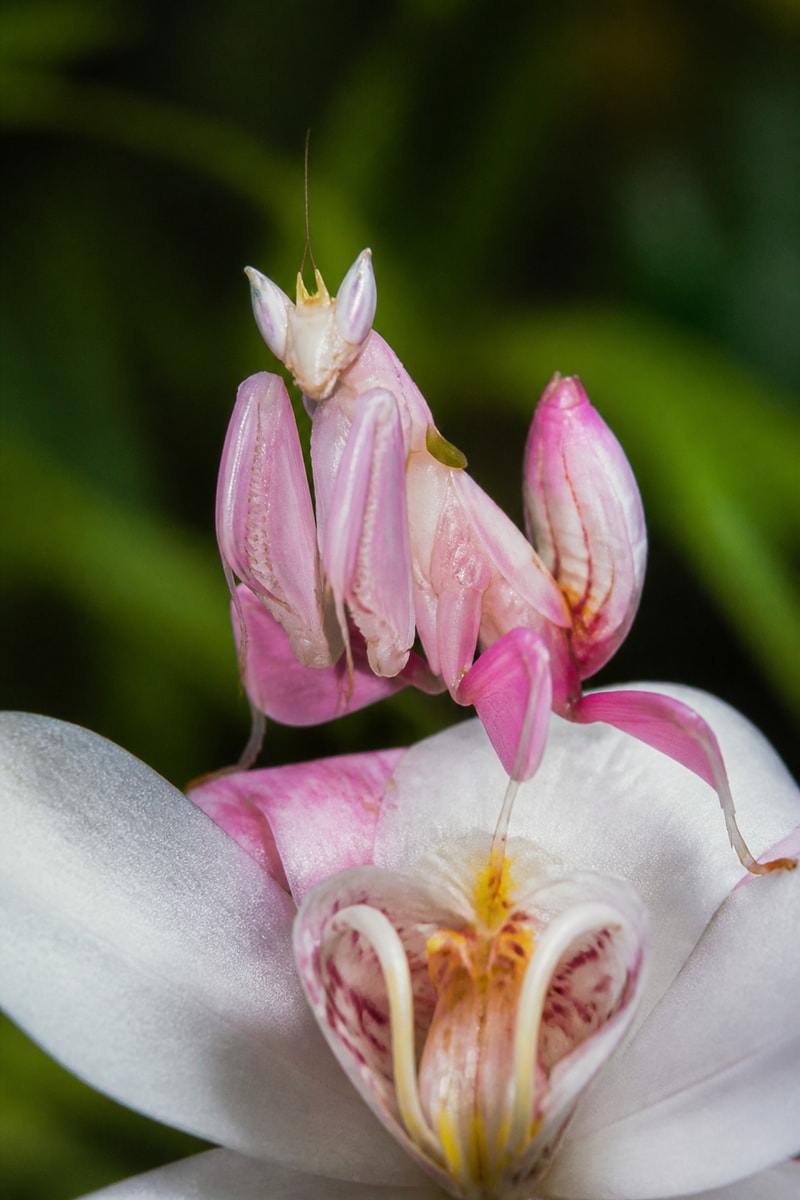
Orchid mantises are flower-mimicking praying mantises of Southeast Asia. Flattened, petal-like leg lobes and pink-to-white colouring lure pollinating insects within striking range.
For Indonesia collectors, this is a rare rainforest invertebrate card — pure Southeast Asian camouflage, not a Neotropical lookalike.
- Scientific nameHymenopus coronatus
- LengthFemales ~6 cm; males ~2–3 cm
- LifespanAround 6–12 months in the wild
- DietAmbush predators taking…
- ConservationLeast Concern
- RegionSoutheast Asian Forest
Where to see them
Habitat
- Lowland rainforest
- Flowering understorey
- Humid scrub
Humid lowland and hill rainforest of Southeast Asia, including parts of Indonesia, Malaysia, and surrounding regions, among flowering shrubs and understorey foliage.
Field notes
Field scale for the Orchid Mantis: length around Females ~6 cm; males ~2-3 cm. Typical lifespan: Around 6-12 months in the wild.
When you are scanning habitat, prioritise lowland rainforest, flowering understorey, and humid scrub. Those settings are where a clean look and a usable photo are most likely.
Quick ID anchor: Flattened petal-like lobes on mid and hind legs; body white, pink, or cream. Confirm with behaviour and habitat before you log the discovery.
Diet
Ambush predators taking flies, bees, butterflies, and other insects drawn to flower shapes.
Strike with raptorial forelegs at high speed.
Behaviour
Sit motionless on vegetation mimicking blooms; hunt by day.
Males fly more readily in search of females; females remain sedentary hunters.
How to identify
Flattened petal-like lobes on mid and hind legs; body white, pink, or cream.
Broad head with large compound eyes; females stockier than thin males.
Interesting facts
- 01
Leg lobes look like flower petals to lure prey.
- 02
Colour ranges from white to pink and pale yellow.
- 03
Females are much larger than slender males.
- 04
Ambush pollinating insects that approach the 'flower'.
- 05
Native to Southeast Asia — not Costa Rica or the Neotropics.
- 06
Nymphs may change tint as they moult and grow.
Conservation status
Orchid mantises lack a formal IUCN threat listing and remain present across parts of Southeast Asia. Rainforest loss and collection for the pet trade can pressure local populations.
Sources: IUCN Red List

Keep exploring
Related discoveries
Free on iOS
Catch the Orchid Mantis
Spot one in the wild, then scan it in Catch'Um to log your rare discovery.