
Field guide · rare
Leopard Seal
Spotted apex predator of the ice edge — long jaws, powerful lunges, and penguin-hunting skill.
Least Concern
Hydrurga leptonyx
Overview
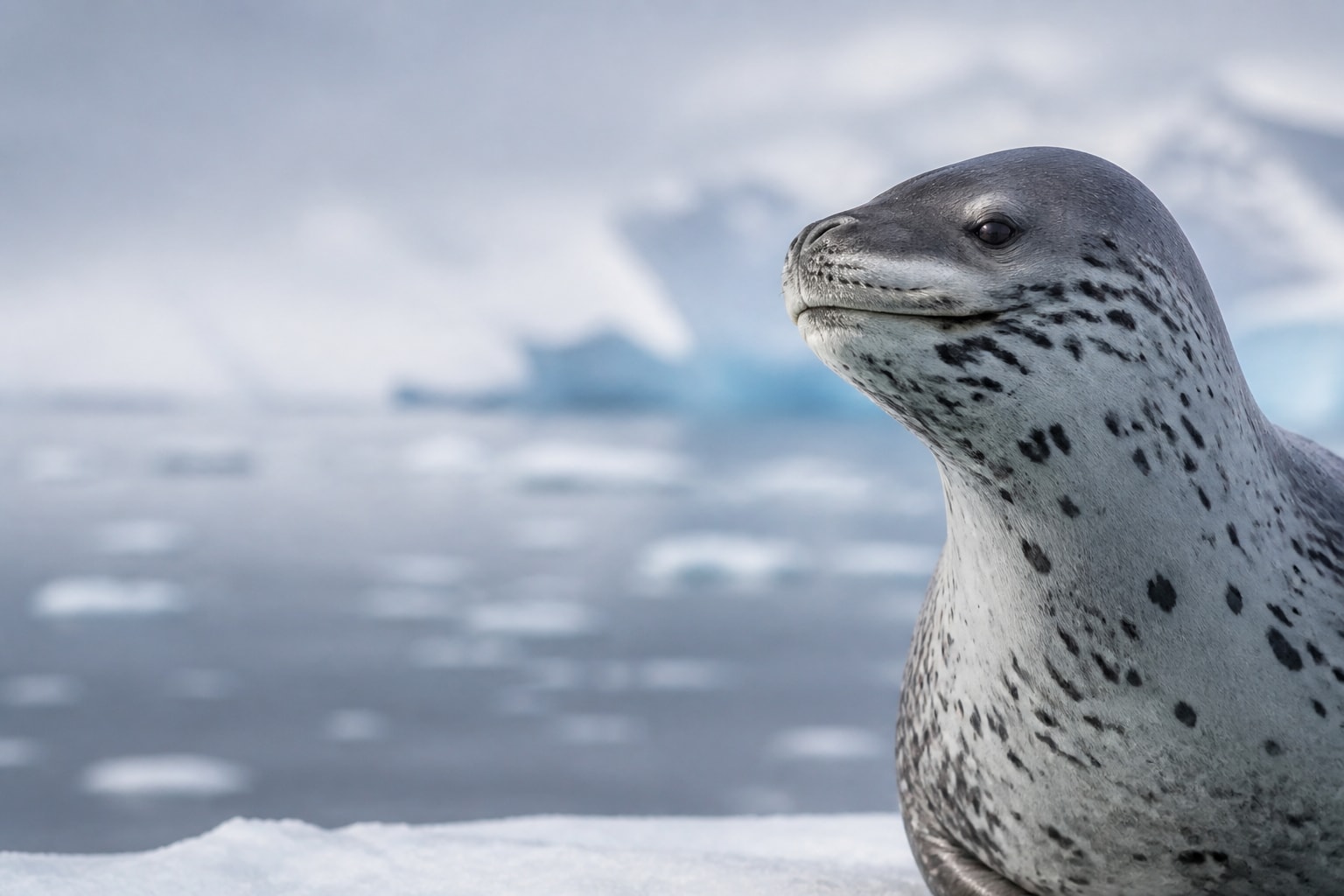
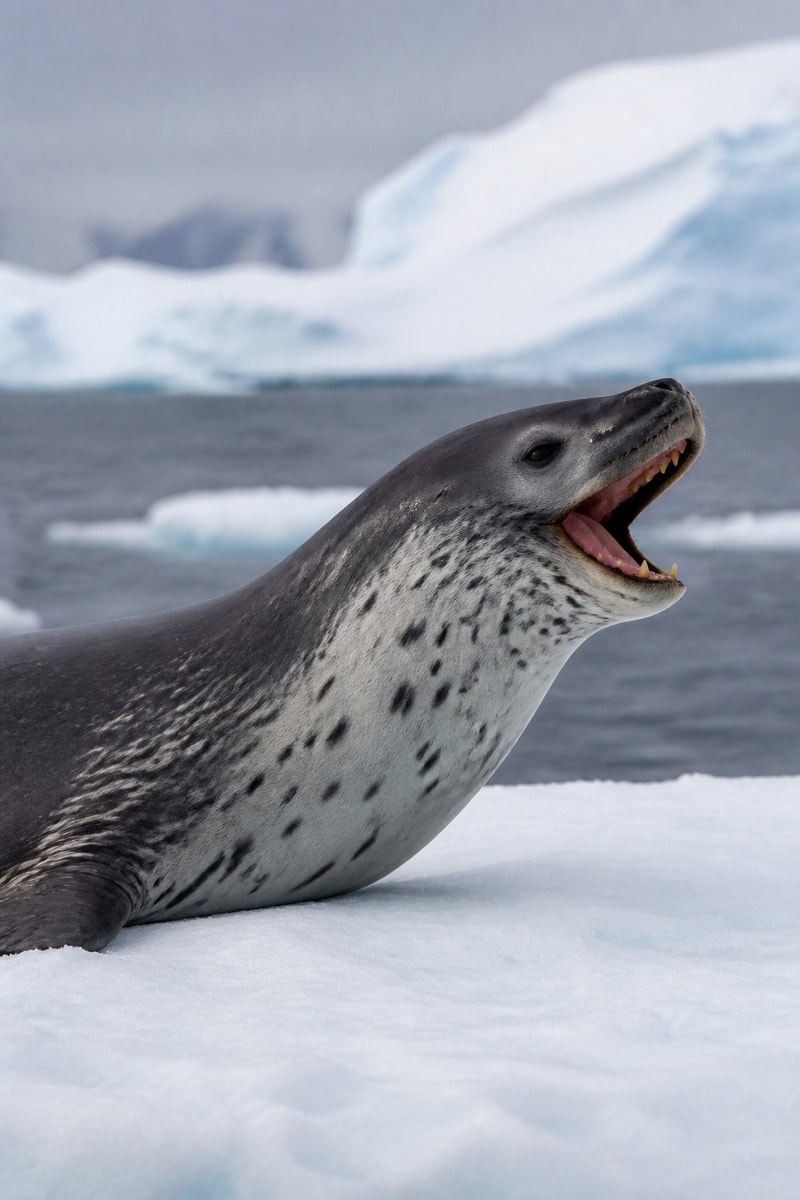
Leopard seals are solitary Antarctic hunters of pack ice and coastal waters. A reptile-like snout, spotted coat, and massive foreflippers mark a seal built to ambush penguins and take krill with specialised teeth.
For Antarctica collectors, the leopard seal is a rare ice-edge legend — the Southern Ocean’s most formidable seal predator.
- Scientific nameHydrurga leptonyx
- Length2.4–3.5 m
- Weight200–600 kg
- LifespanAround 12–15 years in the wild
- DietPenguins
- ConservationLeast Concern
- RegionAntarctic Pack Ice
Where to see them
Habitat
- Pack ice
- Ice floe edge
- Coastal Antarctic waters
Pack ice, ice floes, and coastal Antarctic waters, ranging north seasonally toward subantarctic islands following prey and ice.
Field notes
Field scale for the Leopard Seal: length around 2.4-3.5 m; weight 200-600 kg. Typical lifespan: Around 12-15 years in the wild.
When you are scanning habitat, prioritise pack ice, ice floe edge, and coastal antarctic waters. Those settings are where a clean look and a usable photo are most likely.
Quick ID anchor: Long, sleek seal with a large reptilian head, wide gape, and spotted flanks. Confirm with behaviour and habitat before you log the discovery.
Diet
Penguins, fish, squid, krill, and occasionally other seals — diet shifts with season and ice.
Ambush prey at the surface then thrash larger catches before swallowing.
Behaviour
Mostly solitary and highly mobile along the ice edge.
Rest on floes between hunts; investigate boats and divers with curiosity or caution.
How to identify
Long, sleek seal with a large reptilian head, wide gape, and spotted flanks.
Silver-grey above, pale below; females larger than males.
Interesting facts
- 01
Named for dark spots on a silver-grey coat.
- 02
Powerful jaws can take penguins and young seals.
- 03
Also filter krill using interlocking cheek teeth.
- 04
Usually solitary outside brief breeding encounters.
- 05
Foreflippers are long and wing-like for fast pursuit.
- 06
Vocalisations under ice include eerie trills and moans.
Conservation status
Leopard seals are Least Concern. Populations appear stable across Antarctic pack ice, though they remain sensitive to shifts in ice habitat and krill-based food webs.
Sources: IUCN Red List
Keep exploring
Free on iOS
Catch the Leopard Seal
Spot one in the wild, then scan it in Catch'Um to log your rare discovery.