
Field guide · legendary
King Penguin
Gold-collared colonies of the Subantarctic — second only to emperors in size and spectacle.
Least Concern
Aptenodytes patagonicus
Overview
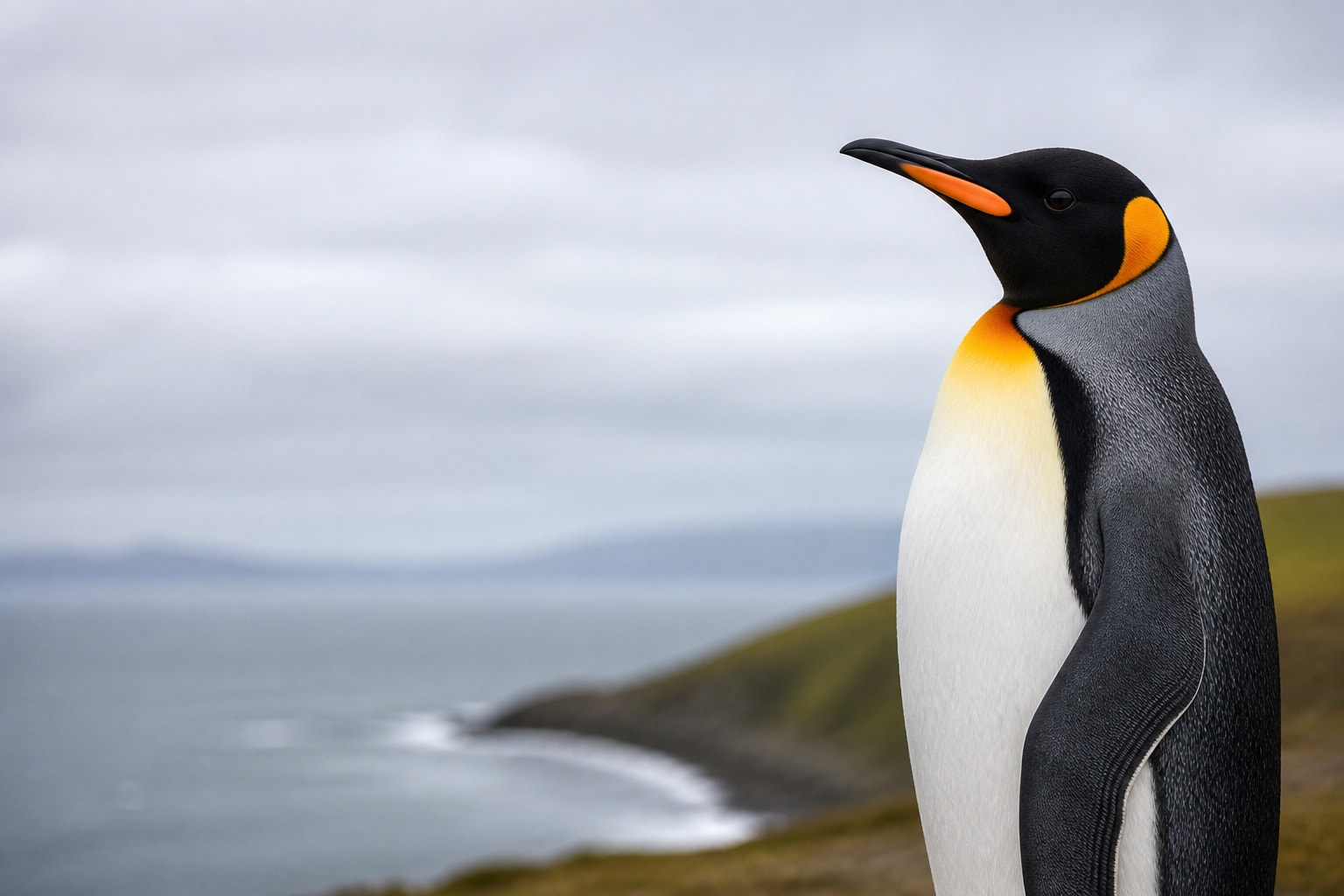
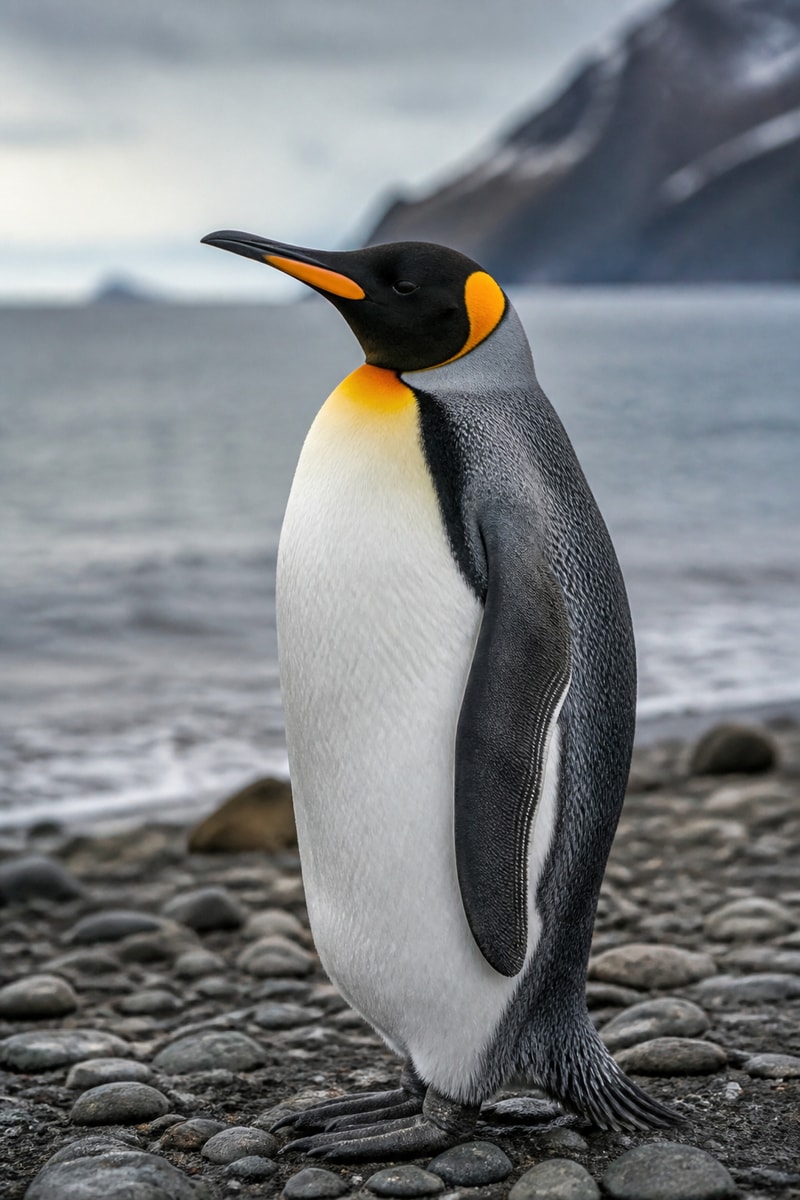
King penguins are the second-largest penguins, nesting in vast colonies on Subantarctic islands. Bright orange-gold ear patches and a long breeding cycle make them one of the Southern Ocean's great wildlife spectacles.
For Antarctica collectors, a king penguin colony is a legendary polar card — dense ranks of gold and silver against black volcanic sand.
- Scientific nameAptenodytes patagonicus
- Height85–95 cm
- Weight11–16 kg
- LifespanAround 15–20 years in the wild
- DietPrimarily lanternfish…
- ConservationLeast Concern
- RegionSubantarctic Islands
Where to see them
Habitat
- Subantarctic beaches
- Ice-free island slopes
- Southern Ocean
Ice-free beaches and slopes of Subantarctic islands for breeding, foraging in surrounding Southern Ocean waters rich in lanternfish and squid.
Field notes
Field scale for the King Penguin: height 85-95 cm; weight 11-16 kg. Typical lifespan: Around 15-20 years in the wild.
When you are scanning habitat, prioritise subantarctic beaches, ice-free island slopes, and southern ocean. Those settings are where a clean look and a usable photo are most likely.
Quick ID anchor: Tall black-and-white penguin with vivid orange-gold auricular patches and a warm neck wash. Confirm with behaviour and habitat before you log the discovery.
Diet
Primarily lanternfish and squid caught on deep dives in the Southern Ocean.
Adults commute from colonies to productive foraging grounds.
Behaviour
Nest in huge colonies without building stick nests — eggs rest on feet under a brood pouch.
Pairs share incubation and chick-rearing across an extended breeding cycle.
How to identify
Tall black-and-white penguin with vivid orange-gold auricular patches and a warm neck wash.
Long slender bill with an orange mandibular plate; chicks are fluffy brown.
Interesting facts
- 01
Second-largest penguin after the emperor.
- 02
Bright orange-gold patches on the sides of the head and neck.
- 03
Breeding cycle can take over a year from egg to independence.
- 04
Chicks wear thick brown down nicknamed 'oakum boys'.
- 05
Dive deeply for lanternfish and squid.
- 06
Form some of the densest seabird colonies on Earth.
Conservation status
King penguins are Least Concern with large colonies on several Subantarctic islands. Climate-driven shifts in prey and historical exploitation shaped local numbers; monitoring remains important.
Sources: IUCN Red List
Keep exploring
Free on iOS
Catch the King Penguin
Spot one in the wild, then scan it in Catch'Um to log your legendary discovery.