
Field guide · common
Adélie Penguin
The classic tuxedo penguin of Antarctica — white eye-ring, rocky nests, and fearless curiosity.
Least Concern
Pygoscelis adeliae
Overview
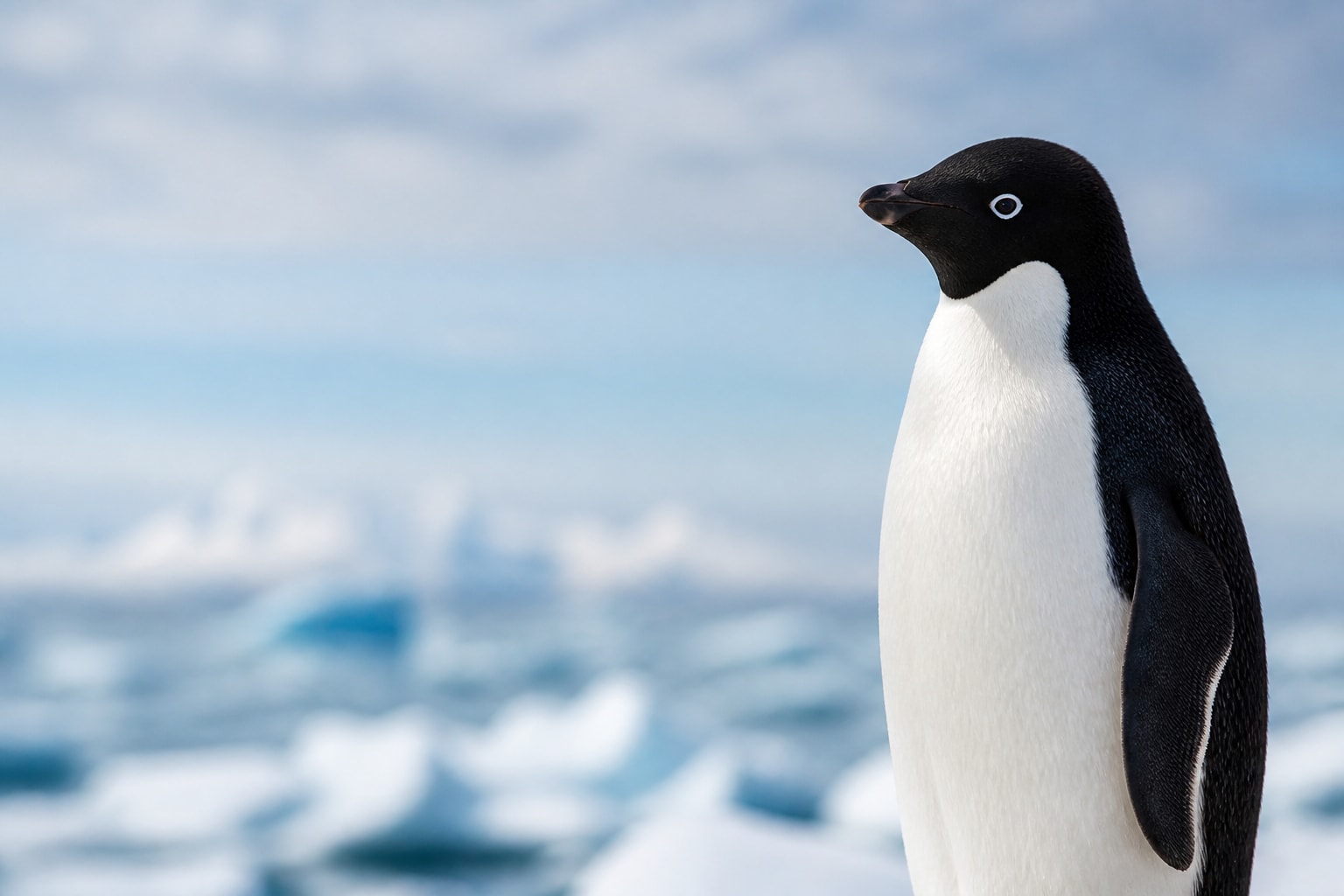
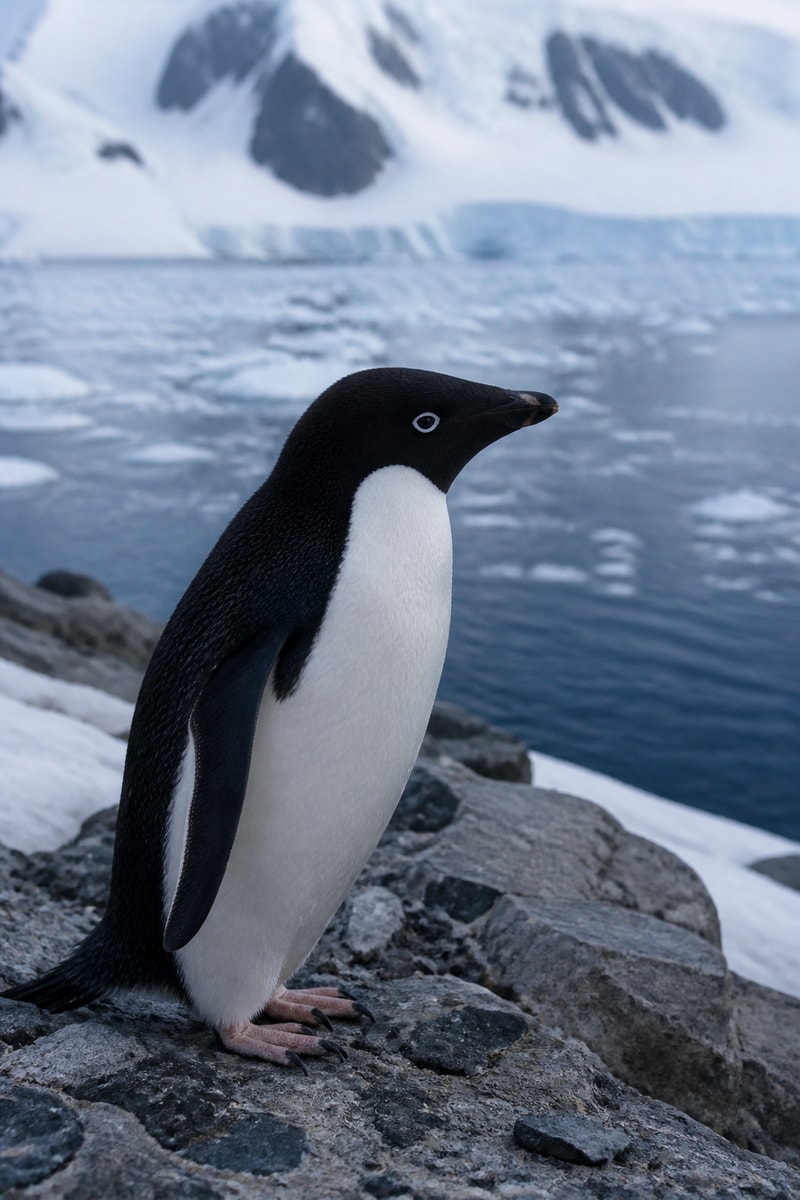
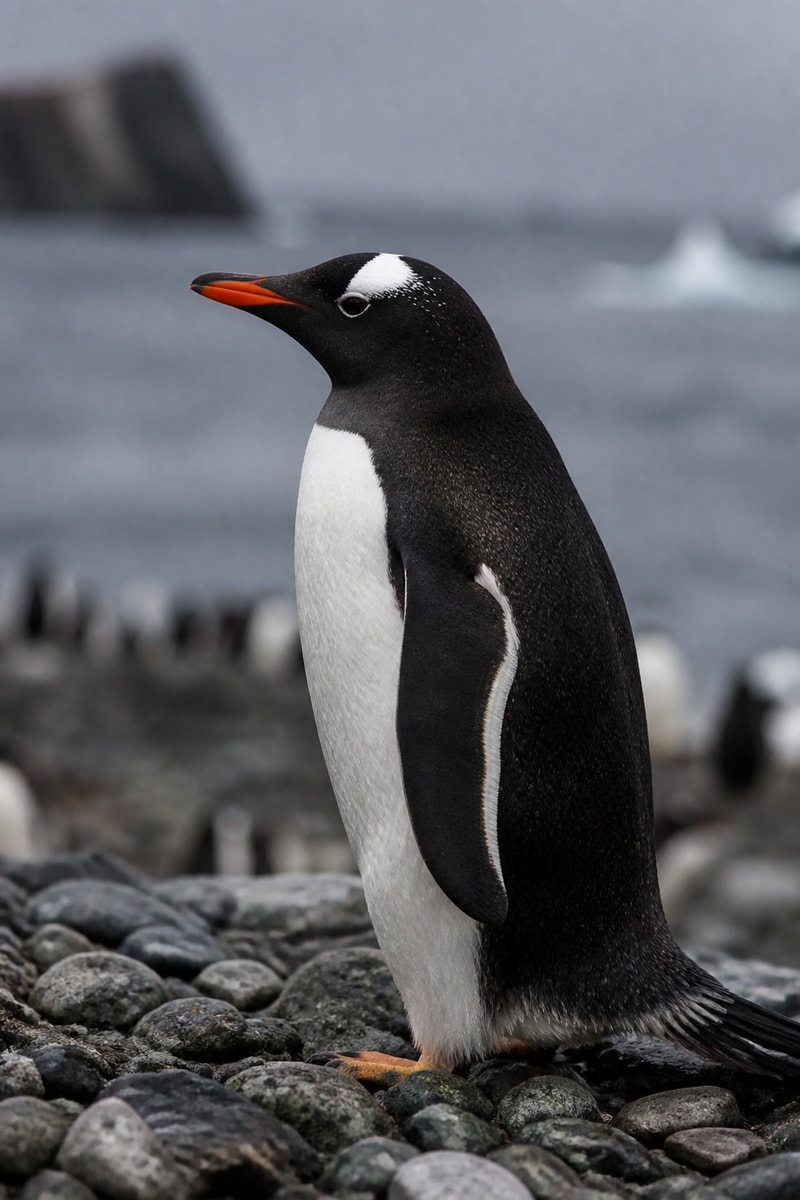
Adélie penguins are the archetypal Antarctic penguin: black-and-white, with a neat white ring around each eye. They nest in vast rocky colonies, toboggan on their bellies, and porpoise through frigid seas after krill.
Together with emperor penguins, they give Antarctica a real Catch'Um set instead of a single legendary bird.
- Scientific namePygoscelis adeliae
- Height70 cm
- Weight3–6 kg
- LifespanAround 10–20 years in the wild
- DietPrimarily Antarctic krill
- ConservationLeast Concern
- RegionAntarctic Ice
Where to see them
Habitat
- Antarctic coast
- Pack ice
- Rocky colonies
Ice-free rocky coasts of Antarctica and nearby islands for nesting; forage in Southern Ocean pack-ice waters rich in krill.
Field notes
Field scale for the Adélie Penguin: height 70 cm; weight 3-6 kg. Typical lifespan: Around 10-20 years in the wild.
When you are scanning habitat, prioritise antarctic coast, pack ice, and rocky colonies. Those settings are where a clean look and a usable photo are most likely.
Quick ID anchor: Black head and back, white belly, and a distinctive white ring around each eye. Confirm with behaviour and habitat before you log the discovery.
Where to see one
Antarctica
In Antarctica, start at Ross Sea (East Antarctica). The largest marine protected area on Earth, with emperor penguins, Adélie penguins, and orcas in pristine polar waters.
More context on this destination lives on the Antarctica expedition page.
Diet
Primarily Antarctic krill, plus fish and squid in coastal waters.
Dive repeatedly from ice edges and open water.
Behaviour
Nest in dense pebble colonies; both parents share incubation and chick feeding.
Highly social; defend nest stones vigorously.
How to identify
Black head and back, white belly, and a distinctive white ring around each eye.
Brush-tail penguin build; no yellow plumes.
Interesting facts
- 01
Named after Adélie Land, itself named for an explorer's wife.
- 02
White eye-rings distinguish them from similar penguins.
- 03
Build nests from pebbles — and steal pebbles from neighbours.
- 04
Feed largely on Antarctic krill.
- 05
Walk, toboggan, and porpoise with classic penguin energy.
- 06
Colonies can number hundreds of thousands of pairs.
Conservation status
Adélie penguins are Least Concern overall, but some colonies decline where sea-ice and krill patterns shift with climate change. Monitoring Antarctic fisheries and ice habitat remains important.
Sources: IUCN Red List
Keep exploring
Free on iOS
Catch the Adélie Penguin
Spot one in the wild, then scan it in Catch'Um to log your common discovery.