
Field guide · legendary
Emperor Penguin
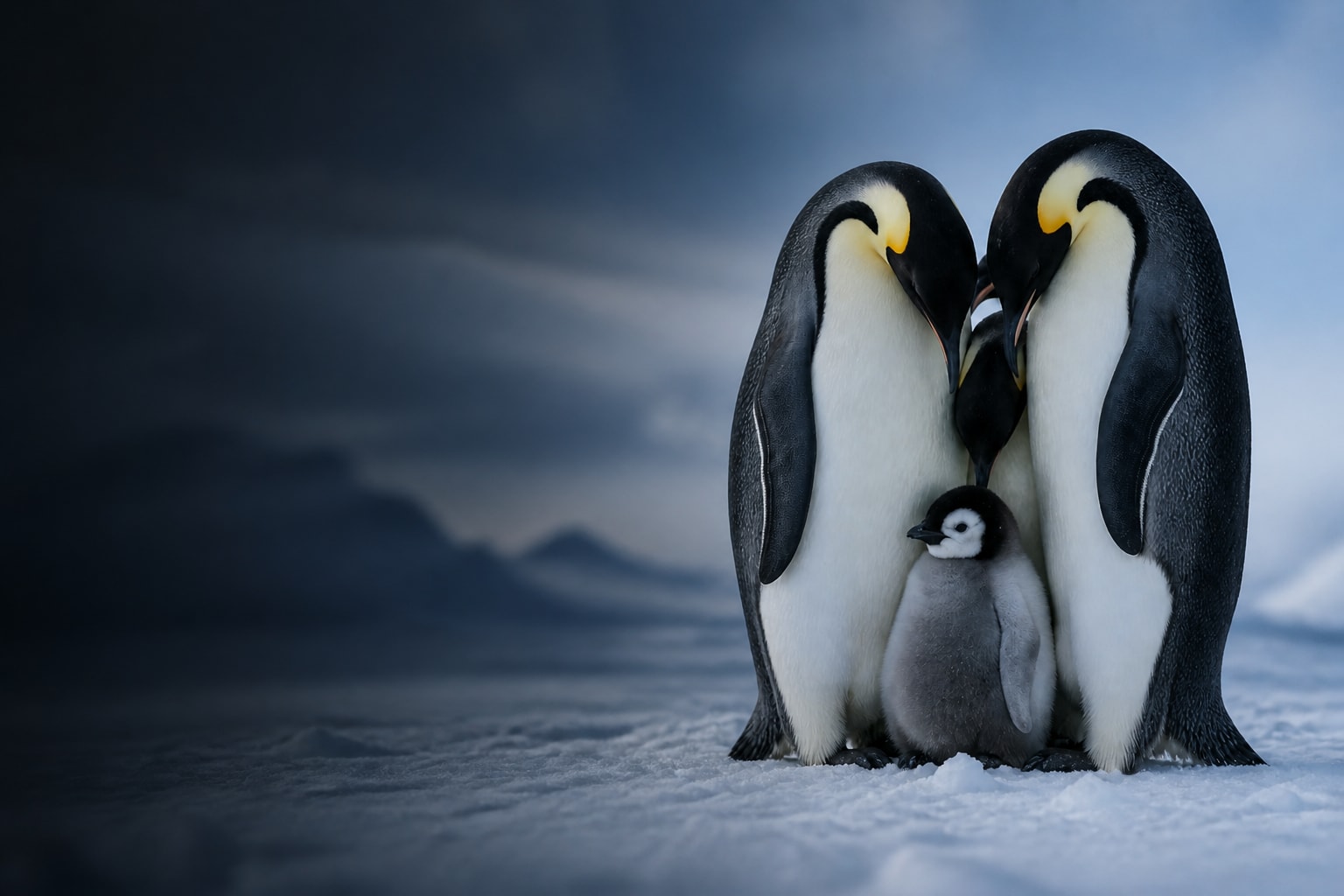
Survivor of the polar night, the tallest penguin, breeding through Antarctica's cruellest winter on the ice.
Near Threatened
Aptenodytes forsteri
Overview
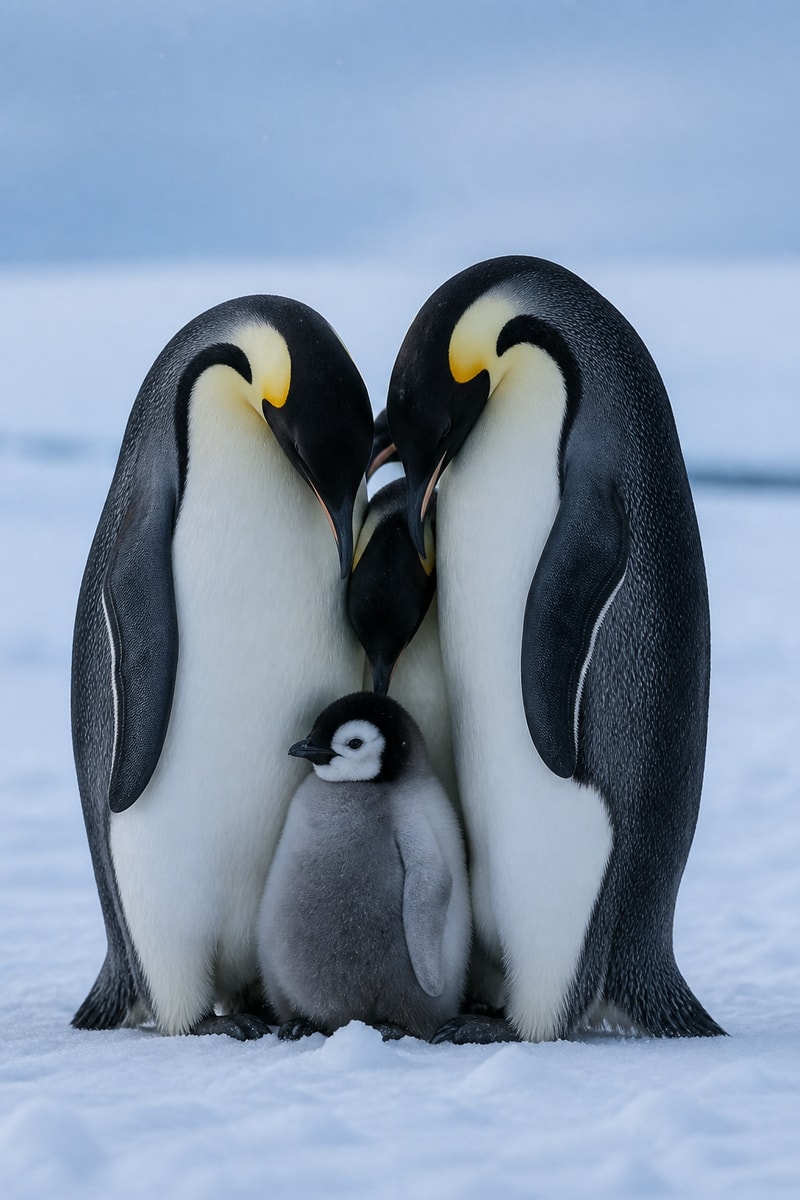
The emperor penguin is the only animal that breeds during the Antarctic winter, marching up to 120 kilometres across sea ice to colonies where males huddle together for two months, balancing a single egg on their feet at temperatures below minus 40°C.
At over 1.2 metres tall, emperors are the largest penguins on Earth. They dive deeper than any other bird, over 500 metres, hunting fish and squid beneath the ice, and stream through the ocean like torpedoes.
- Scientific nameAptenodytes forsteri
- Height1.1–1.3 m
- Weight22–45 kg (seasonal)
- LifespanAround 15–20 years in the wild
- DietDives for fish
- ConservationNear Threatened
- RegionAntarctic Ice
Habitat
- Sea ice
- Antarctic coast
- Open ocean
Emperor penguins breed on fast ice attached to the Antarctic continent, at roughly 40 known colonies around the coast. They spend their lives on and in the Southern Ocean, coming ashore only to moult and breed.
Countries found
Field notes
Field scale for the Emperor Penguin: height 1.1-1.3 m; weight 22-45 kg (seasonal). Typical lifespan: Around 15-20 years in the wild.
When you are scanning habitat, prioritise sea ice, antarctic coast, and open ocean. Those settings are where a clean look and a usable photo are most likely.
Quick ID anchor: Tallest penguin: black back, white belly, pale yellow ear patches, and a dark bill with an orange-pink lower mandible stripe. Confirm with behaviour and habitat before you log the discovery.
Where to see one
Antarctica
In Antarctica, strong options include Snow Hill Island, Ross Sea, South Georgia Island, and Weddell Sea. An emperor penguin colony accessible by icebreaker and helicopter, one of the rarest wildlife encounters on Earth.
Open the Antarctica spotting guide for every park note tied to the emperor penguin.
Diet
Dives for fish, Antarctic silverfish, squid, and krill beneath sea ice, often to depths of hundreds of metres.
Feeds in open water polynyas and at ice edges during the breeding cycle.
Behaviour
The only bird that breeds through the Antarctic winter; males incubate a single egg on their feet in huge huddles.
Colonies form on stable sea ice; adults may walk tens of kilometres between feeding grounds and the colony.
How to identify
Tallest penguin: black back, white belly, pale yellow ear patches, and a dark bill with an orange-pink lower mandible stripe.
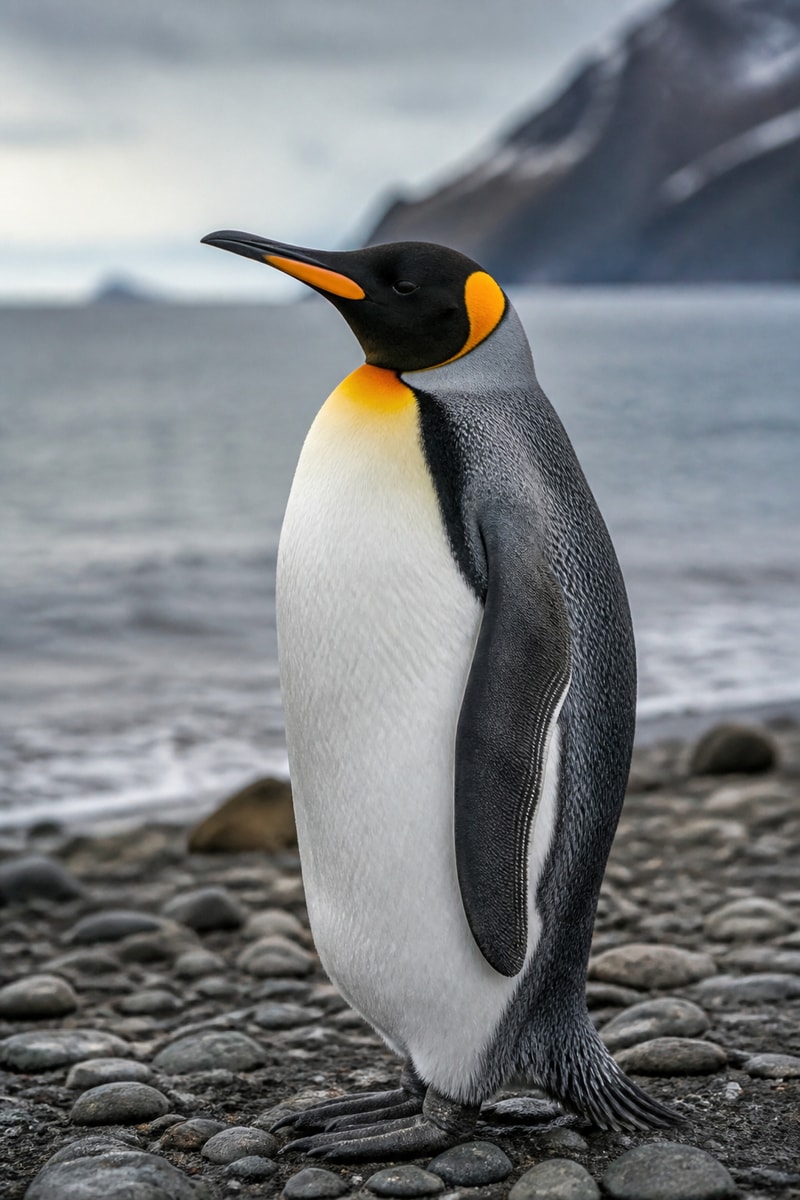
Larger and more thickset than king penguins, with a less vivid orange neck patch.
Interesting facts
- 01
Emperor penguins breed in the harshest winter on Earth, males incubate eggs on their feet for 65 days.
- 02
They can dive to over 500 metres, deeper than any other bird.
- 03
Huddling males rotate from cold outside to warm centre every few minutes.
Conservation status
Emperor penguins are Near Threatened, with colonies projected to decline as sea ice shrinks with climate change. Antarctica's remote colonies make monitoring difficult but satellite imagery is revealing population trends.
Sources: IUCN Red List
Keep exploring
Free on iOS
Catch the Emperor Penguin
Spot one in the wild, then scan it in Catch'Um to log your legendary discovery.