
Field guide · legendary
Jaguar
The Americas' apex cat, a golden-spotted hunter with the strongest bite of any big cat.
Near Threatened
Panthera onca
Overview
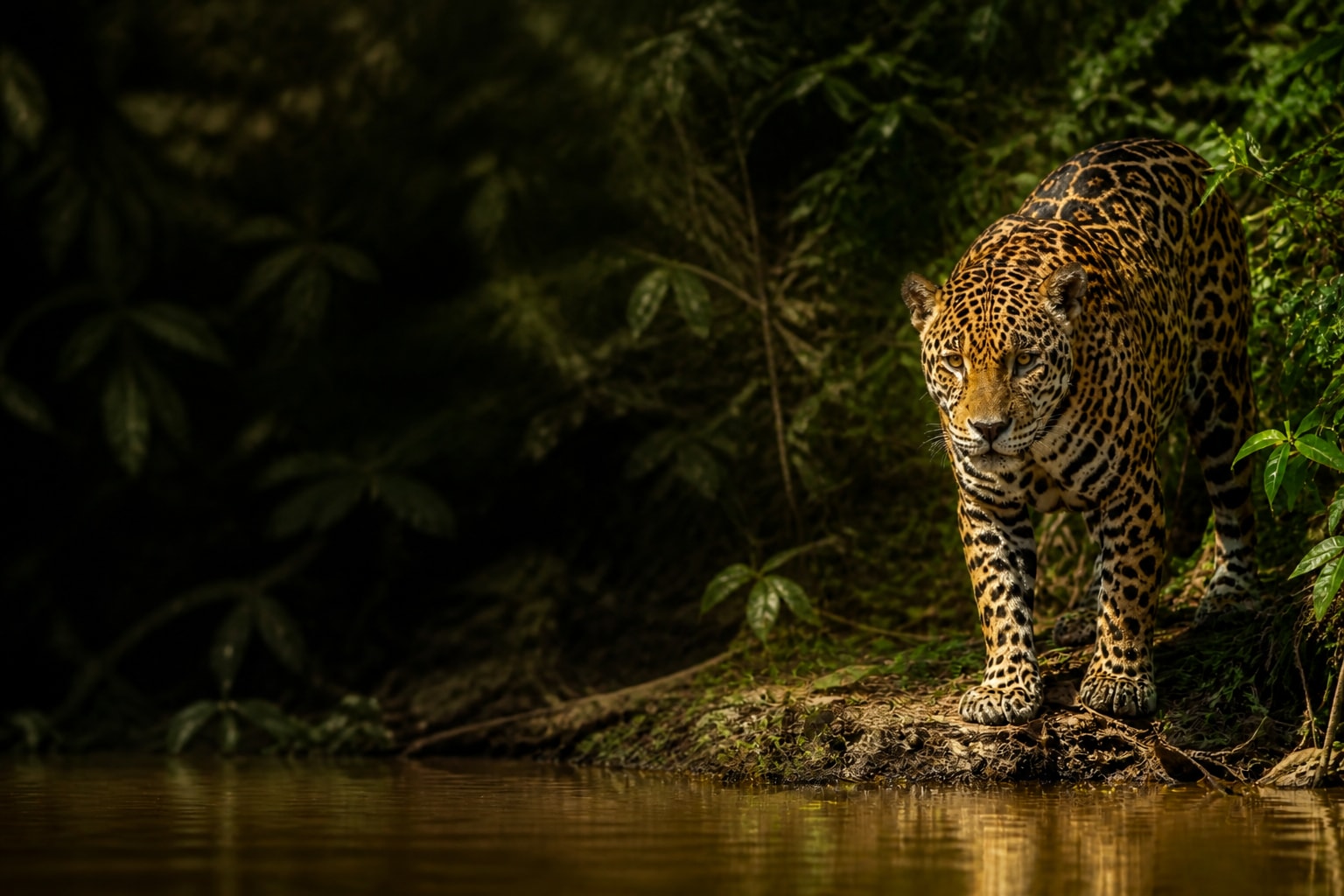
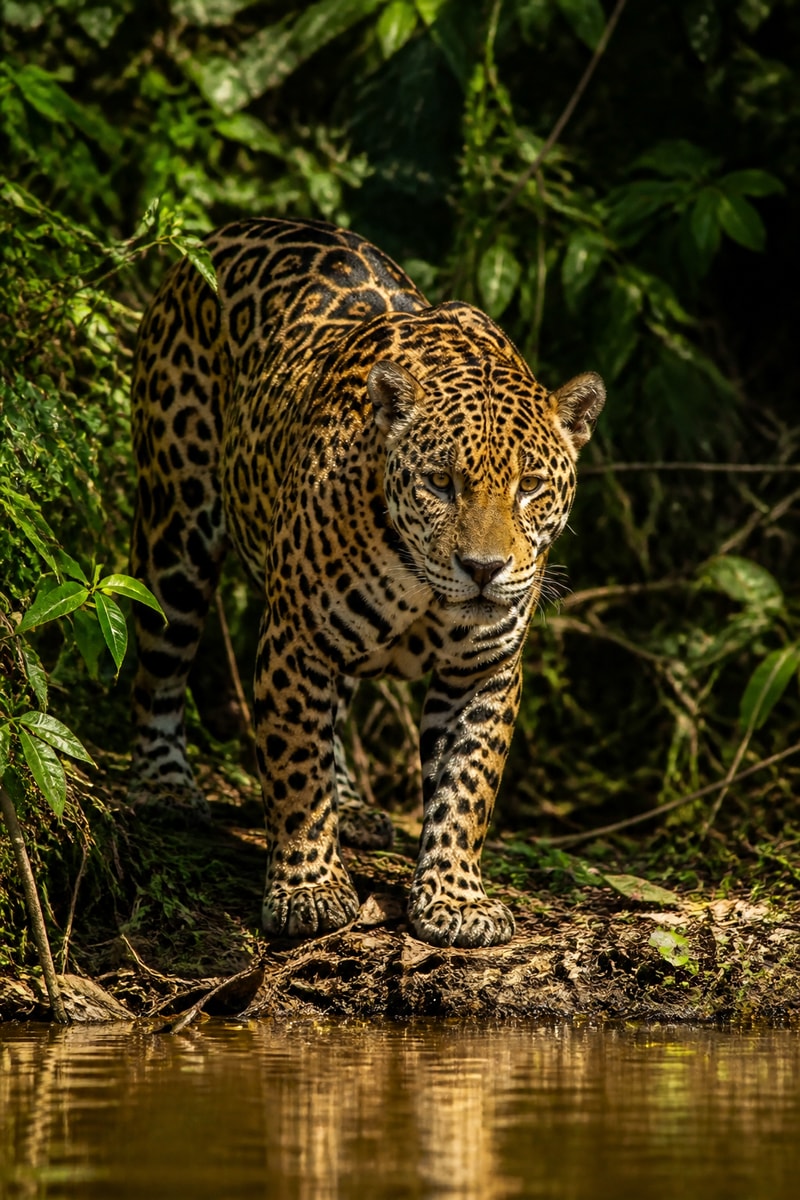
The jaguar is the largest cat in the Americas and the third-largest in the world, a compact, immensely powerful predator built for rainforest rivers and wetland margins. Its rosette coat is larger and more open than a leopard's, often with a central spot, and every pattern is unique.
Jaguars hunt by ambush at water's edge, taking capybaras, caimans, and even turtles whose shells they crack with a bite force stronger than any other big cat. In the Pantanal and Amazon, a glimpse of that heavy head and unhurried stride through riverside grass is the definition of a legendary field-guide discovery.
- Scientific namePanthera onca
- Length1.1–1.9 m body; tail 45–75 cm
- Weight56–96 kg (males often heavier)
- LifespanAround 12–15 years in the wild
- DietPowerful predator of…
- ConservationNear Threatened
- RegionRainforest & Wetland
Habitat
- Tropical rainforest
- Wetland
- Riverine forest
- Savanna woodland
Jaguars range from Mexico's southern jungles through Central America to the Amazon and Pantanal of Brazil, favouring tropical rainforest, river corridors, and open wetland where prey gathers at water. The Pantanal offers the world's best odds of a daylight sighting.
Countries found
Field notes
Field scale for the Jaguar: length around 1.1-1.9 m body; tail 45-75 cm; weight 56-96 kg (males often heavier). Typical lifespan: Around 12-15 years in the wild.
When you are scanning habitat, prioritise tropical rainforest, wetland, riverine forest, and savanna woodland. Those settings are where a clean look and a usable photo are most likely.
Quick ID anchor: Stocky golden coat with large rosettes often containing a central spot; shorter legs and more muscular build than a leopard. Confirm with behaviour and habitat before you log the discovery.
Where to see one
Brazil
In Brazil, strong options include Pantanal and Amazon Rainforest. The world's largest tropical wetland, with capybaras, jaguars, hyacinth macaws, and giant otters in open savanna.
Open the Brazil spotting guide for every park note tied to the jaguar.
Mexico
In Mexico, start at Calakmul Biosphere Reserve (Campeche). Mayan rainforest, with jaguars, toucans, and howler monkeys in one of Mexico's largest protected areas.
More context on this destination lives on the Mexico expedition page.
Diet
Powerful predator of peccaries, capybara, deer, caiman, turtles, and fish; often kills with a bite through the skull.
Hunts alone, frequently near water, and is an accomplished swimmer.
Behaviour
Mostly solitary and territorial; active by day or night depending on habitat and human pressure.
Prefers dense cover along rivers, wetlands, and rainforest; avoids open arid country.
How to identify
Stocky golden coat with large rosettes often containing a central spot; shorter legs and more muscular build than a leopard.
Melanistic (black) jaguars still show rosettes in good light.
Interesting facts
- 01
Jaguars have the strongest bite of any big cat, strong enough to crack turtle shells and skulls.
- 02
They are excellent swimmers and often hunt along rivers and in flooded forest.
- 03
Unlike most cats, jaguars kill prey with a skull bite rather than a throat hold.
- 04
The name jaguar comes from the Tupi word yaguara, beast of prey.
- 05
Black jaguars are the same species, melanistic individuals still show rosettes in the right light.
Conservation status
Jaguars are Near Threatened, declining from deforestation, habitat fragmentation, and conflict with ranchers. Brazil's Pantanal and Amazon protected areas remain the species' greatest strongholds in the wild.
Sources: IUCN Red List
Keep exploring
Where it lives
Related discoveries
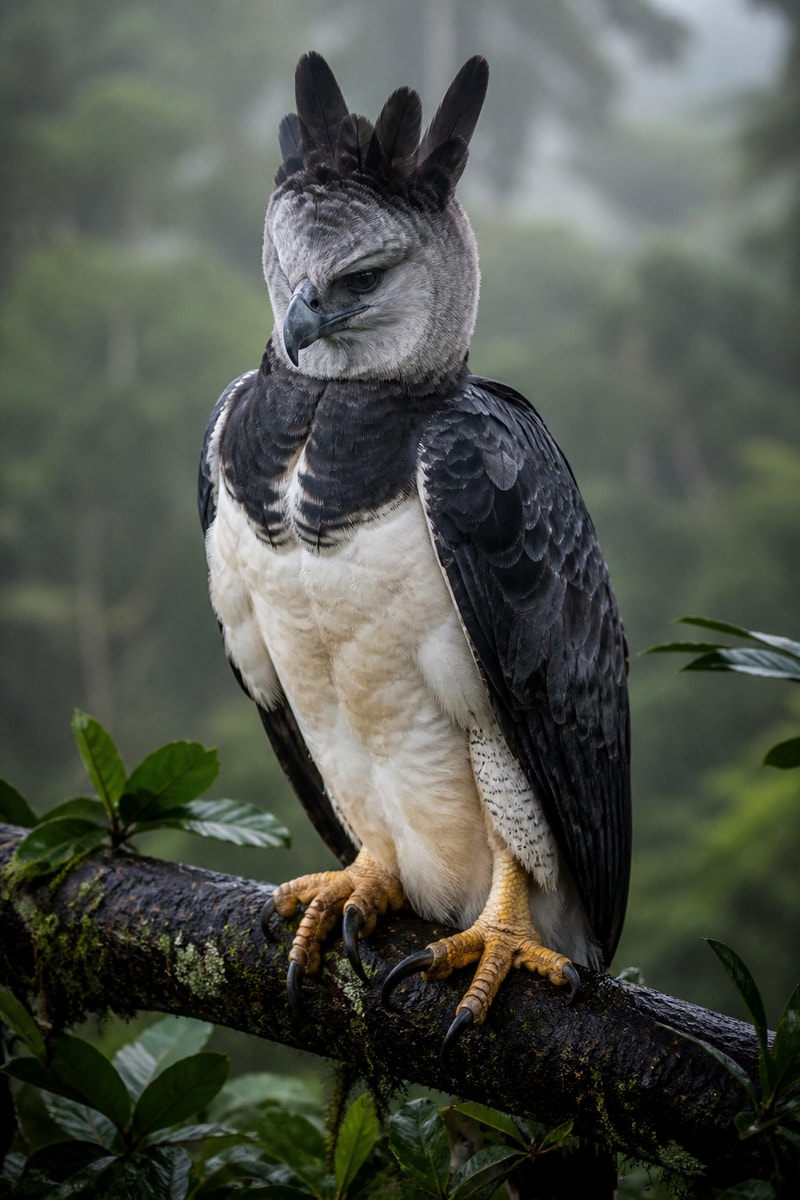
- Harpy Eaglelegendary • Rainforest Canopy
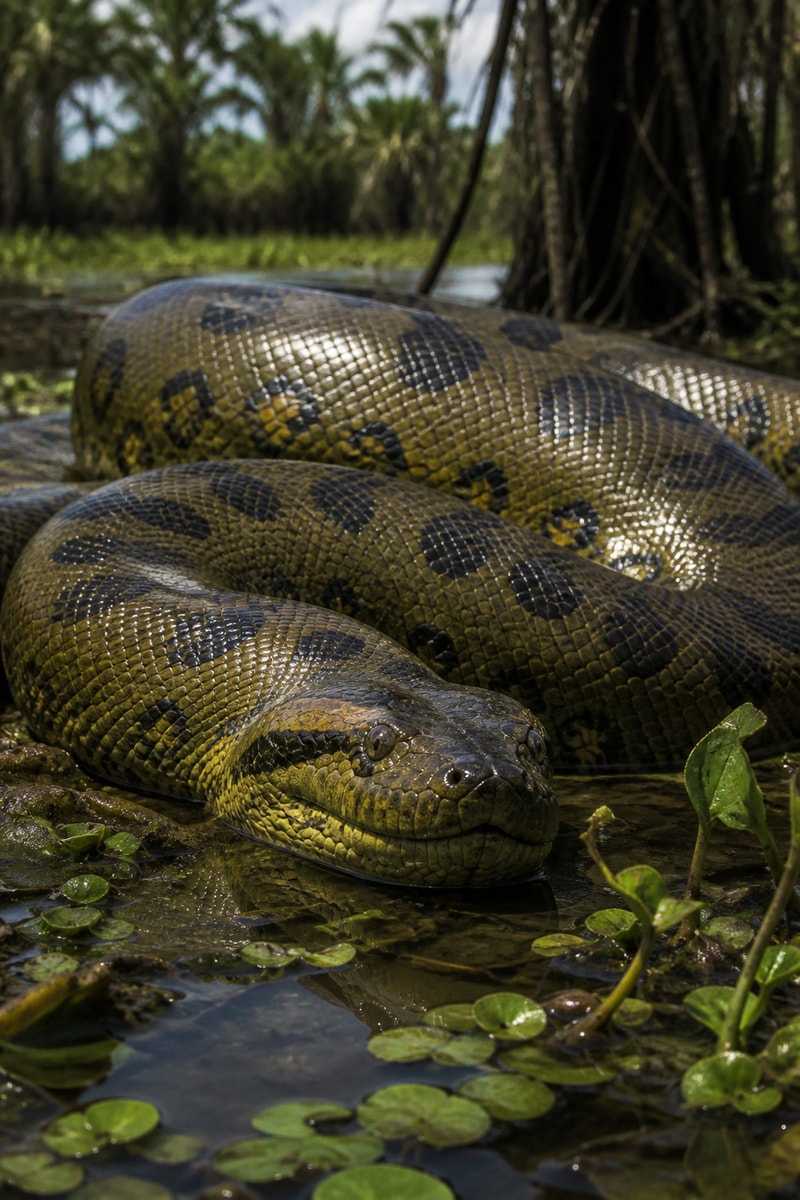
- Green Anacondalegendary • Wetlands & Rivers
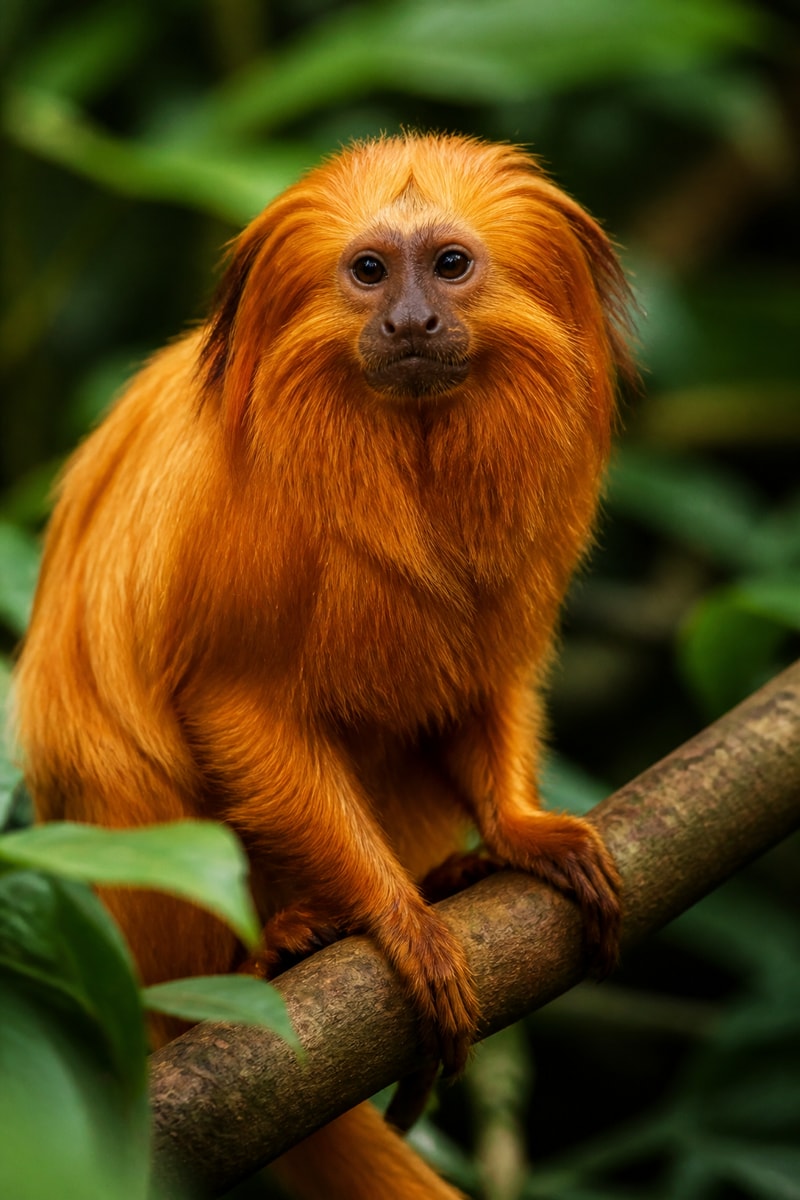
- Golden Lion Tamarinlegendary • Atlantic Forest Canopy
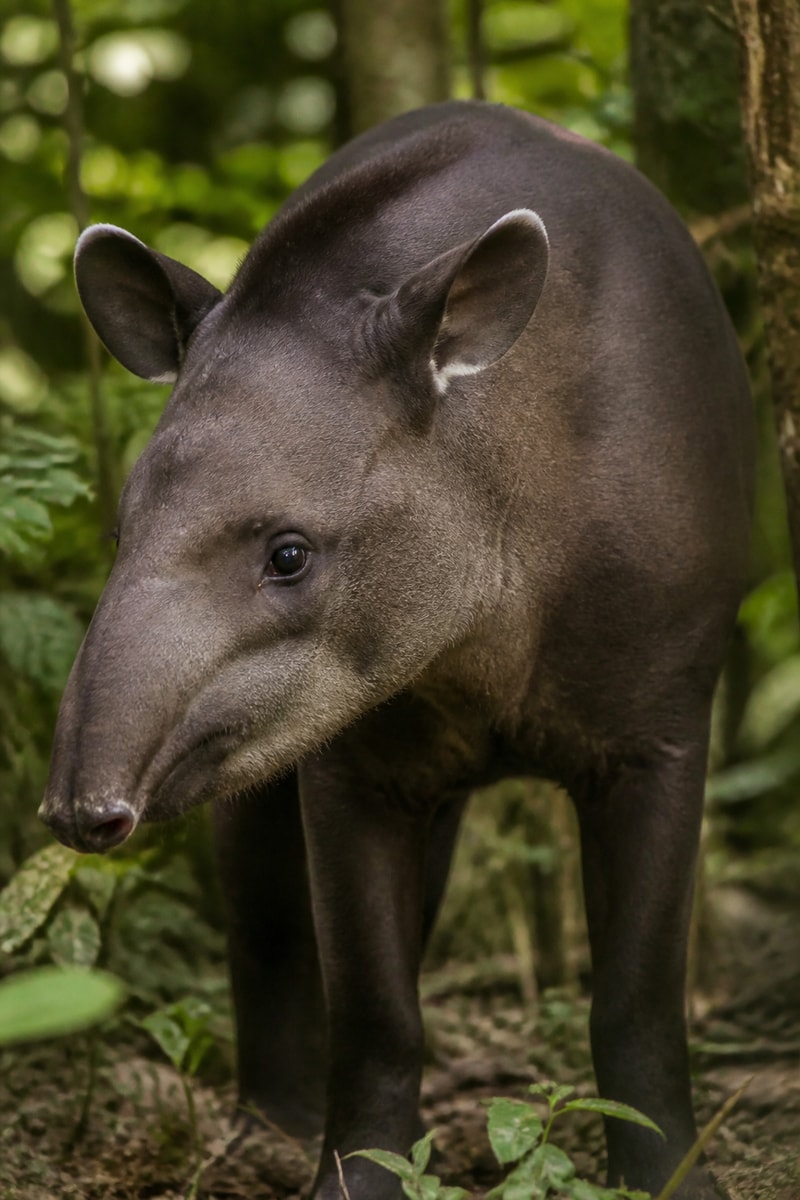
- Baird's Tapirlegendary • Central American Forest
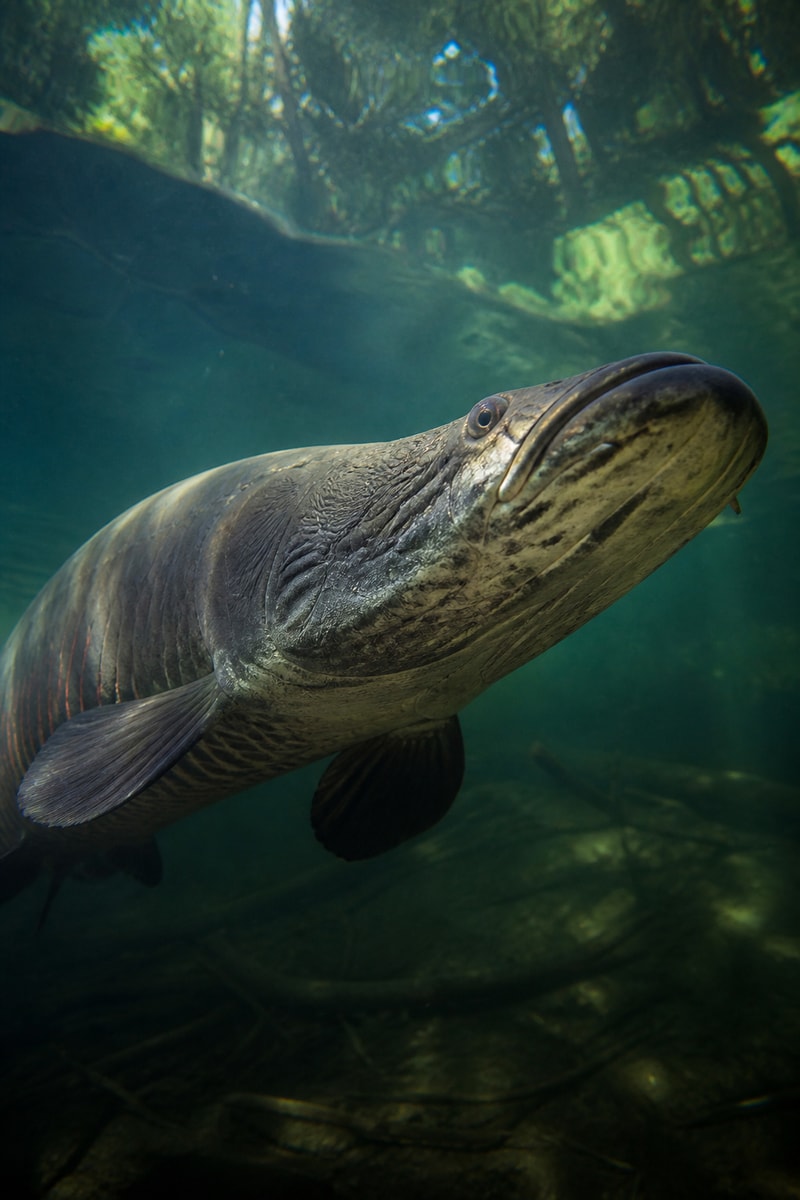
- Arapaimalegendary • Amazon Floodplain
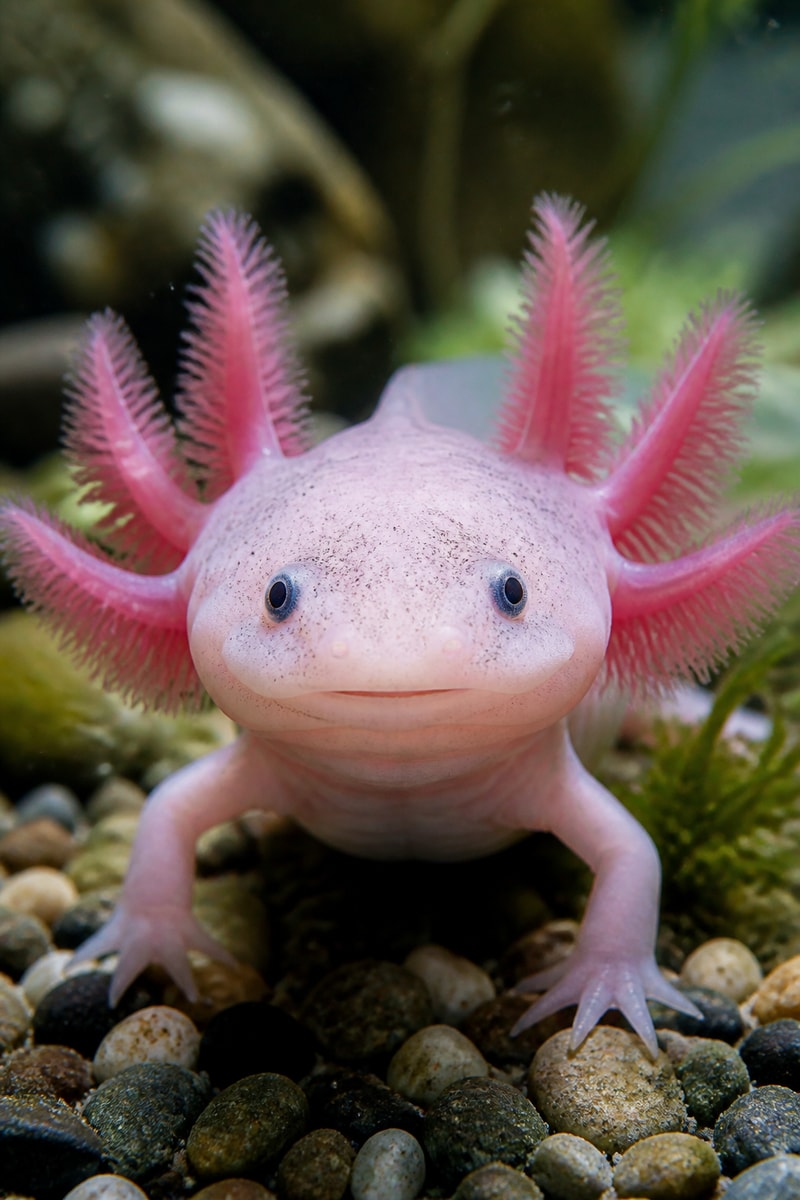
- Axolotlrare • Lake & Canals
- Giant Anteaterrare • Grassland & Forest
- Giant Manta Rayrare • Open Ocean & Reefs
Free on iOS
Catch the Jaguar
Spot one in the wild, then scan it in Catch'Um to log your legendary discovery.