
Field guide · legendary
Baird's Tapir
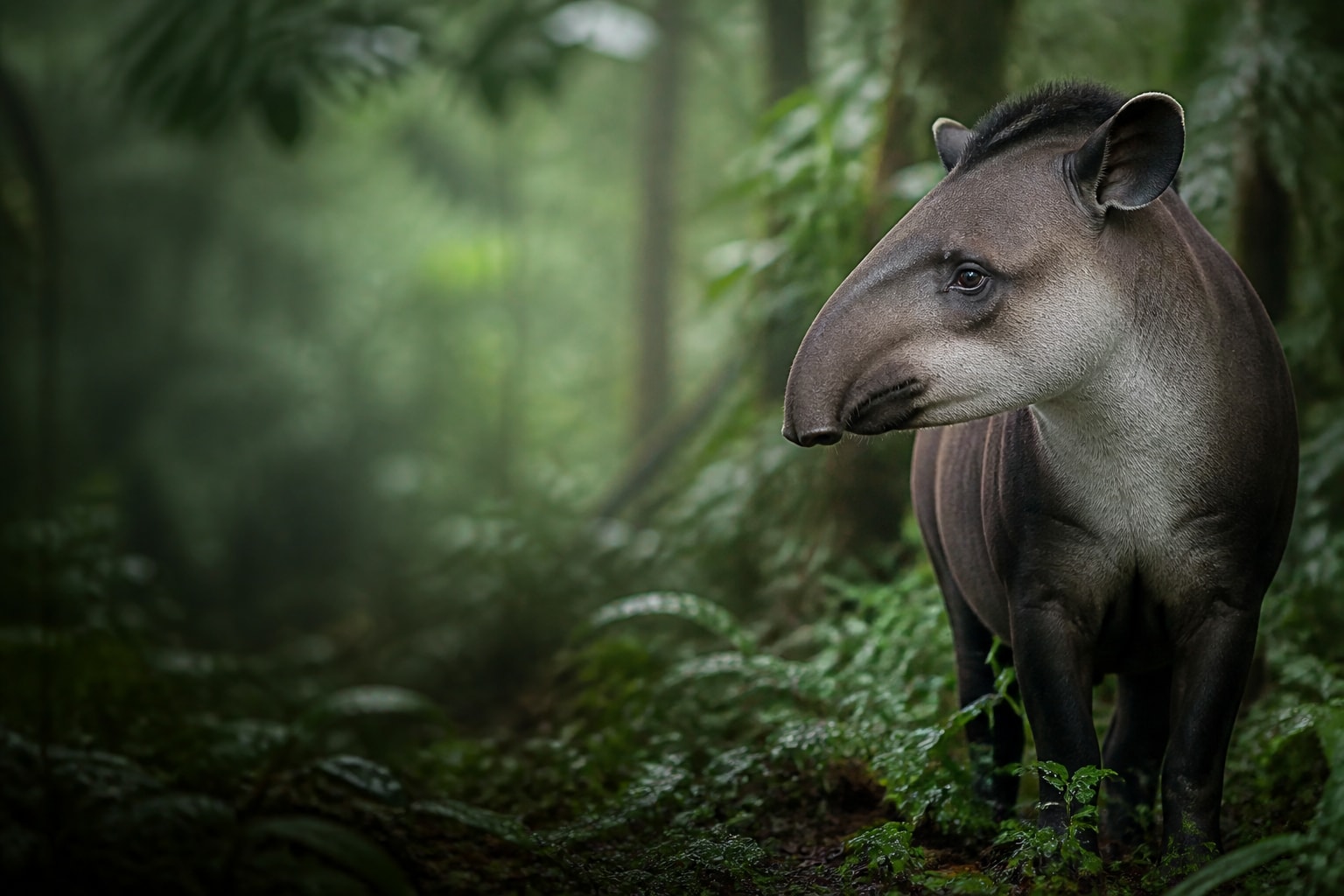
Living fossil of Mesoamerica — prehensile snout, stout body, and Endangered forest gardener.
Endangered
Tapirus bairdii
Overview
Baird's tapirs are the largest native land mammals in Central America, browsing forest understorey with a flexible snout. They seed forests as they wander trails between wallows, salt licks, and fruiting trees.
For Costa Rica and Mexico collectors, Baird's tapir is a legendary rainforest heavyweight — rare, ancient-looking, and essential to healthy forests.
- Scientific nameTapirus bairdii
- Length1.8–2.5 m
- HeightAbout 1.2 m at the shoulder
- Weight150–300 kg
- LifespanAround 20–30 years in the wild
- DietLeaves
- ConservationEndangered
- RegionCentral American Forest
Where to see them
Habitat
- Tropical rainforest
- Montane forest
- Swamp forest
Humid tropical forest, montane forest, and swampy lowlands from southern Mexico to northern South America, needing cover, water, and browse.
Field notes
Field scale for the Baird's Tapir: length around 1.8-2.5 m; height About 1.2 m at the shoulder; weight 150-300 kg. Typical lifespan: Around 20-30 years in the wild.
When you are scanning habitat, prioritise tropical rainforest, montane forest, and swamp forest. Those settings are where a clean look and a usable photo are most likely.
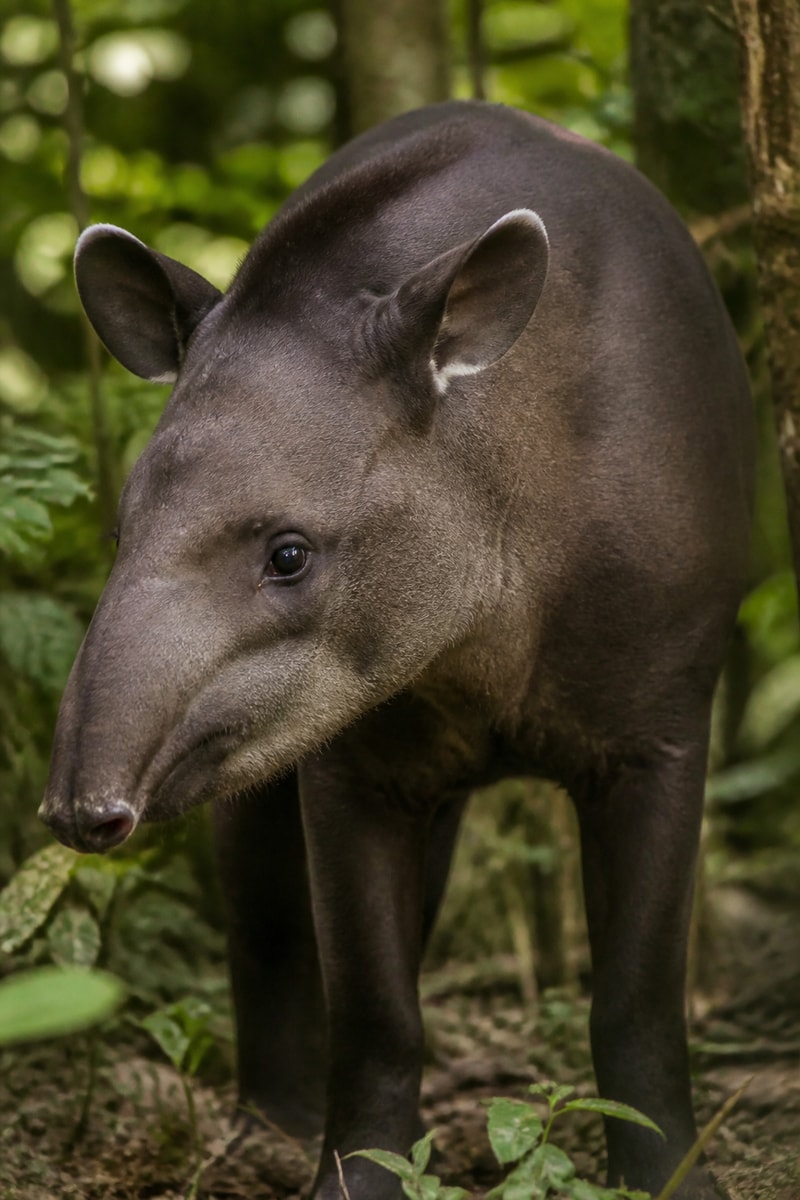
Quick ID anchor: Stocky dark brown tapir with a short prehensile snout and pale throat/cheek accents. Confirm with behaviour and habitat before you log the discovery.
Where to see one
Costa Rica
In Costa Rica, start at Corcovado National Park (Osa Peninsula). One of the most biodiverse places on the planet, with tapirs, scarlet macaws, and all four Costa Rican monkey species.
More context on this destination lives on the Costa Rica expedition page.
Diet
Leaves, twigs, fruits, and aquatic vegetation browsed along forest trails.
Selective browsers that follow seasonal fruit and flush of new leaves.
Behaviour
Mostly solitary and crepuscular to nocturnal.
Use well-worn paths between water, wallows, and feeding sites.
How to identify
Stocky dark brown tapir with a short prehensile snout and pale throat/cheek accents.
Juveniles wear white spots and streaks that fade with age.
Interesting facts
- 01
Largest native terrestrial mammal in Central America.
- 02
Flexible proboscis grips leaves and fruit.
- 03
Young are patterned with spots and stripes.
- 04
Strong swimmers that wallow to cool off.
- 05
Important seed dispersers in Neotropical forests.
- 06
Usually solitary except mothers with calves.
Conservation status
Baird's tapirs are Endangered. Hunting and habitat loss fragment their range. Large protected forests from Mexico through Costa Rica remain core strongholds.
Sources: IUCN Red List
Related discoveries


Keep exploring
Where it lives
Related discoveries
Free on iOS
Catch the Baird's Tapir
Spot one in the wild, then scan it in Catch'Um to log your legendary discovery.