
Field guide · common
Clownfish
The anemone's roommate, a bright orange reef fish that lives immune among stinging tentacles and swaps sex when the dominant female dies.
Least Concern
Amphiprion ocellaris
Overview
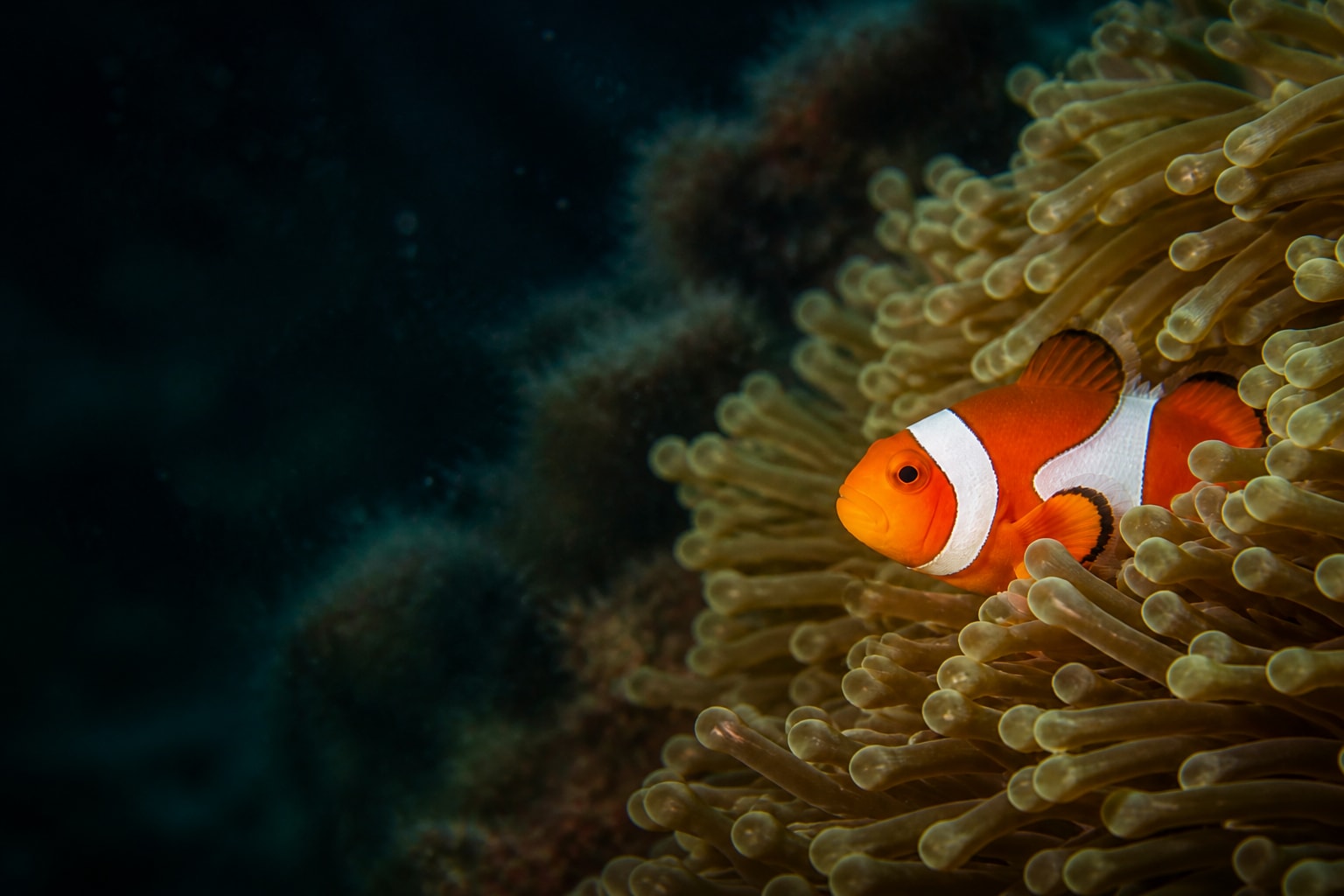
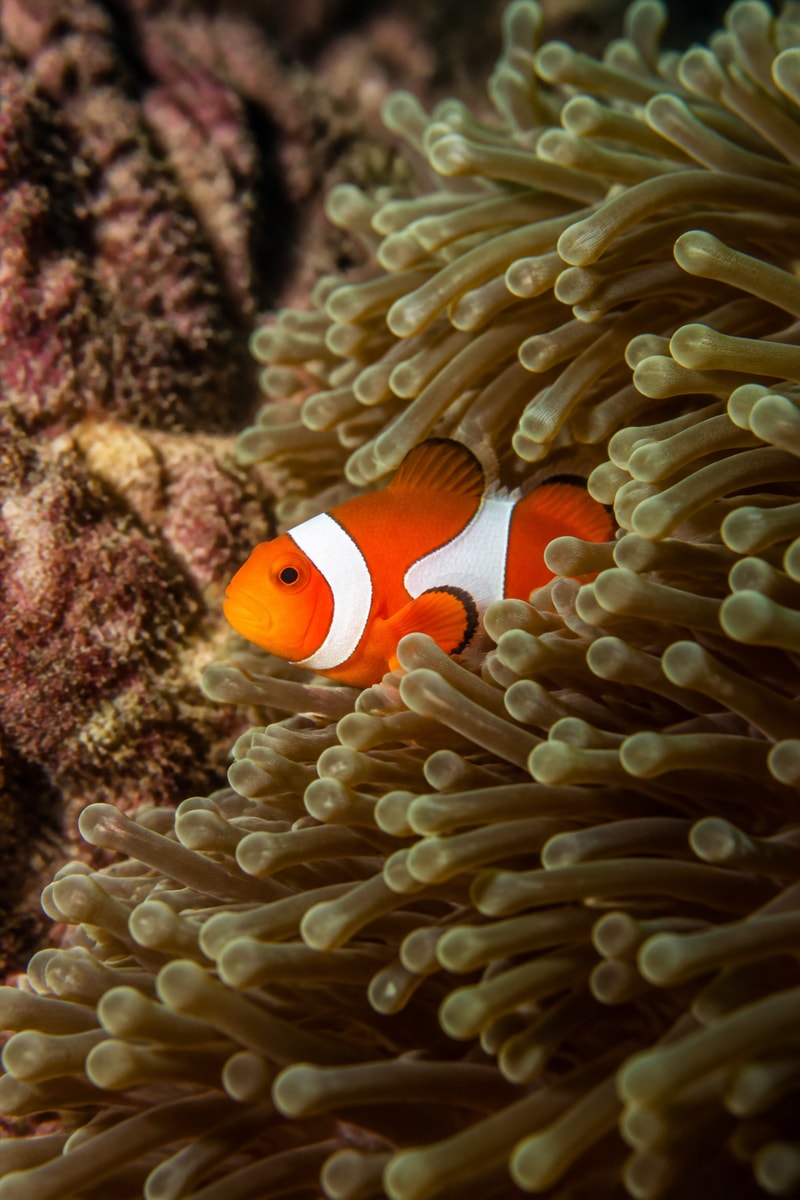
Clownfish, the real-life models for a famous animated film, live in symbiosis with sea anemones, sheltered from predators by stinging tentacles that would kill most fish. A special mucus coating prevents the anemone from stinging its resident clownfish.
Clownfish societies are fascinating: they are born male and live in hierarchy within an anemone, with the largest female dominant. When she dies, the largest male transforms into a female, a rare example of sequential hermaphroditism.
- Scientific nameAmphiprion ocellaris
- Length8–11 cm
- WeightUnder 50 g
- LifespanAround 6–10 years in the wild
- DietOcellaris clownfish feed…
- ConservationLeast Concern
- RegionCoral Reef
Habitat
- Coral reefs
- Shallow lagoons
Shallow coral reefs in the Indo-Pacific hold clownfish and their host anemones. Indonesia's Raja Ampat, Bali, and Komodo waters offer some of the easiest reef snorkelling for spotting orange-and-white pairs darting among the tentacles.
Countries found
Field notes
Field scale for the Clownfish: length around 8-11 cm; weight Under 50 g. Typical lifespan: Around 6-10 years in the wild.
When you are scanning habitat, prioritise coral reefs and shallow lagoons. Those settings are where a clean look and a usable photo are most likely.
Quick ID anchor: Bright orange body with three bold white bars edged in thin black; fins are rounded. Confirm with behaviour and habitat before you log the discovery.
Where to see one
Indonesia
In Indonesia, start at Komodo National Park (East Nusa Tenggara). The only place on Earth to see wild Komodo dragons, patrolling savanna hillsides between pink-sand beaches and manta-filled reefs.
More context on this destination lives on the Indonesia expedition page.
Diet
Ocellaris clownfish feed on zooplankton, algae, and leftover scraps within their host anemone.
They also nibble parasites and debris from the anemone, helping keep the tentacles clean.
Behaviour
They live in strict hierarchy inside a single anemone; all are born male, and the largest fish becomes female if she dies.
A mucus coating lets them move among stinging tentacles that would harm most other reef fish.
How to identify
Bright orange body with three bold white bars edged in thin black; fins are rounded.
Smaller and more finely barred than many Amphiprion species; often confused with the similar A. percula.
Interesting facts
- 01
Clownfish live among stinging anemones, a mucus coating protects them.
- 02
All clownfish are born male, the dominant fish becomes female.
- 03
They fan eggs laid on rocks near the anemone to keep them oxygenated.
Conservation status
Ocellaris clownfish are Least Concern in the wild, though coral reef degradation threatens their habitat. The aquarium trade relies heavily on captive breeding after wild collection was restricted.
Sources: IUCN Red List
Keep exploring
Related discoveries
Free on iOS
Catch the Clownfish
Spot one in the wild, then scan it in Catch'Um to log your common discovery.