
Field guide · legendary
Shoebill
A prehistoric stare and a shoe-shaped bill — Uganda's most surreal wetland bird.
Vulnerable
Balaeniceps rex
Overview
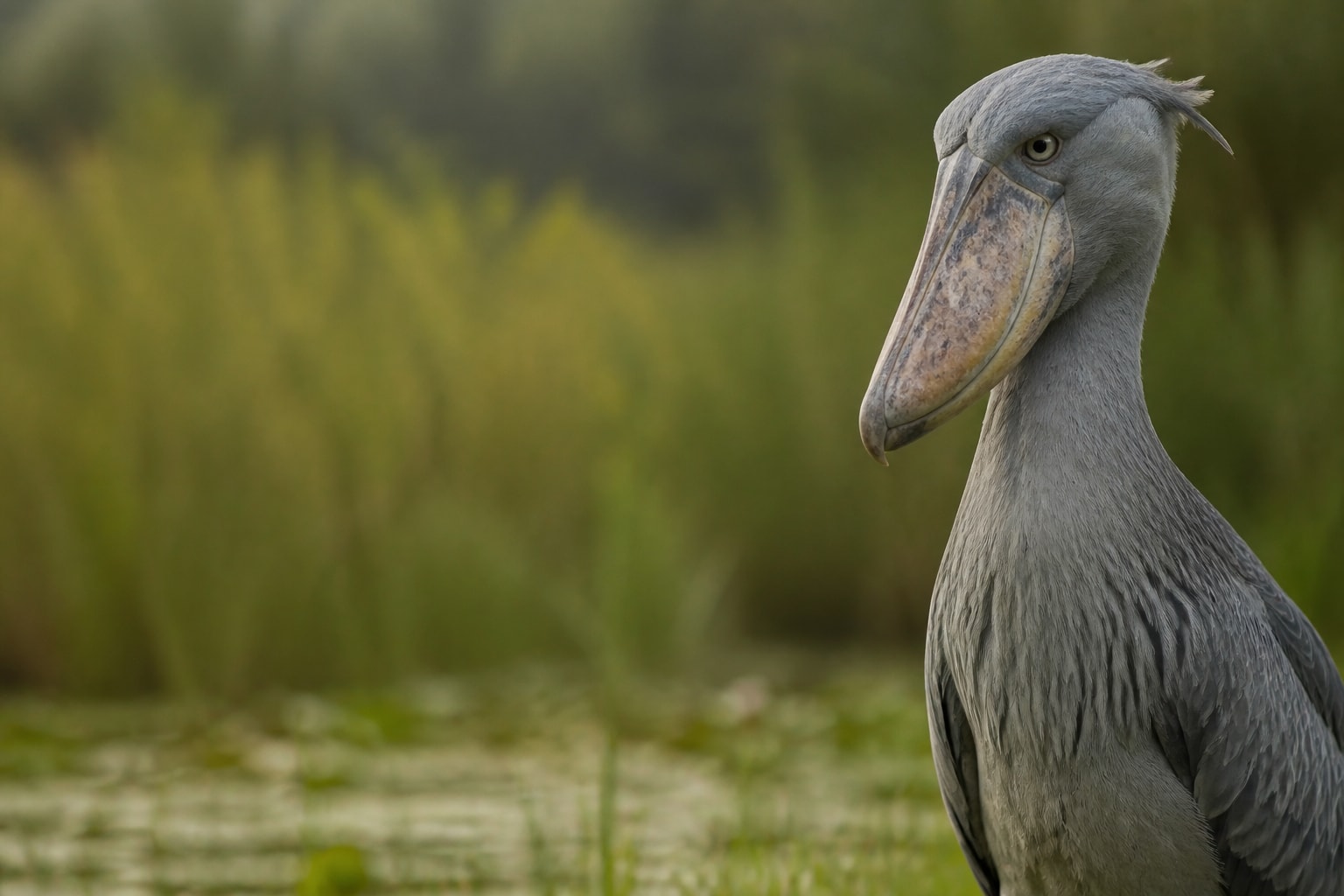
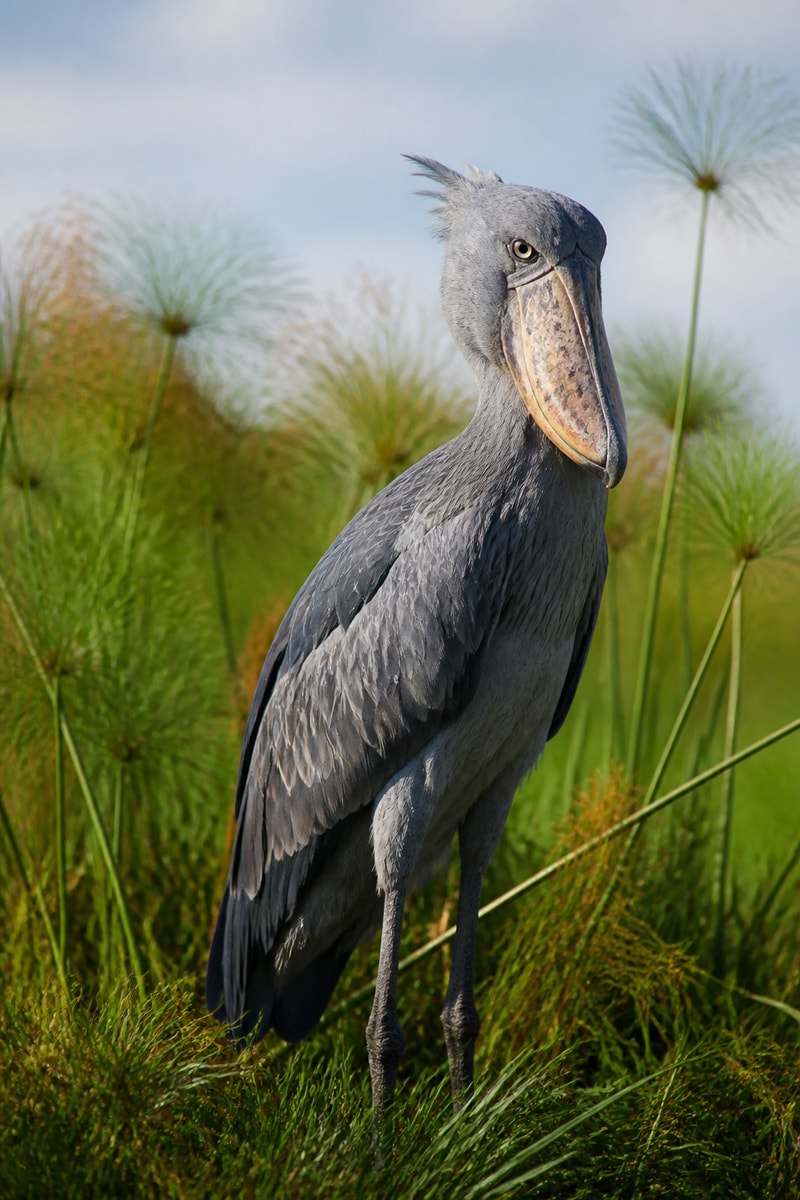
The shoebill looks carved from another age: tall, grey, and still as stone, with a massive shoe-shaped bill built to snatch lungfish from papyrus swamps. It waits motionless, then strikes with shocking speed.
For Uganda collectors, a shoebill in the Mabamba wetlands is a bucket-list Catch'Um card — rare, strange, and instantly shareable.
- Scientific nameBalaeniceps rex
- LengthWingspan ~2.3 m
- Height110–140 cm
- Weight4–7 kg
- LifespanAround 35 years estimated
- DietLungfish
- ConservationVulnerable
- RegionPapyrus Swamps
Where to see them
Habitat
- Papyrus swamp
- Freshwater marsh
- Floodplain
Extensive freshwater marshes and papyrus swamps in central and eastern Africa, notably around Lake Victoria's Ugandan shores and the Sudd.
Field notes
Field scale for the Shoebill: length around Wingspan ~2.3 m; height 110-140 cm; weight 4-7 kg. Typical lifespan: Around 35 years estimated.
When you are scanning habitat, prioritise papyrus swamp, freshwater marsh, and floodplain. Those settings are where a clean look and a usable photo are most likely.
Quick ID anchor: Tall blue-grey bird with a massive shoe-shaped bill and staring pale eyes. Confirm with behaviour and habitat before you log the discovery.
Diet
Lungfish, catfish, frogs, and young reptiles snatched from swamp water.
Ambush hunters that freeze for long periods before a sudden bill strike.
Behaviour
Usually solitary or in pairs; nest on floating vegetation.
Slow, deliberate walkers that rarely soar far from wetlands.
How to identify
Tall blue-grey bird with a massive shoe-shaped bill and staring pale eyes.
Broad wings in flight; shaggy crest at the back of the head.
Interesting facts
- 01
The bill can be over 20 cm long and ends in a sharp hook.
- 02
Shoebills specialise on lungfish and other swamp fish.
- 03
They stand motionless for long periods before striking.
- 04
Pairs nest on floating vegetation platforms.
- 05
Despite the stork-like look, they are in their own unique family.
- 06
Their slow blink and stare have made them internet-famous.
Conservation status
Shoebills are Vulnerable. Wetland drainage, burning, and disturbance shrink nesting habitat. Protecting papyrus swamps in Uganda and neighbouring countries is essential.
Sources: IUCN Red List

Free on iOS
Catch the Shoebill
Spot one in the wild, then scan it in Catch'Um to log your legendary discovery.