
Field guide · rare
Chimpanzee
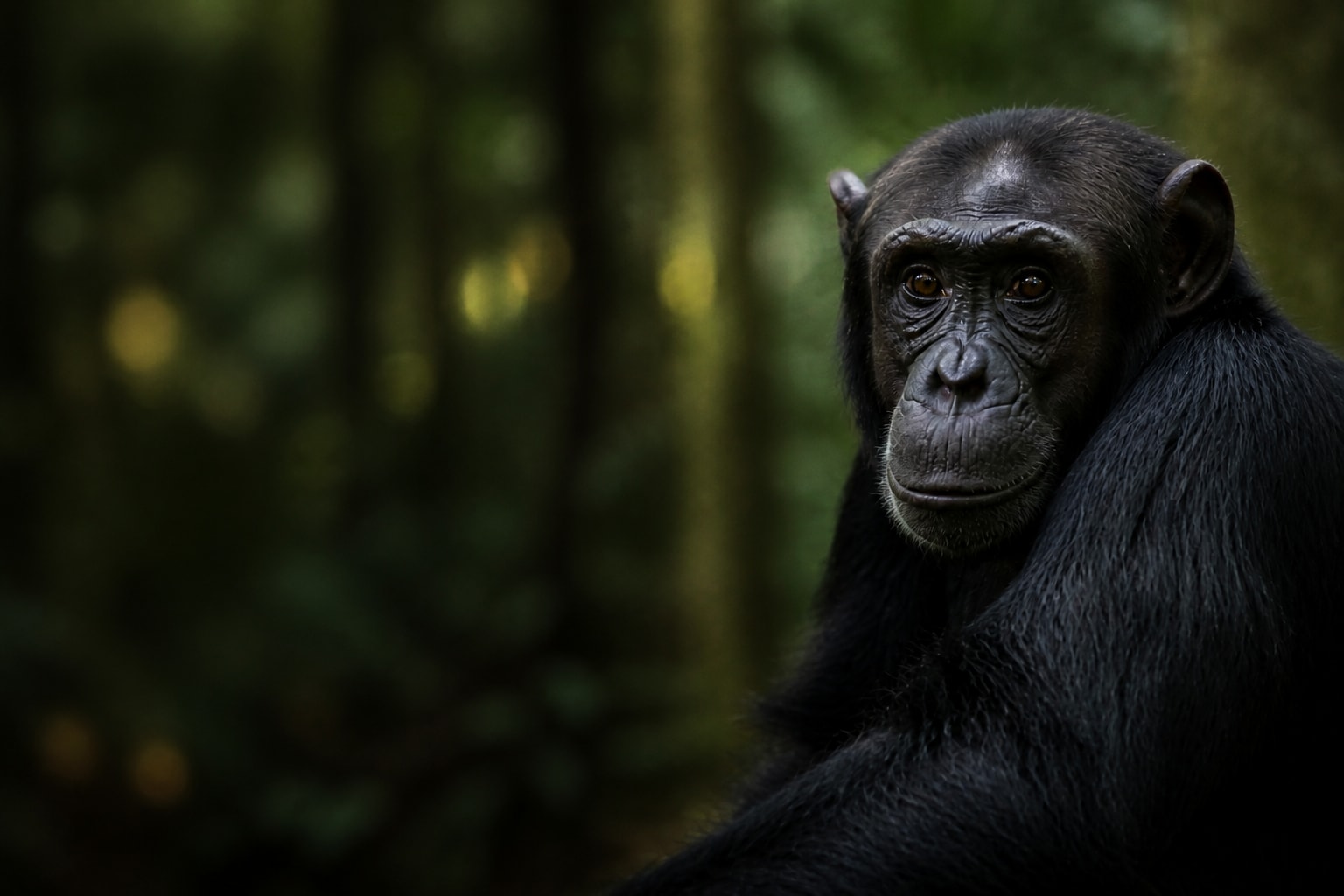
Our closest living relative, an intelligent great ape that makes tools, grooms in family groups, and sees the forest with knowing eyes.
Endangered
Pan troglodytes
Overview
The chimpanzee shares about 98.7% of its DNA with humans and displays behaviour that once seemed uniquely ours: tool use, cooperative hunting, culture passed between generations, and complex social politics. Communities of up to 150 individuals split into smaller foraging parties through the forest.
Chimpanzees fashion twigs to fish termites from mounds, use stones as hammers to crack nuts, and communicate through gestures, calls, and facial expressions remarkably like our own. Tracking them through Kibale or Budongo forest is one of Africa's great primate experiences.
- Scientific namePan troglodytes
- Height1.0–1.7 m standing
- Weight25–70 kg
- LifespanAround 30–40 years in the wild; longer in captivity
- DietOmnivore
- ConservationEndangered
- RegionRainforest
Habitat
- Tropical rainforest
- Woodland savanna
Tropical rainforest and woodland savanna across equatorial Africa. Uganda's Kibale National Park holds one of the world's largest chimpanzee populations, with habituated groups allowing close observation on guided treks.
Countries found
Field notes
Field scale for the Chimpanzee: height 1.0-1.7 m standing; weight 25-70 kg. Typical lifespan: Around 30-40 years in the wild; longer in captivity.
When you are scanning habitat, prioritise tropical rainforest and woodland savanna. Those settings are where a clean look and a usable photo are most likely.
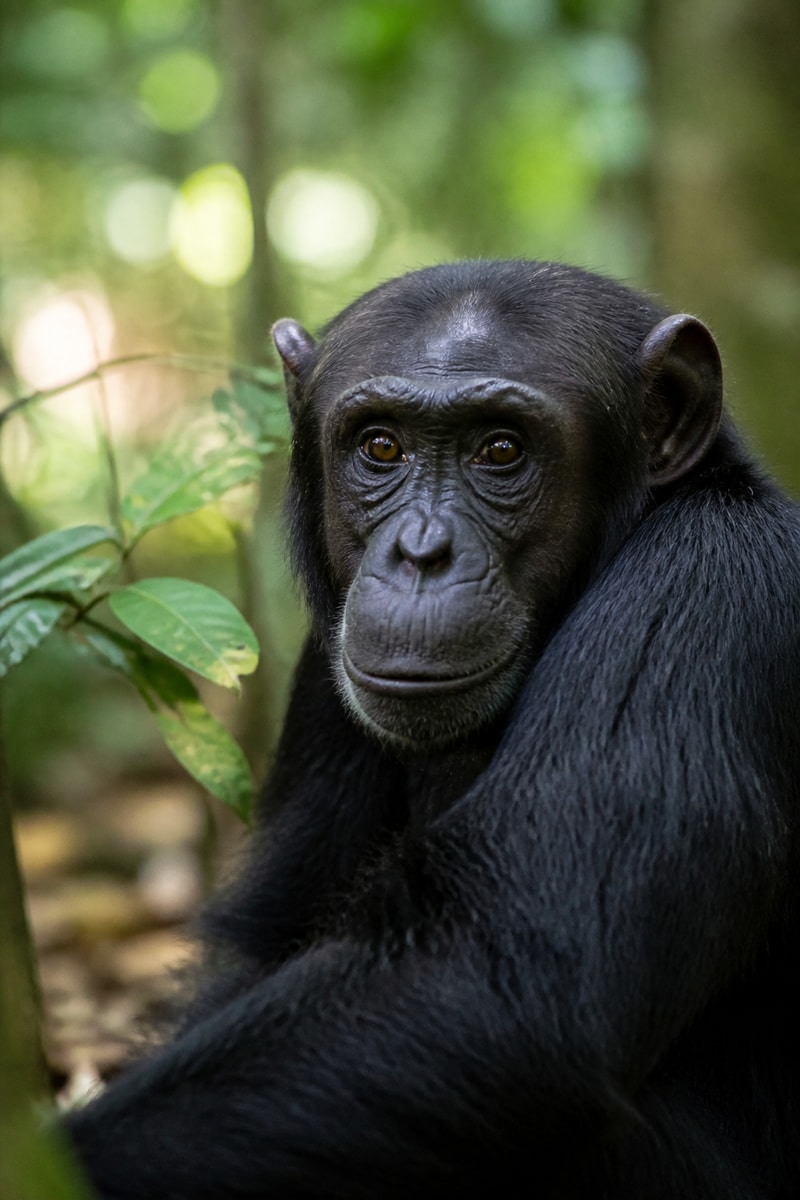
Quick ID anchor: Great ape with mostly black hair, bare face, and long arms for knuckle-walking and climbing. Smaller and leaner than gorillas; expressive face and ears that protrude from the head. Confirm with behaviour and habitat before you log the discovery.
Where to see one
Uganda
In Uganda, start at Kibale National Park (Western Uganda). Primate capital of the world, with habituated chimpanzee communities and 12 other primate species in lush rainforest.
More context on this destination lives on the Uganda expedition page.
Diet
Omnivores eating fruit, leaves, seeds, insects, and occasionally hunted mammals. Use tools such as termite-fishing sticks and stone hammers to crack nuts in some populations.
Behaviour
Live in fission–fusion communities with complex social politics, grooming, and alliances. Travel and forage by day, build leafy nests in trees at night, and show population-specific cultural behaviours.
How to identify
Great ape with mostly black hair, bare face, and long arms for knuckle-walking and climbing. Smaller and leaner than gorillas; expressive face and ears that protrude from the head.
Interesting facts
- 01
Chimpanzees use tools, twigs for termites and stones to crack nuts.
- 02
They share about 98.7% of their DNA with humans.
- 03
Chimp communities have distinct cultures, different groups use different tools.
Conservation status
Chimpanzees are Endangered, with populations falling from habitat loss, bushmeat hunting, and disease. Uganda's protected forests are among the most important strongholds for East African chimpanzees.
Sources: IUCN Red List
Keep exploring
Free on iOS
Catch the Chimpanzee
Spot one in the wild, then scan it in Catch'Um to log your rare discovery.