
Field guide · legendary
Gorilla
The gentle giant of the mist, a great ape whose family bonds and calm strength make every mountain encounter unforgettable.
Endangered
Gorilla beringei
Overview
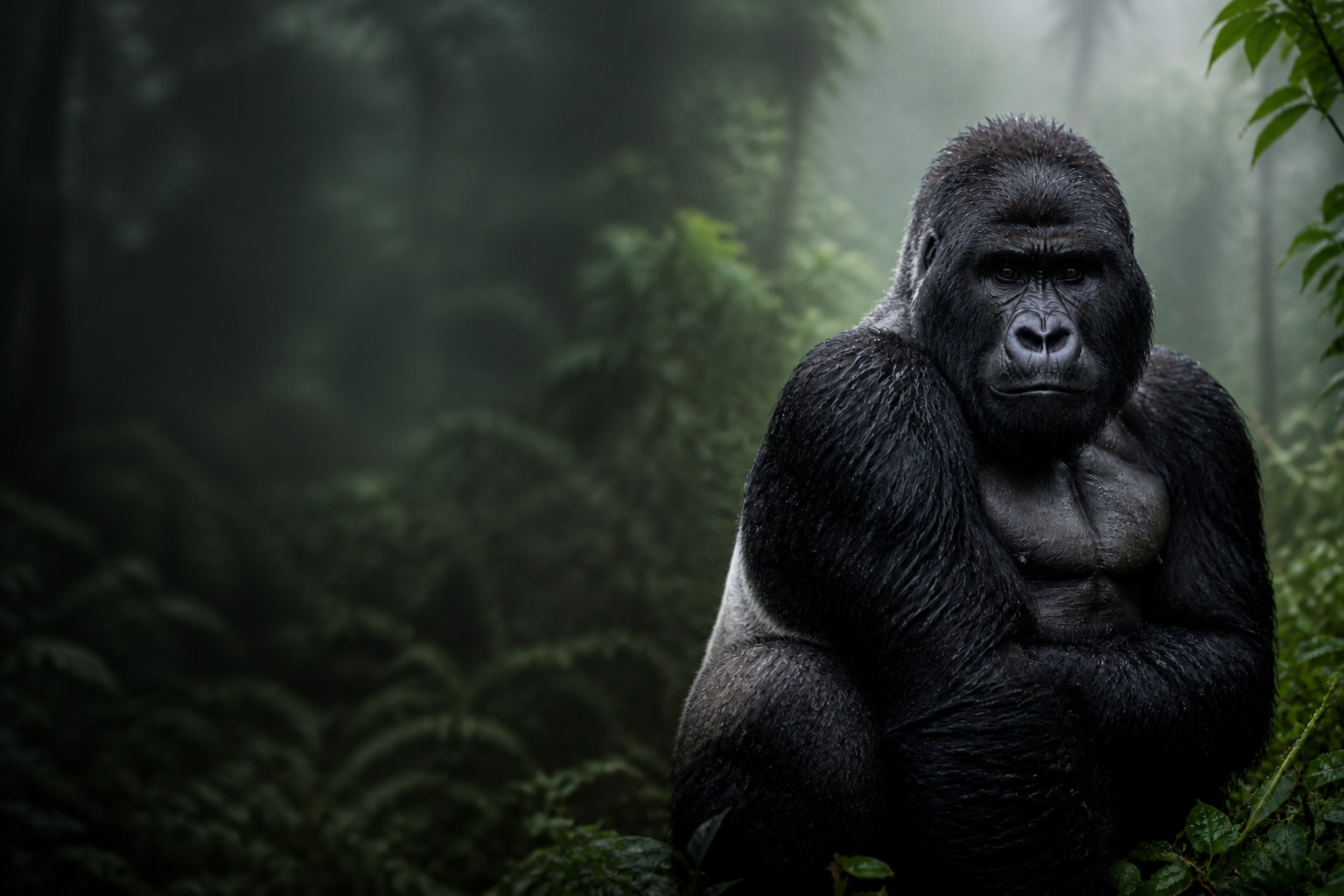
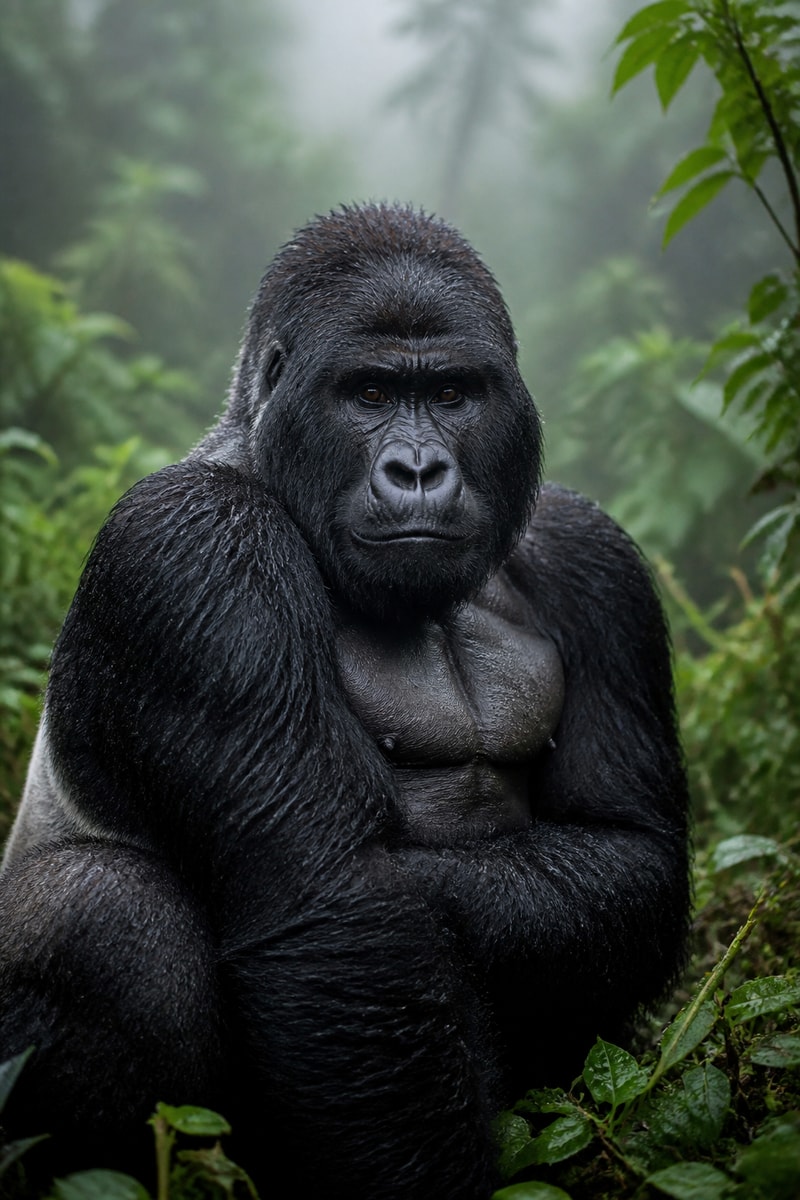
The mountain gorilla is one of humanity's closest relatives, sharing about 98% of our DNA. Silverback males lead family groups of females and young through dense montane forest, foraging on leaves, stems, and wild celery for hours each day.
Gorillas are far gentler than their size suggests, playing, grooming, and communicating through grumbles, chest beats, and expressive eyes. Habituated groups in Rwanda and Uganda allow carefully managed trekking that funds conservation and local communities.
- Scientific nameGorilla beringei
- Height1.4–1.8 m standing
- WeightMales ~140–200+ kg; females ~70–110 kg
- LifespanAround 35–40 years in the wild
- DietFolivore
- ConservationEndangered
- RegionMountain Forest
Habitat
- Montane rainforest
- Cloud forest
Montane rainforest on the volcanic slopes of the Virunga Mountains, spanning Rwanda, Uganda, and the Democratic Republic of Congo. Gorillas need dense forest with abundant herbaceous vegetation and minimal human disturbance.
Countries found
Field notes
Field scale for the Gorilla: height 1.4-1.8 m standing; weight Males ~140-200+ kg; females ~70-110 kg. Typical lifespan: Around 35-40 years in the wild.
When you are scanning habitat, prioritise montane rainforest and cloud forest. Those settings are where a clean look and a usable photo are most likely.
Quick ID anchor: Largest living primate: stocky black-haired body, long arms, and a broad face. Adult males develop a silver saddle of hair on the back; each individual has a unique nose print. Confirm with behaviour and habitat before you log the discovery.
Where to see one
Rwanda
In Rwanda, start at Volcanoes National Park (Northwest Rwanda). Montane rainforest on the slopes of the Virunga volcanoes, home to habituated mountain gorilla families and golden monkeys.
More context on this destination lives on the Rwanda expedition page.
Diet
Mountain gorillas are largely folivores: leaves, stems, pith, and wild celery, plus occasional fruit and bark. Silverbacks and females spend long hours foraging on the forest floor.
Behaviour
Live in stable family groups led by a dominant silverback. Day ranges are short; they build fresh ground nests each night and communicate with grunts, chest-beats, and posture.
How to identify
Largest living primate: stocky black-haired body, long arms, and a broad face. Adult males develop a silver saddle of hair on the back; each individual has a unique nose print.
Interesting facts
- 01
Gorillas share about 98% of their DNA with humans.
- 02
Silverbacks can weigh over 200 kilograms but eat mostly plants.
- 03
Each gorilla nose print is unique, like a fingerprint.
Conservation status
Mountain gorillas are Endangered but recovering, one of conservation's success stories. Tourism revenue in Rwanda's Volcanoes National Park has helped triple their numbers since the 1980s.
Sources: IUCN Red List
Related discoveries
Keep exploring
Where it lives
Related discoveries
Free on iOS
Catch the Gorilla
Spot one in the wild, then scan it in Catch'Um to log your legendary discovery.