
Field guide · rare
Mandrill
The world's most colourful primate face — scarlet nose, cobalt ridges, and forest-floor power.
Vulnerable
Mandrillus sphinx
Overview
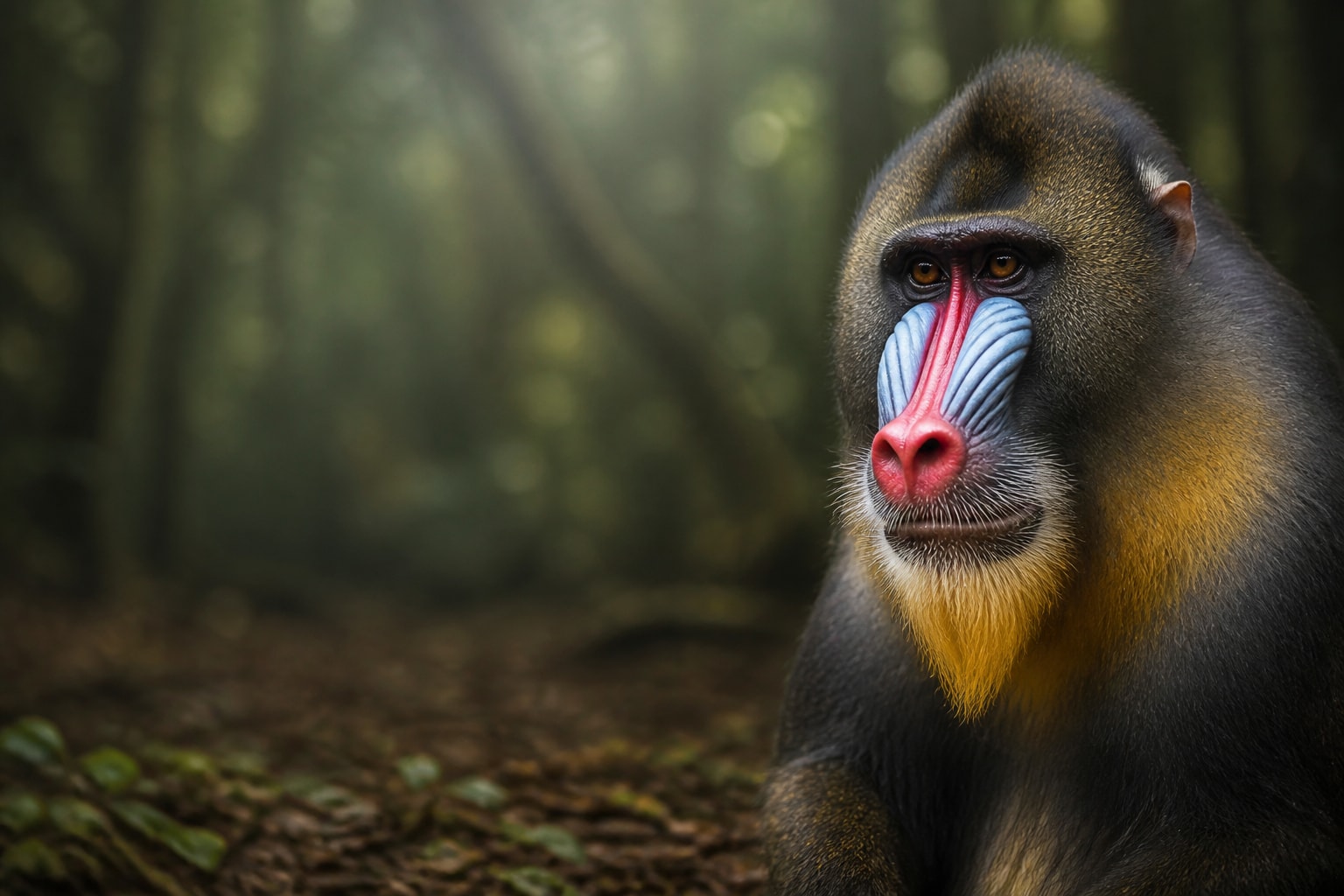
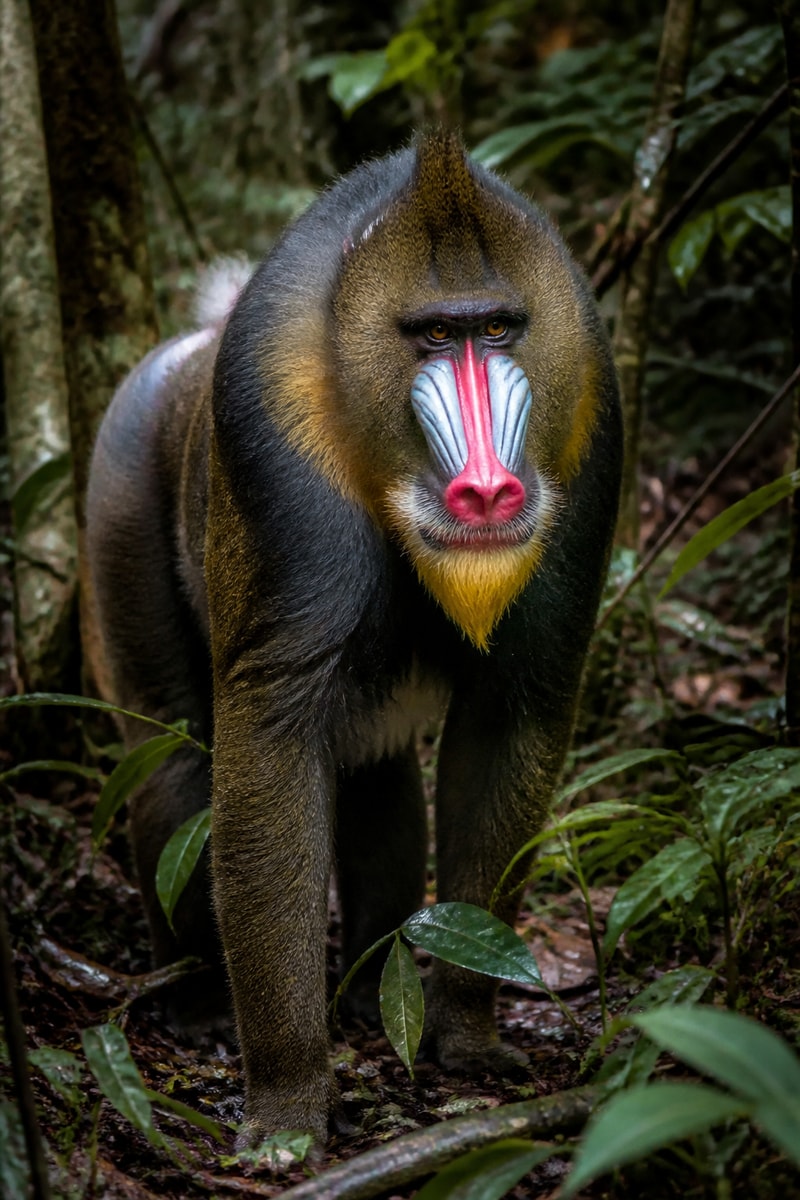
Mandrills are the largest monkeys, roaming Central African rainforests in large multi-male, multi-female groups. Adult males flash vivid red-and-blue facial skin and a golden beard used in dominance displays.
For Congo collectors, a mandrill on the forest floor is a rare Central African icon — unmistakable colour and serious presence.
- Scientific nameMandrillus sphinx
- Length55–95 cm body; tail short ~5–10 cm
- WeightFemales ~10–15 kg; males ~20–35 kg
- LifespanAround 20 years in the wild
- DietOmnivore
- ConservationVulnerable
- RegionCentral African Rainforest
Where to see them
Habitat
- Tropical rainforest
- Forest floor
- Secondary forest
Primary and secondary rainforest of western Central Africa, especially Gabon, Cameroon, Equatorial Guinea, and the Republic of the Congo, foraging from the forest floor into the lower canopy.
Field notes
Field scale for the Mandrill: length around 55-95 cm body; tail short ~5-10 cm; weight Females ~10-15 kg; males ~20-35 kg. Typical lifespan: Around 20 years in the wild.
When you are scanning habitat, prioritise tropical rainforest, forest floor, and secondary forest. Those settings are where a clean look and a usable photo are most likely.
Quick ID anchor: Olive-brown body, bright red-and-blue face on adult males, golden beard, and ridged snout. Confirm with behaviour and habitat before you log the discovery.
Where to see one
DR Congo
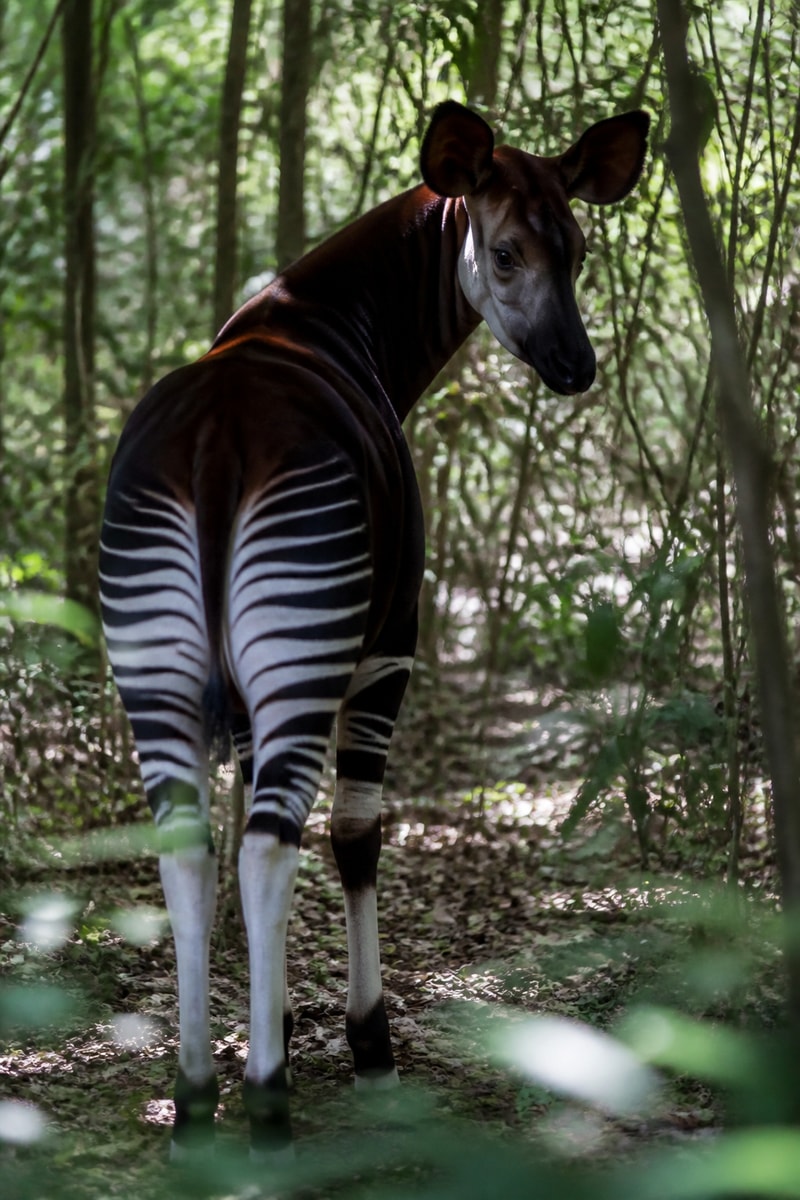
In DR Congo, start at Okapi Wildlife Reserve (Ituri Forest). UNESCO World Heritage Site and the global stronghold for wild okapis in primary rainforest.
More context on this destination lives on the DR Congo expedition page.
Diet
Omnivores taking fruit, seeds, leaves, fungi, invertebrates, and occasional small vertebrates.
Forage mainly on the ground while scanning the understorey for food.
Behaviour
Live in large, mobile social groups with ranked males and females.
Males may join breeding groups seasonally; loud grunts and yawns reinforce hierarchy.
How to identify
Olive-brown body, bright red-and-blue face on adult males, golden beard, and ridged snout.
Stumpy tail and powerful limbs; females and juveniles are duller.
Interesting facts
- 01
Mandrills are the largest living monkeys.
- 02
Adult males have bright red noses and blue facial ridges.
- 03
Colour intensity signals male rank and condition.
- 04
Groups can number dozens to over a hundred individuals.
- 05
They eat fruit, seeds, leaves, insects, and small animals.
- 06
Long canine teeth are used in displays and defence.
Conservation status
Mandrills are Vulnerable. Hunting for bushmeat and rainforest loss reduce populations. Large protected forests in Gabon and neighbouring Congo Basin countries remain key strongholds.
Sources: IUCN Red List
Free on iOS
Catch the Mandrill
Spot one in the wild, then scan it in Catch'Um to log your rare discovery.