
Field guide · common
Okapi
The forest giraffe, a zebra-striped relative of the giraffe, hidden in Congo rainforest until 1901.
Endangered
Okapia johnstoni
Overview
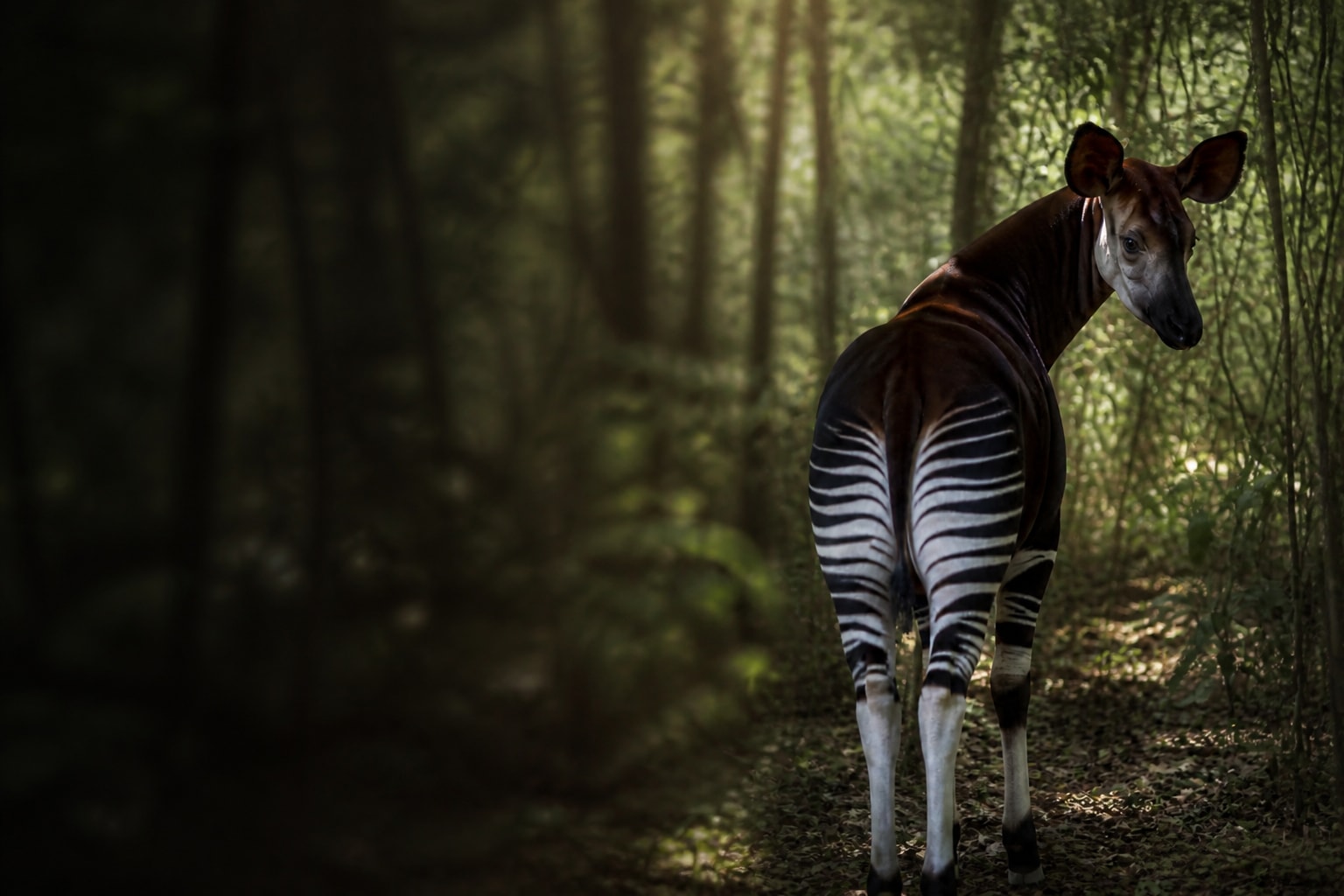
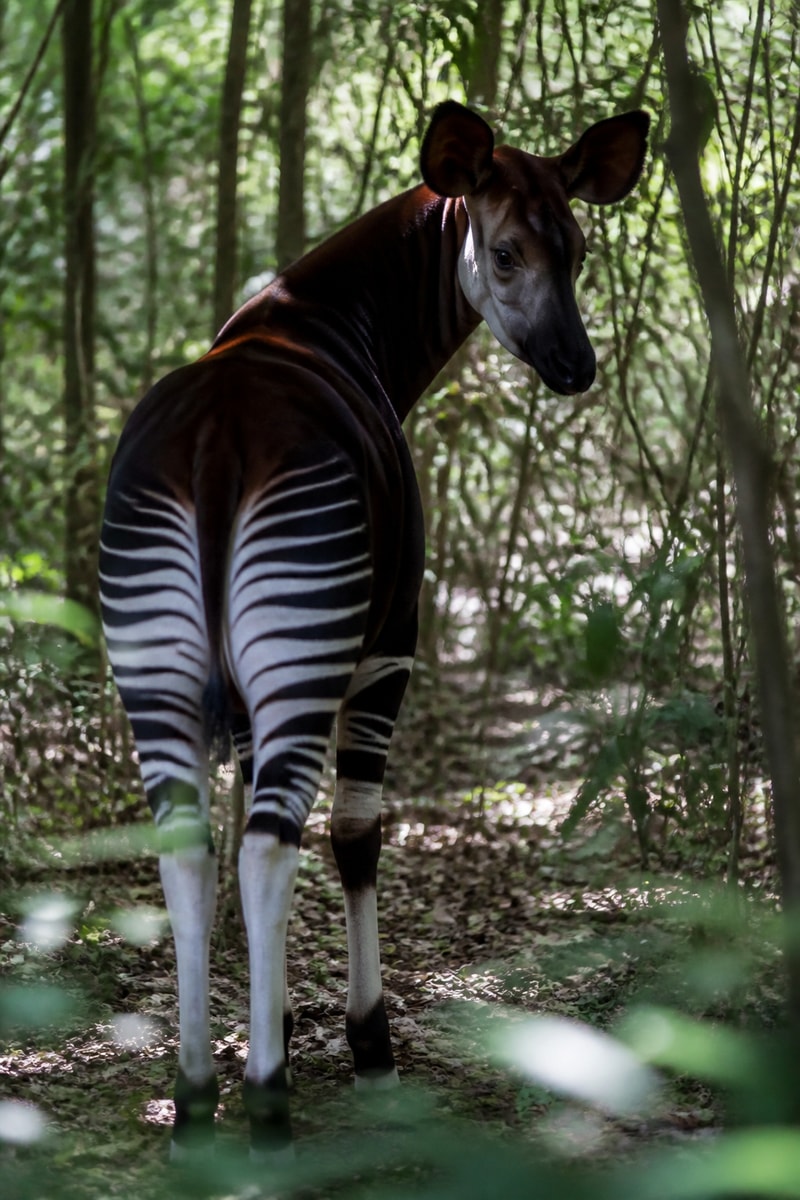
The okapi looks like a creature assembled from spare parts: giraffe-like head on a horse body with vivid zebra stripes on the legs. It is the giraffe's only living relative, sharing a long blue tongue and ossicone head bumps, but adapted to dense rainforest rather than open savanna.
Okapis were unknown to Western science until 1901, when British explorers confirmed local accounts of a 'forest donkey' in the Ituri Rainforest. They remain elusive, solitary browsers of the understorey, rarely seen despite their size.
- Scientific nameOkapia johnstoni
- Length2.0–2.2 m body
- Height1.5–1.8 m at shoulder
- Weight200–350 kg
- LifespanAround 15–20 years in the wild
- DietBrowser of rainforest…
- ConservationEndangered
- RegionRainforest Understorey
Habitat
- Tropical rainforest
- Riverine forest
Dense primary rainforest in the Democratic Republic of Congo holds the okapi's entire wild range. The Okapi Wildlife Reserve in the Ituri Forest protects the largest population, though civil conflict and poaching remain constant threats.
Countries found
Field notes
Field scale for the Okapi: length around 2.0-2.2 m body; height 1.5-1.8 m at shoulder; weight 200-350 kg. Typical lifespan: Around 15-20 years in the wild.
When you are scanning habitat, prioritise tropical rainforest and riverine forest. Those settings are where a clean look and a usable photo are most likely.
Quick ID anchor: Chocolate-brown body with zebra-like white stripes on the legs and rump; giraffe-like head and ossicones. Confirm with behaviour and habitat before you log the discovery.
Where to see one
DR Congo
In DR Congo, strong options include Okapi Wildlife Reserve and Salonga National Park. UNESCO World Heritage Site and the global stronghold for wild okapis in primary rainforest.
Open the DR Congo spotting guide for every park note tied to the okapi.
Diet
Browser of rainforest understorey leaves, buds, ferns, fruit, and fungi, using a long prehensile tongue.
Selective feeder that takes many plant species in Congo forest.
Behaviour
Shy, mostly solitary and diurnal to crepuscular; relies on dense cover and acute hearing.
Closely related to the giraffe but adapted to closed rainforest rather than open savanna.
How to identify
Chocolate-brown body with zebra-like white stripes on the legs and rump; giraffe-like head and ossicones.
Large ears and a long blue-black tongue; unmistakable once seen in forest.
Interesting facts
- 01
Okapis were unknown to Western science until 1901. They look like zebra-giraffe hybrids.
- 02
Their 35-centimetre tongue is blue and long enough to clean their own ears.
- 03
Okapis are the giraffe's closest living relative.
Conservation status
Okapis are Endangered, confined to the Ituri Rainforest of DR Congo. Poaching, habitat loss, and instability from armed conflict threaten one of Africa's most unusual mammals.
Sources: IUCN Red List
Related discoveries
Keep exploring
Free on iOS
Catch the Okapi
Spot one in the wild, then scan it in Catch'Um to log your common discovery.