
Field guide · legendary
Bonobo
The peaceful great ape of the Congo — matriarchal societies, social bonds, and rainforest genius.
Endangered
Pan paniscus
Overview
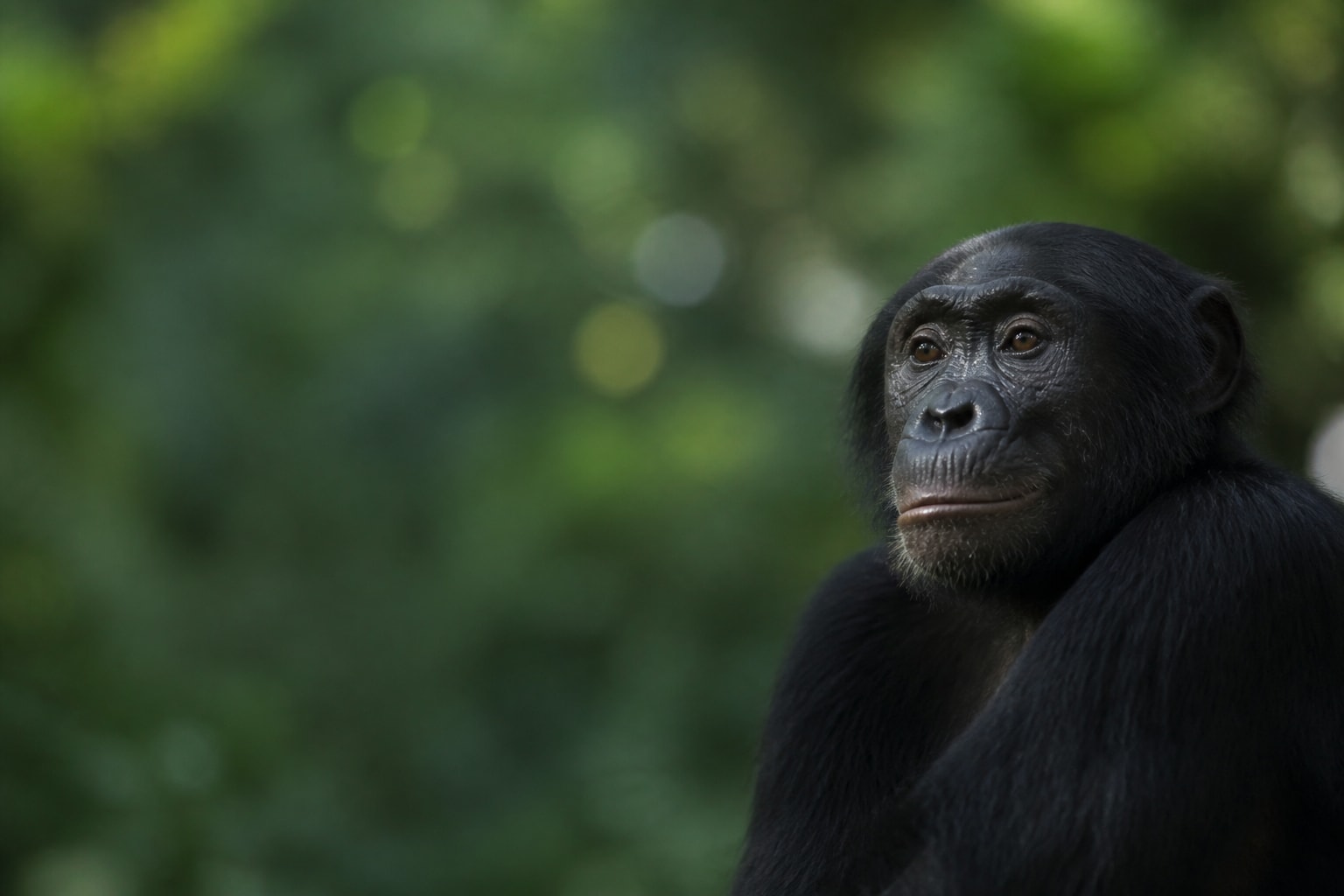
Bonobos are great apes found only south of the Congo River. Closely related to chimpanzees, they live in fission–fusion communities where females often hold high rank and conflicts are frequently eased through social contact rather than aggression.
For Congo collectors, a bonobo card is a legendary rainforest prize — rare, charismatic, and unique to Central African forests.
- Scientific namePan paniscus
- Height70–90 cm standing; longer when stretched
- WeightFemales ~25–35 kg; males ~35–45 kg
- LifespanAround 40 years in the wild
- DietPrimarily ripe fruit
- ConservationEndangered
- RegionCongo Basin Forest
Where to see them
Habitat
- Lowland rainforest
- Swamp forest
- Congo Basin canopy
Humid lowland rainforest and swamp forest of the Democratic Republic of the Congo, south of the Congo River, where fruiting trees and continuous canopy support large ranging communities.
Field notes
Field scale for the Bonobo: height 70-90 cm standing; longer when stretched; weight Females ~25-35 kg; males ~35-45 kg. Typical lifespan: Around 40 years in the wild.
When you are scanning habitat, prioritise lowland rainforest, swamp forest, and congo basin canopy. Those settings are where a clean look and a usable photo are most likely.
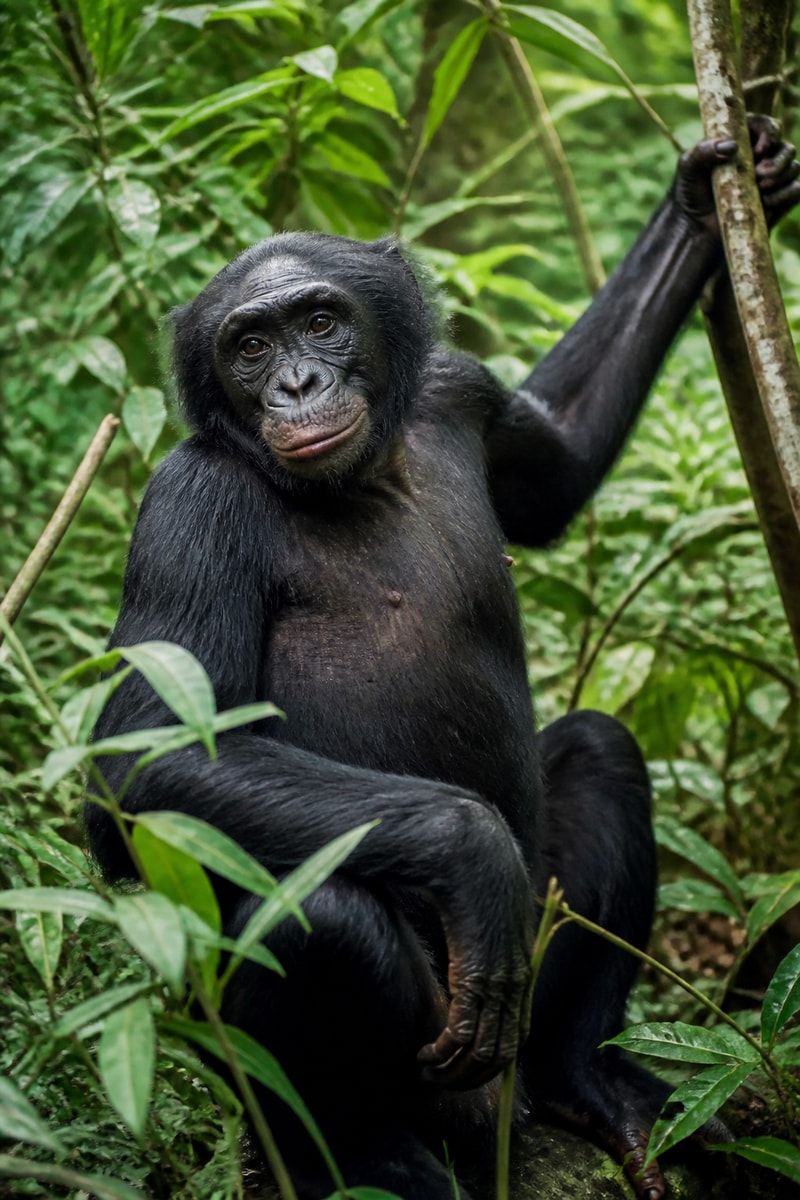
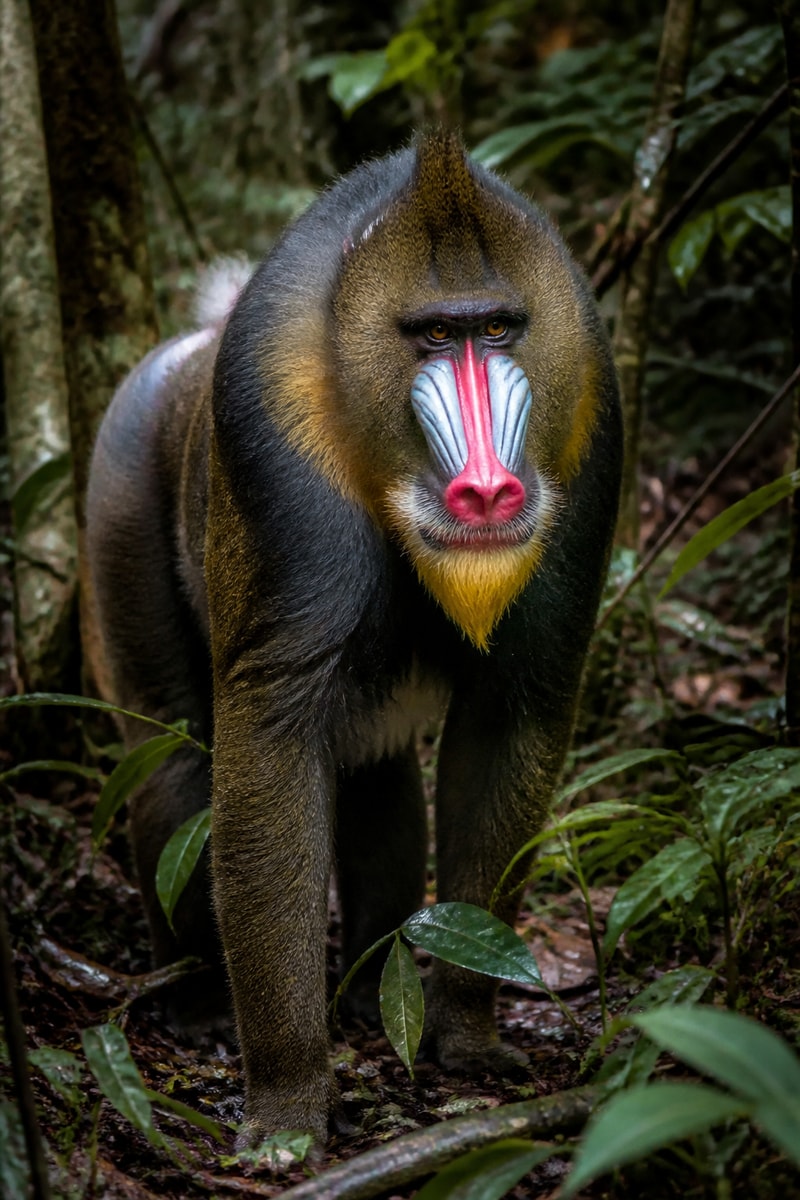
Quick ID anchor: Black coat, pink lips, and a more gracile build than chimpanzees; face often darker with age. Confirm with behaviour and habitat before you log the discovery.
Where to see one
DR Congo
In DR Congo, start at Okapi Wildlife Reserve (Ituri Forest). UNESCO World Heritage Site and the global stronghold for wild okapis in primary rainforest.
More context on this destination lives on the DR Congo expedition page.
Diet
Primarily ripe fruit, plus leaves, flowers, pith, and occasional insects or small vertebrates.
Forage widely through the canopy following seasonal fruiting trees.
Behaviour
Live in mixed-sex communities with strong female bonds and frequent social grooming.
Travel and feed by day; build leafy nests in trees each night.
How to identify
Black coat, pink lips, and a more gracile build than chimpanzees; face often darker with age.
Parted hair on the crown and relatively long legs give a distinctive silhouette.
Interesting facts
- 01
Bonobos live only south of the Congo River in Central Africa.
- 02
They share about 98–99% of their DNA with humans.
- 03
Females frequently outrank males in social hierarchies.
- 04
Communities form and split through the day (fission–fusion).
- 05
Fruit is a dietary staple, supplemented with leaves, pith, and invertebrates.
- 06
They walk bipedally more often than many other apes.
Conservation status
Bonobos are Endangered. Habitat loss, hunting for bushmeat, and civil conflict threaten remaining populations. Protected forests in the Congo Basin are essential for their survival.
Sources: IUCN Red List
Free on iOS
Catch the Bonobo
Spot one in the wild, then scan it in Catch'Um to log your legendary discovery.