
Field guide · rare
Fennec Fox
The desert's oversized ears — a tiny Saharan fox built for heat, sand, and silence.
Least Concern
Vulpes zerda
Overview
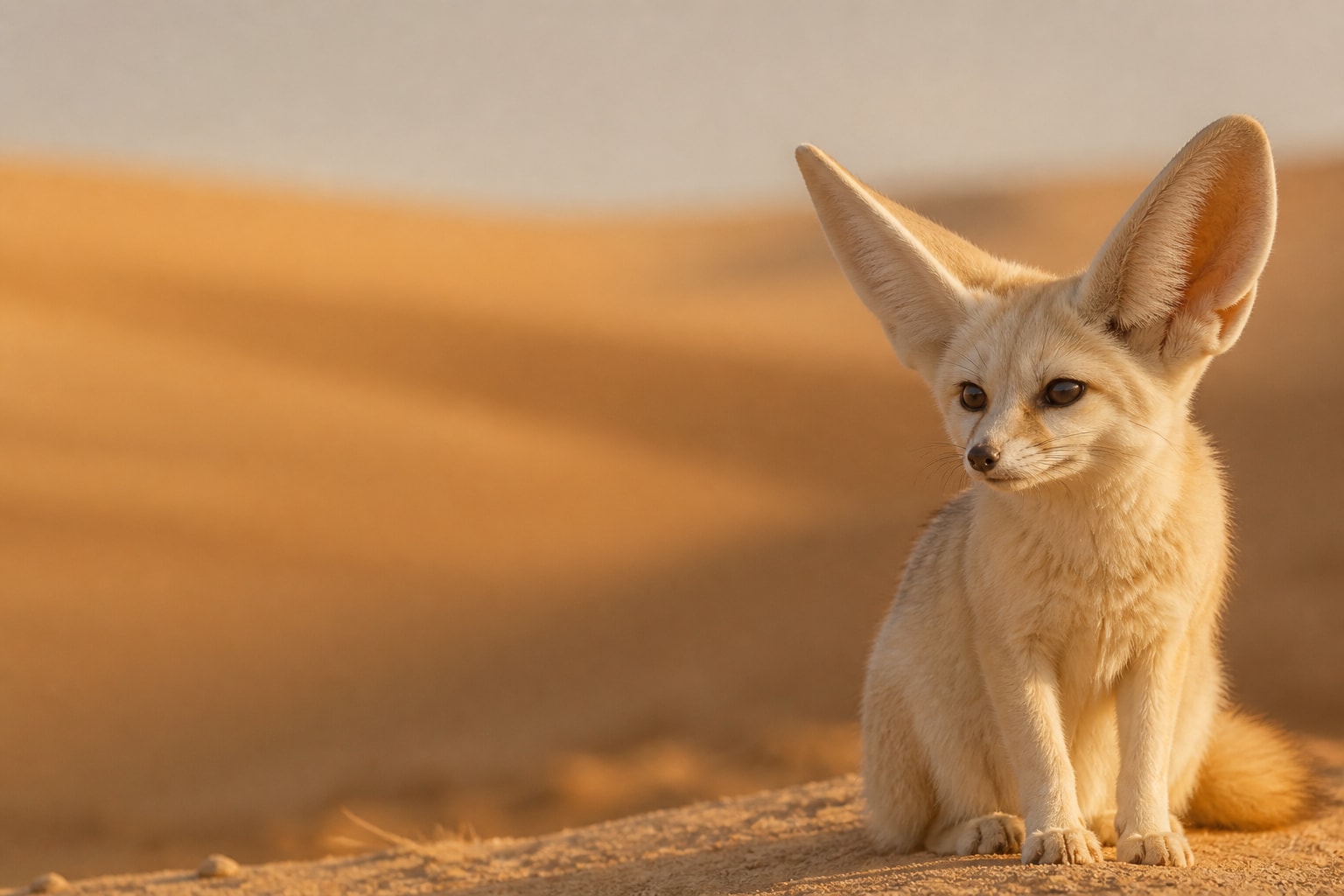
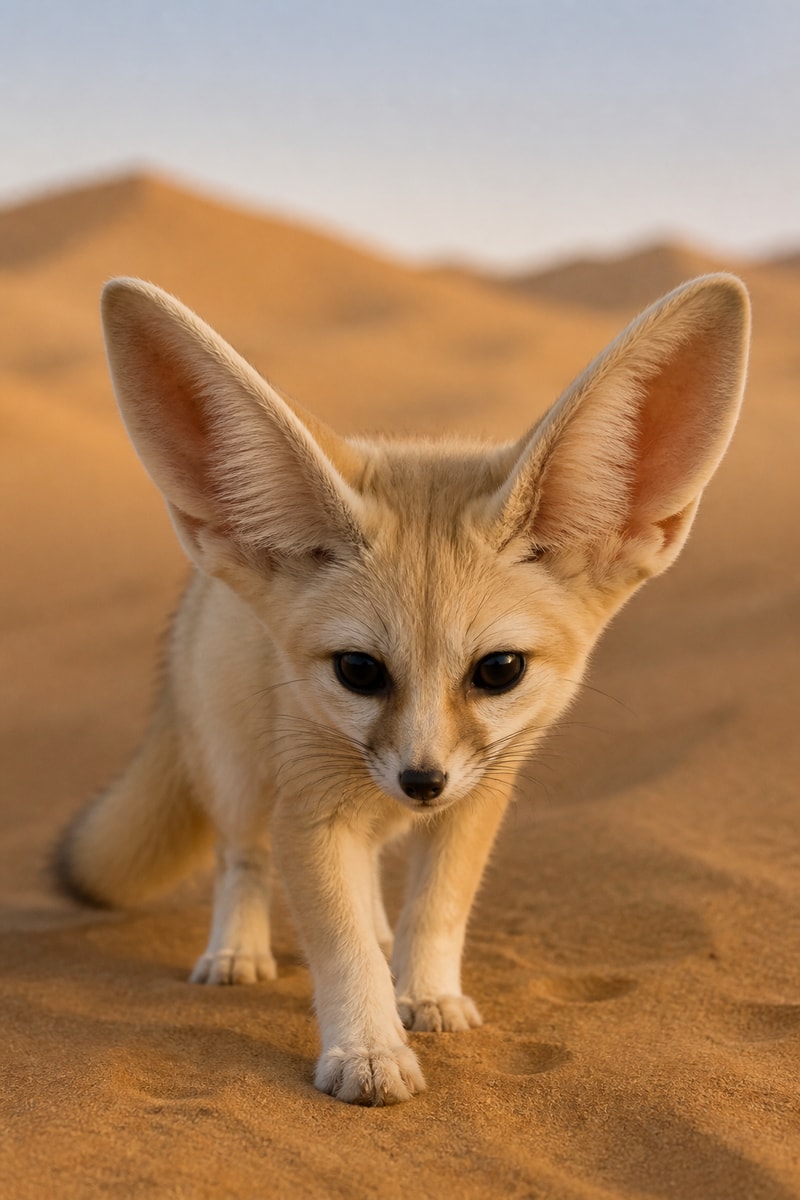
Fennec foxes are the world's smallest foxes, famous for enormous ears that shed heat and catch the faintest prey sounds. Pale fur and furred feet let them thrive on Saharan dunes by night.
No Catch'Um country pack covers their North African strongholds yet — collect this card for the Sahara itself, from Algeria and Morocco to Egypt and beyond.
- Scientific nameVulpes zerda
- Length24–41 cm body; tail ~18–30 cm
- Weight0.8–1.5 kg
- LifespanAround 10 years in the wild
- DietOmnivore
- ConservationLeast Concern
- RegionSahara Dunes
Where to see them
Habitat
- Sand dunes
- Rocky desert
- Sahara scrub
Sandy deserts and semi-deserts of the Sahara and northern Sahel, denning in burrows that buffer extreme heat and cold.
Field notes
Field scale for the Fennec Fox: length around 24-41 cm body; tail ~18-30 cm; weight 0.8-1.5 kg. Typical lifespan: Around 10 years in the wild.
When you are scanning habitat, prioritise sand dunes, rocky desert, and sahara scrub. Those settings are where a clean look and a usable photo are most likely.
Quick ID anchor: Cream to pale sandy coat, huge dark-backed ears, and black-tipped tail. Confirm with behaviour and habitat before you log the discovery.
Diet
Omnivorous desert diet of insects, small vertebrates, eggs, and fruits or roots when available.
Hunt and dig by night using acute hearing.
Behaviour
Nocturnal and social within family dens; rest underground by day.
Communicate with high-pitched calls, growls, and scent marks.
How to identify
Cream to pale sandy coat, huge dark-backed ears, and black-tipped tail.
Small body with large eyes and fully furred feet.
Interesting facts
- 01
Largest ears relative to body size of any canid.
- 02
World's smallest fox species.
- 03
Furred paw pads grip and insulate on hot sand.
- 04
Nocturnal to avoid daytime desert heat.
- 05
Eat insects, rodents, birds, eggs, and some plant material.
- 06
Live in family groups centred on a den system.
Conservation status
Fennec foxes are Least Concern across the Sahara, though local trapping for the pet trade and vehicle disturbance affect some areas. Vast desert habitat still supports widespread populations.
Sources: IUCN Red List
Free on iOS
Catch the Fennec Fox
Spot one in the wild, then scan it in Catch'Um to log your rare discovery.